GWh, Nm³, bcm y MJ: understanding the units of measurement for biomethane

Different indicators used to describe the same form of green energy

Madrid. 13 October 2026. A biomethane plant can produce 1,000 Nm³/h, generate 90 GWh a year, or form part of a market whose capacity is measured in bcm per year. These three figures can describe the same reality from different perspectives: flow rate, energy produced and gas volume.

Understanding the units of measurement for biomethane is essential for comparing plants, interpreting energy targets or determining how much energy a given volume of gas contains.

The key concept is simple: m³ and Nm³ measure volume; Nm³/h measures flow rate; kWh, MWh, GWh and TWh measure energy; MJ and GJ also measure energy; and bcm is used to express large volumes of gas.

In Europe, these units are in constant use. The European Biogas Association (EBA), for example, estimated that by 2026 the continent’s installed biomethane production capacity would stand at 8.2 bcm per year, having exceeded 8 bcm for the first time.
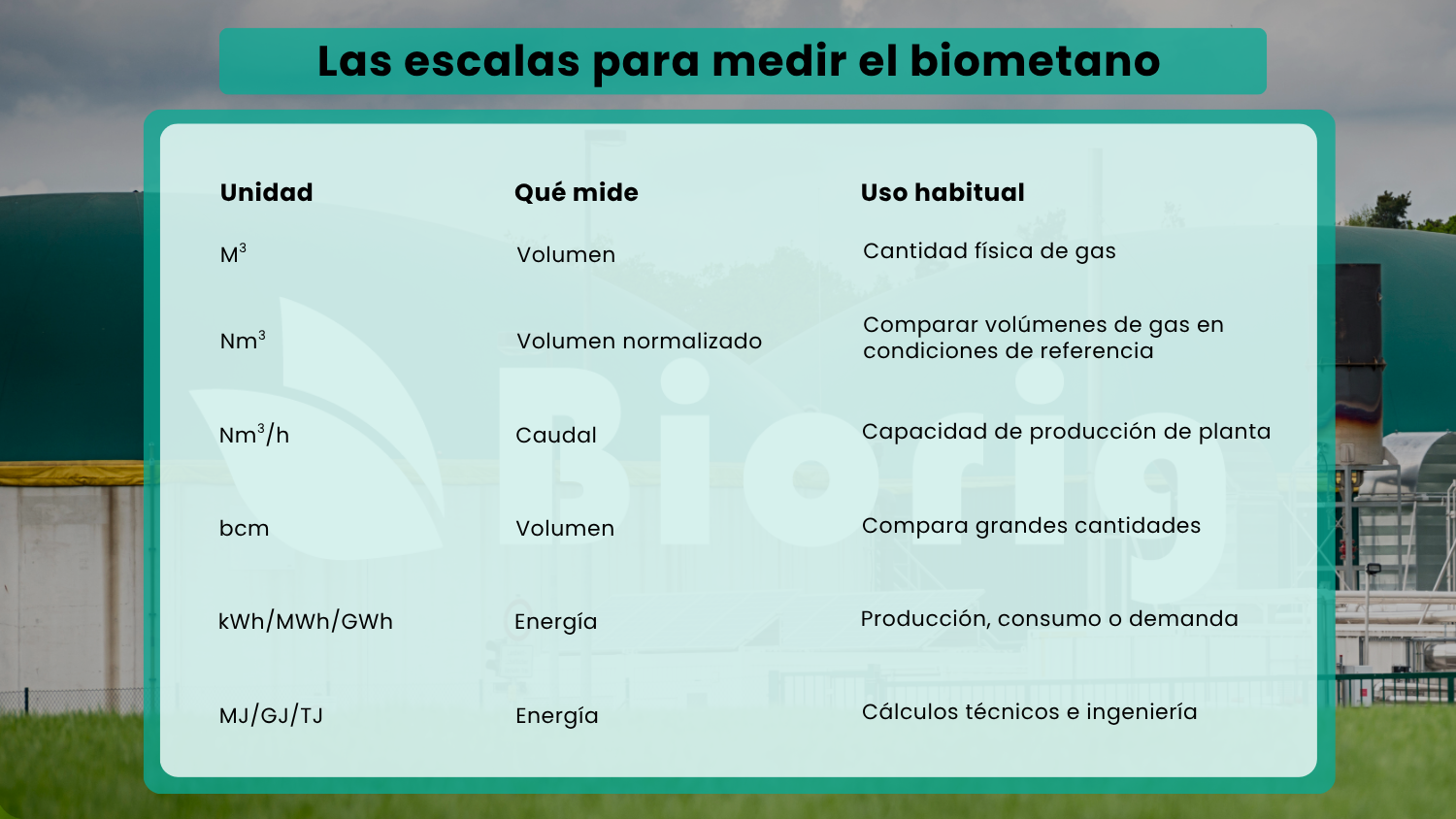

EscalasbiometanoOK

Volume, flow rate and energy: the fundamental difference

Before converting units, you need to know what each figure represents.

Volume answers the question: how much gas do we have? It can be expressed, for example, in cubic metres.

Flow rate answers another question: how much gas flows or is produced per unit of time? Hence units such as Nm³/h.

Energy, for its part, indicates how much energy that gas contains and can be expressed in kWh, MWh, GWh, MJ or GJ.

That is why 1,000 Nm³/h and 100 GWh/year are not directly comparable quantities. The first figure describes a rate of production; the second, the total amount of energy accumulated over the course of a year.

GWh, Nm³, bcm and MJ: how biomethane is measured
What are m³ and Nm³ in biomethane?

A cubic metre (m³) is a unit of volume. The problem is that gases expand and contract when their pressure and temperature change. One cubic metre of gas does not necessarily contain the same number of molecules under different ambient conditions. That is why reference conditions are used in the gas industry.

Nm³ stands for normal cubic metre. It expresses the volume that the gas would occupy under specified conditions of pressure and temperature. In the Spanish gas system, the reference conditions used to measure volume are 0 °C —273.15 K— and 1.01325 bar. European regulations also use 0 °C and 1.01325 bar as the reference conditions for volume in gas transactions.
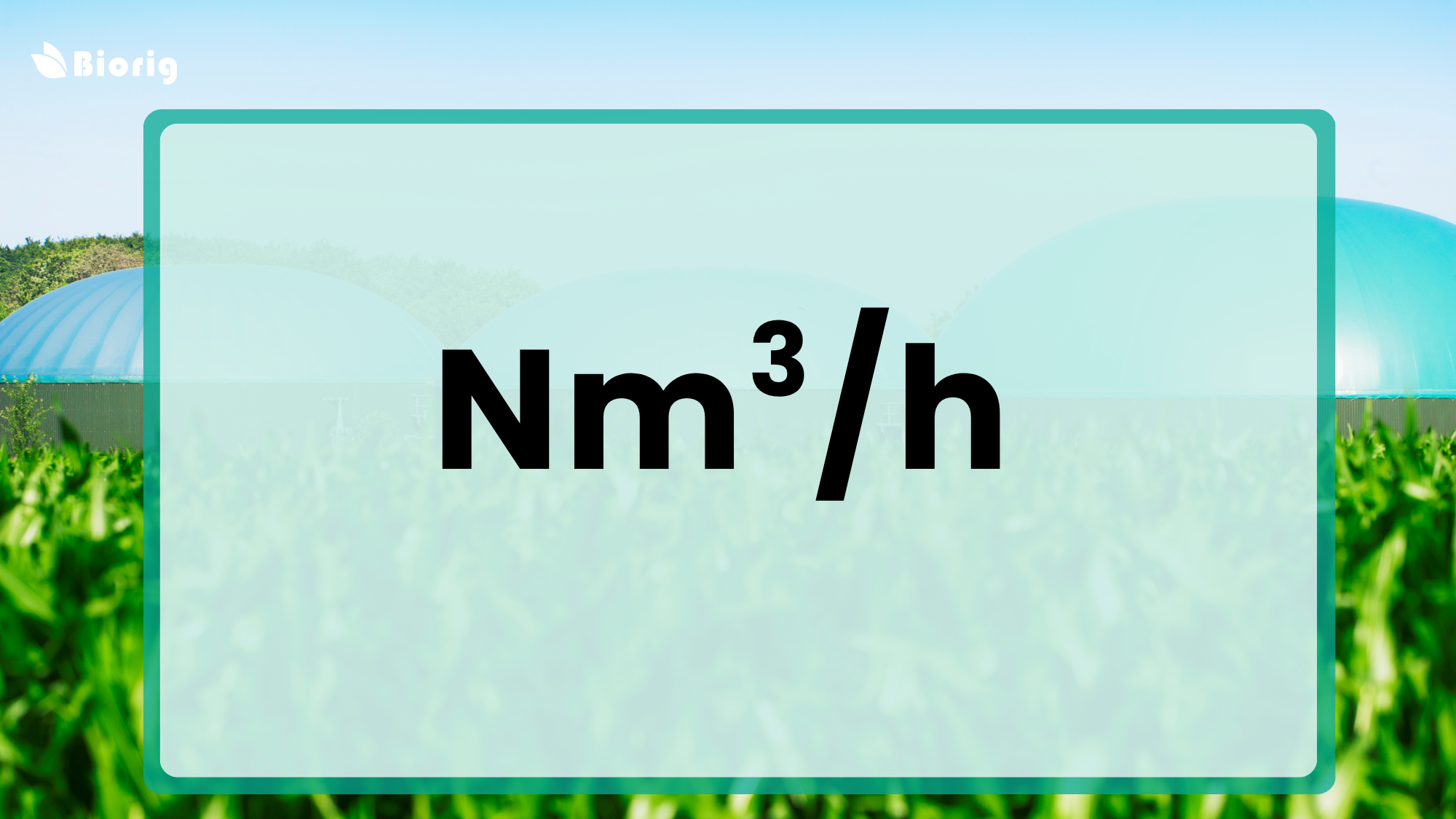
What does Nm³/h mean?

Nm³/h expresses a volumetric flow rate: the number of standard cubic metres of gas that a plant produces, transports or injects per hour.

It is one of the most commonly used units for expressing the production capacity of a biomethane plant.

To work out how many GWh those 4.38 million Nm³ represent, you also need to know the calorific value of biomethane.

The European Biogas Association uses precisely these figures to characterise European plants. In its 2025 map, it put the average size of a European plant at 483 Nm³/h.
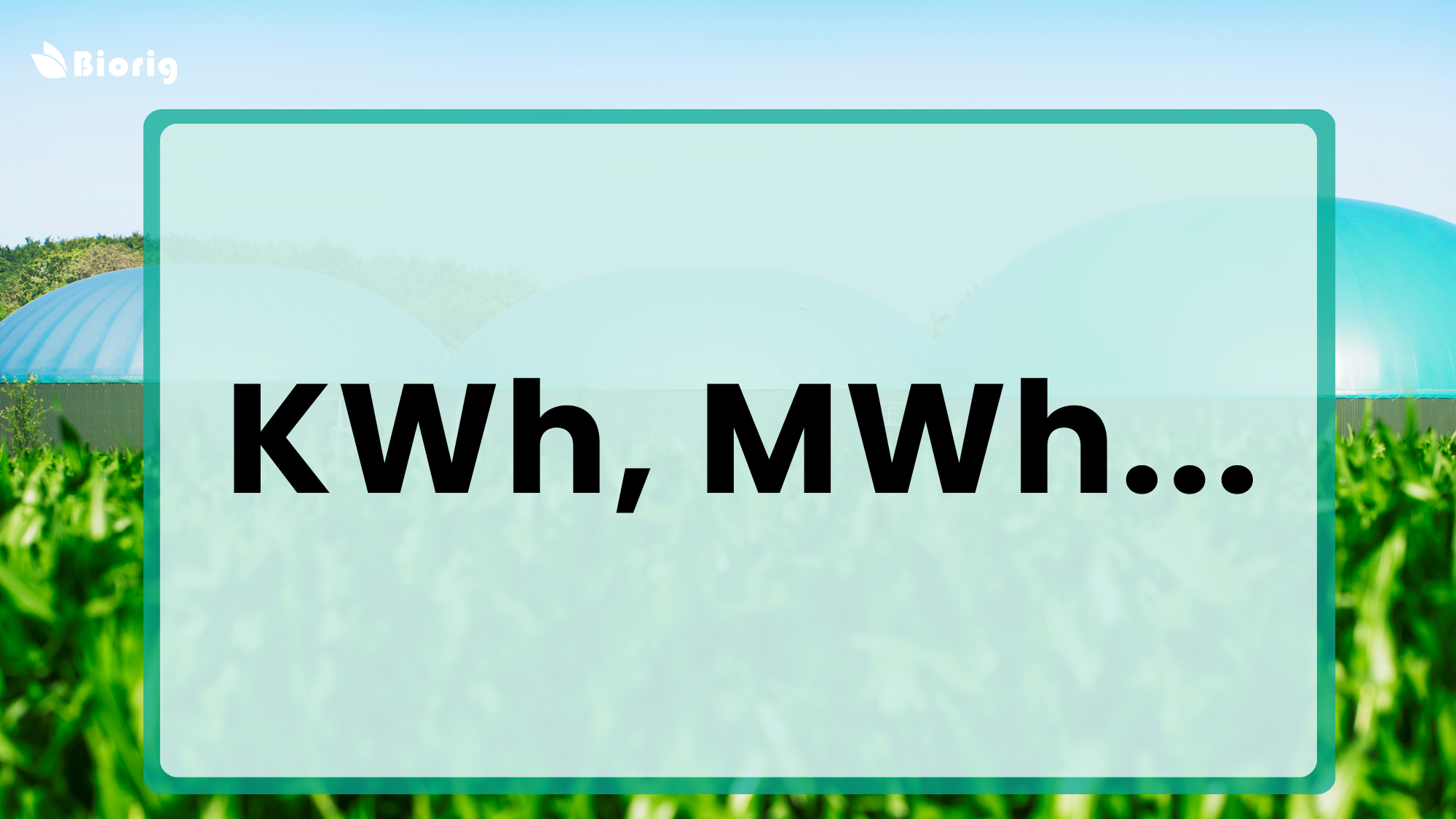
 What do kWh, MWh, GWh and TWh stand for?

These units represent energy.

The prefix changes the scale:

1 MWh = 1,000 kWh and can be used to measure industrial consumption

1 GWh = 1,000 MWh = 1,000,000 kWh and can be used to measure the output of large power stations or the consumption of large consumers

1 TWh = 1,000 GWh = 1,000,000,000 kWh; this can be used to measure the production or consumption of regions, countries and large energy portfolios

In the case of biomethane, the most common unit used to describe a plant is GWh/year. TWh/year is more useful for expressing corporate portfolios, national production figures or major energy targets.

Biorig, for example, carries out projects with a combined annual output of several TWh, whilst a single plant may generate in the region of tens or hundreds of GWh a year.
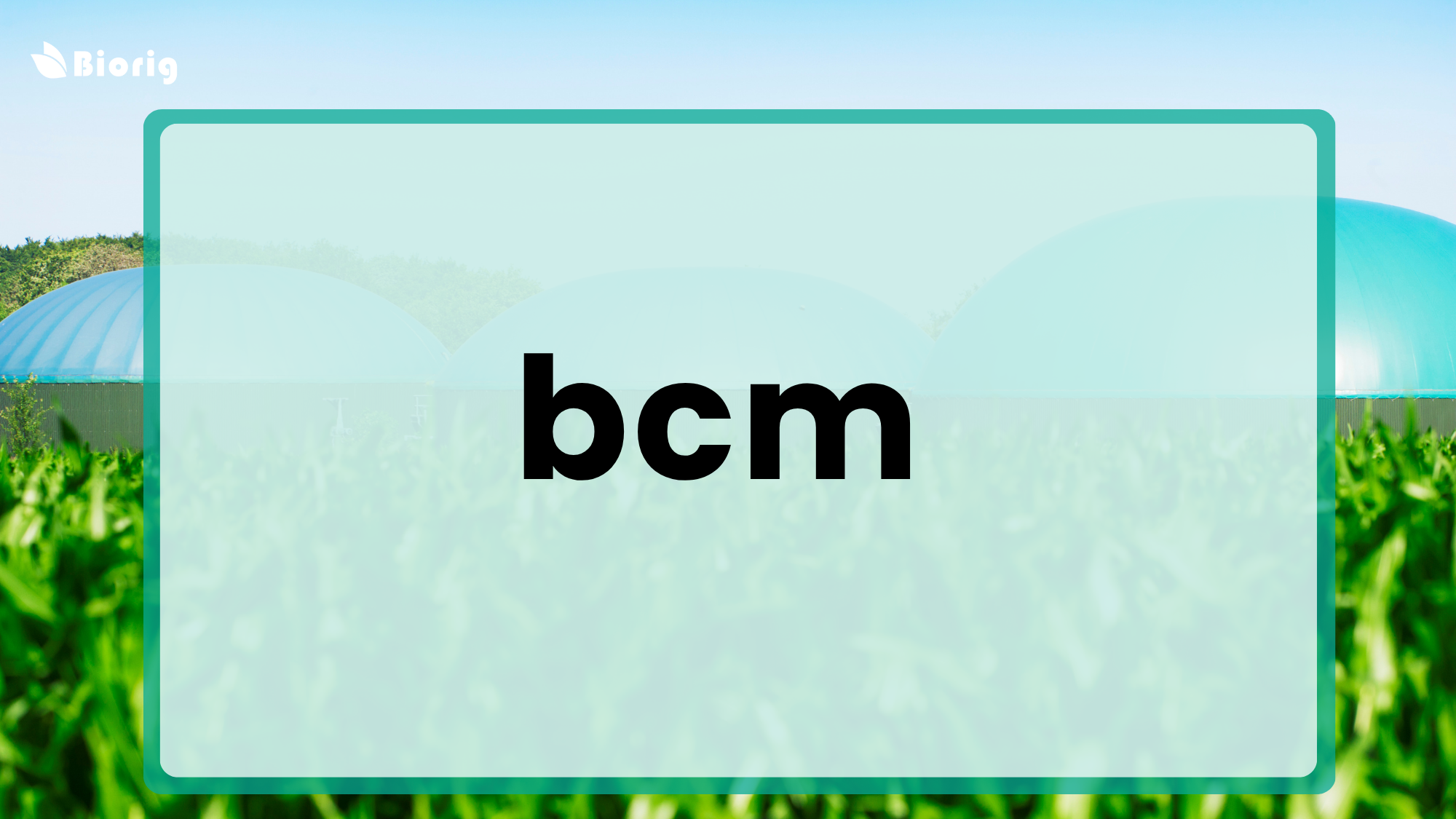
What does bcm stand for?

bcm is the international abbreviation for billion cubic metres: one billion cubic metres. Therefore:

1 bcm = 1,000,000,000 m³

It is not a unit distinct from the cubic metre: it is simply a practical way of dealing with extraordinarily large volumes.

That is why it regularly features in national and European gas statistics.

The EBA uses bcm/year to express the capacity of the European market. In 2025, it recorded approximately 7 bcm/year of installed capacity and forecast a further 7.3 bcm/year of new capacity by 2030 across the projects analysed. By the 2026 edition of its map, European installed capacity had already reached 8.2 bcm/year. European Biogas Association
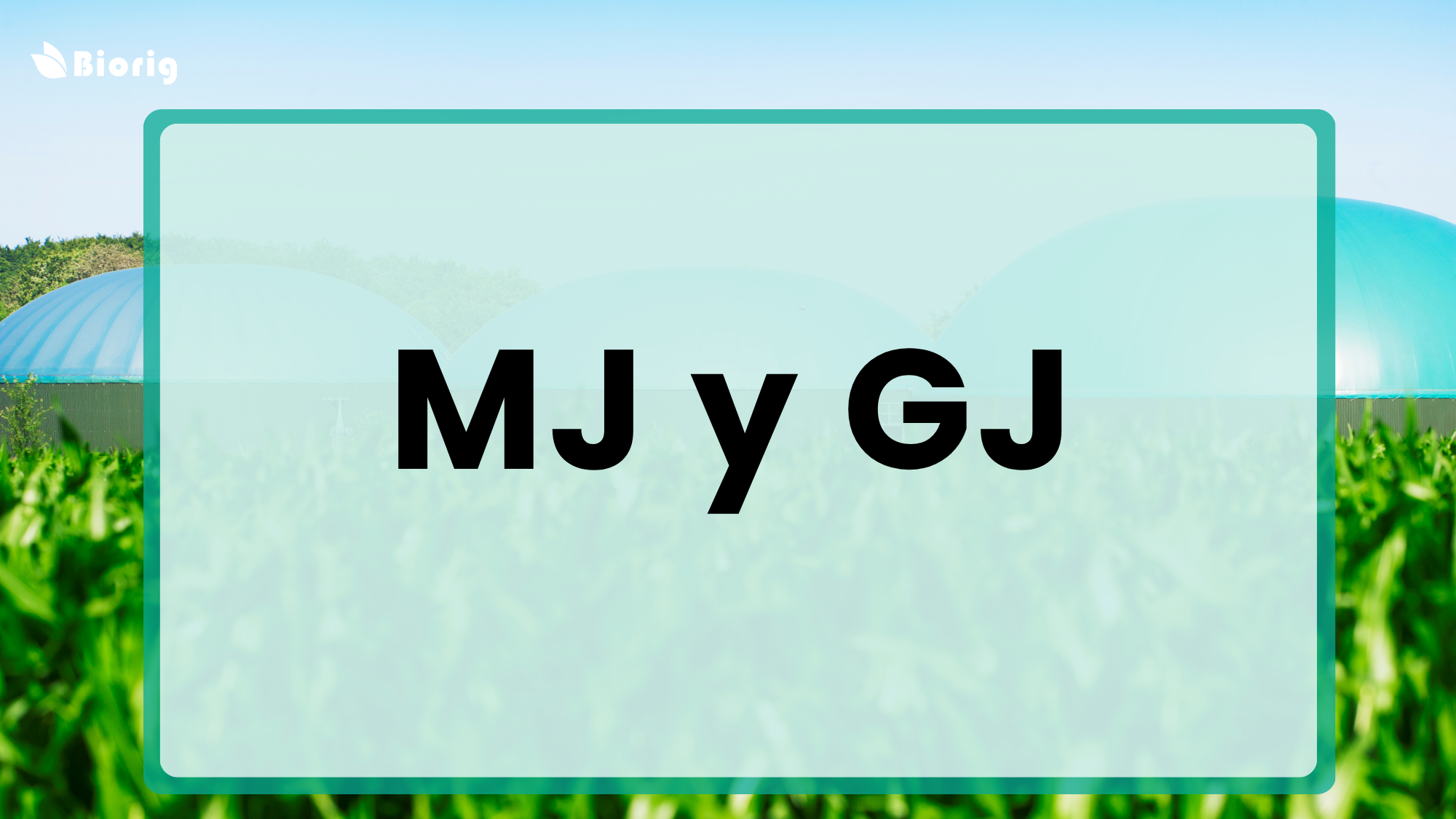
What are MJ and GJ?

The joule (J) is the unit of energy in the International System of Units. The watt-hour (Wh) is another widely used way of expressing energy, particularly in the energy sector.

The following frequently appear in gas projects:

MJ: megajulio

GJ: gigajoule

TJ: terajoule

The conversion between the two systems of units is exact:

1 kWh = 3,6 MJ

1 MWh = 3,6 GJ

1 GWh = 3,6 TJ

1 TWh = 3,6 PJ

Thus, a plant producing 100 GWh per year generates an amount of energy equivalent to:

100 GWh × 3,6 = 360 TJ/año

There is no assumption about the gas involved here: we are converting two units that represent the same quantity, namely energy.

How many households can 1 GWh of biomethane supply?

The European Biogas Association’s (EBA) Energy Translator tool links biomethane capacities to everyday examples such as households supplied, LNG lorries, fertiliser production or emissions avoided. For a biomethane capacity of 1 GWh/year, the tool presented by the EBA provides, amongst other figures, energy equivalent to the annual consumption of 87 European households.

Las capturas facilitadas mueThe screenshots provided also show that the translator associates:stran también que el traductor asocia:

  • 1 GWh/year of biomethane → 87 European households per year
  • 1 GWh/year → 462 tonnes of CO₂ avoided per year
  • 1 bcm/year → 907,140 European households per year
  • 1 bcm/year → 4,832,928 tonnes of CO₂ avoided per year

These figures are very useful for communicating impacts, but they are not universal physical equivalents. They depend on the assumptions made by the tool: average household consumption, the technology being replaced, emission factors and other variables. The EBA itself presents its Energy Translator as a tool designed to link units and capacities to examples of impact.
Why is biomethane described in so many different ways?

Because biomethane is simultaneously a physical gas, an industrial flow and an energy source. An engineer designing a plant needs to know how many Nm³/h will flow through a pipeline. An energy operator may need to know the MWh or GWh injected. A government may set its national targets in TWh/year. And an analysis of the European market may refer to bcm/year. No single unit is better than another. Each answers a different question. This variety is particularly relevant in a rapidly expanding European sector. The EBA’s Energy Translator allows users to convert energy units, production capacities and quantities such as kWh, GJ, bcm/year or m³/h, thereby facilitating their interpretation.

Producción

Cómo funciona una planta de biometano

Contact

We are close to you

Do you want to contact us, propose a project, learn about our services? You can reach us at any of our offices, by e-mail or telephone.
Biomethane and Local Communities: an Energy Transition that Creates Shared Value

Madrid. 06.08.2026. The development of biomethane represents an opportunity to advance decarbonisation, improve the use of organic waste and generate economic activity in rural areas.

However, a biomethane plant is not developed in isolation. It becomes part of a municipality with its own history, economic dynamics, natural environment and people who understand the local reality better than anyone else.

That is why, at Biorig, we work to ensure that our relationship with local communities begins in the earliest stages of each project and continues throughout the entire lifetime of our facilities. Listening, explaining and understanding the local environment enables us to make better decisions and develop projects that are genuinely connected to the places where they are located.

How we work with local communities

Information and active listening are part of the same process. It is not simply about presenting a project, but about maintaining an ongoing conversation throughout its construction and operation.

Territorial integration is an integral part of the way Biorig works. Each project is developed taking into account the characteristics of the municipality, maintaining continuous dialogue with its residents and adapting operational decisions to the local context.

Understanding the local area before taking action

Every municipality has its own specific characteristics. Proximity to population centres, access routes, agricultural and livestock activities, the availability of feedstock and the social context all influence the development of each project.

These factors are analysed from the earliest stages, alongside technical and environmental considerations, to understand how the future facility will interact with its surroundings. This knowledge is also built through dialogue with those who live and work in the area: local councils, residents, farmers, livestock farmers, associations, companies and other local stakeholders.

Their input helps us better understand the needs of the municipality, anticipate potential concerns and identify improvements that support the project’s integration into the local area.

Informing, listening and maintaining dialogue

Community participation should not be limited to a single stage of the permitting process.

Biorig promotes information sessions and communication channels adapted to the characteristics of each community. These forums provide an accessible way to explain how a biomethane plant works, what feedstocks it uses, how its operations are organised and which environmental controls are applied.

At the same time, they provide an opportunity to gather questions, proposals and concerns relating to issues such as logistics, access, employment and the coexistence of the facility with other activities in the municipality.

Information and active listening are part of the same process. It is not simply about presenting a project, but about maintaining an ongoing conversation throughout its construction and operation.

Making decisions adapted to the local environment

Our relationship with the local area is also reflected in the day-to-day planning of our facilities.

The organisation of transport routes, access points and schedules must take local mobility into account. Likewise, the origin of feedstocks, odour control, water management and the application of organic soil improvers are among the issues assessed in order to adapt each project to its surroundings.

Whenever possible, Biorig prioritises the use of locally sourced agricultural, livestock and plant-based waste. This helps reduce transport distances and establish stable relationships with local producers and waste managers.

Long-term coexistence requires attention not only to the major aspects of a project, but also to everyday issues that may affect life in the municipality.

The Green Dialogue Roundtable

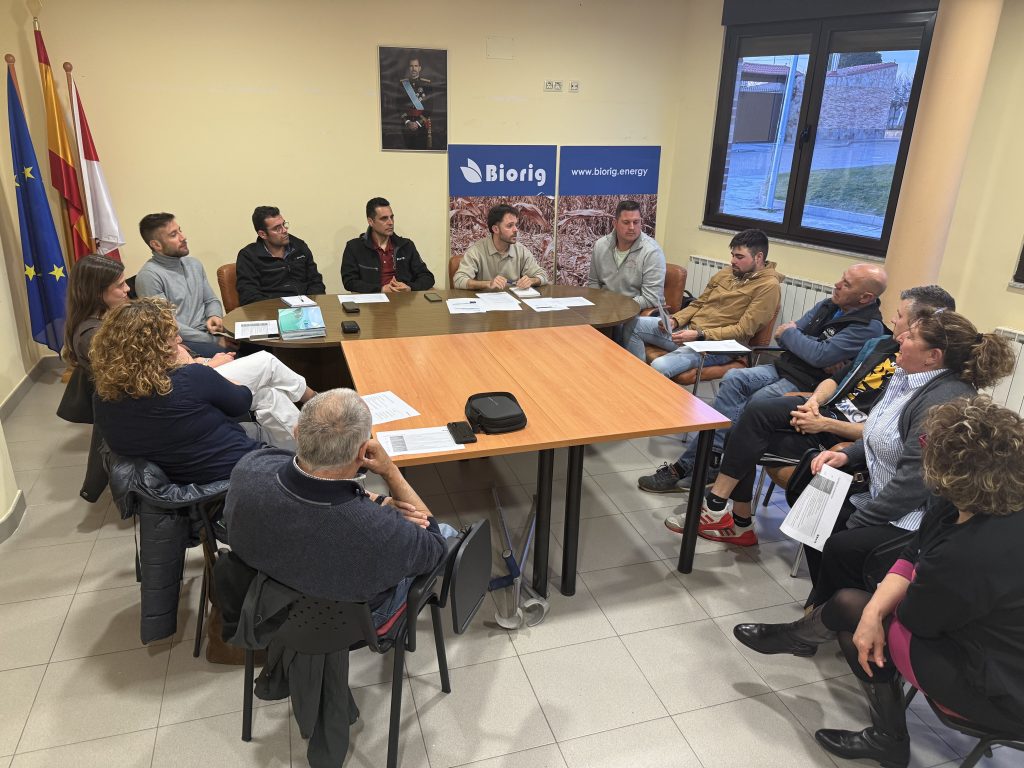
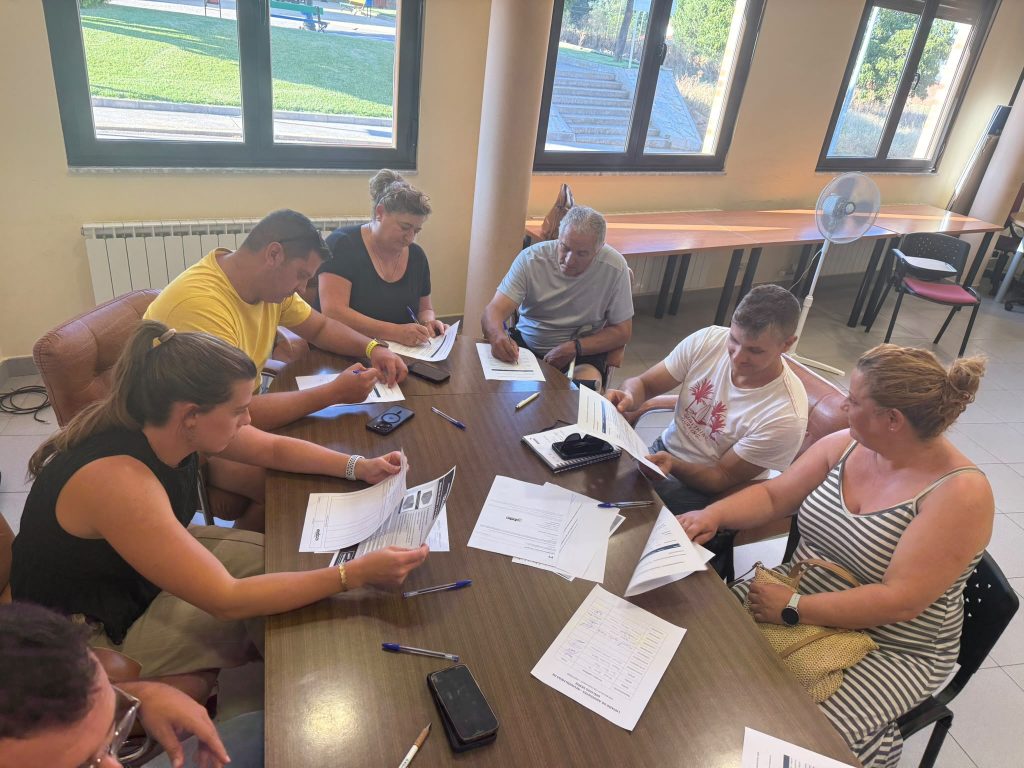
In San Millán de los Caballeros, in León, where Biorig is developing a plant for the production of biomethane, biogenic CO₂ and organic fertiliser, the company’s first Green Dialogue Roundtable has been established.

It is a permanent forum for engagement between Biorig, the local council and the municipality’s social fabric.

This initiative will be implemented across all our projects and will provide a forum for sharing information on their progress, gathering concerns and suggestions, monitoring commitments and bringing knowledge about biomethane closer to local communities.

The Roundtable includes representatives from the local council, Biorig professionals, associations and residents. This composition makes it possible to incorporate different perspectives and maintain a dialogue that reflects the local reality.

In addition, the Green Dialogue Roundtable participates in the assessment of initiatives submitted under the Community Reinvestment Programme.

Its creation represents a shift from one-off information activities towards an ongoing engagement model, providing the municipality with a stable channel through which to submit proposals and follow the progress of the project.

Community Reinvestment Programme

Biorig’s presence in a municipality is intended to create opportunities that go beyond the activity of the plant itself.

Through the Community Reinvestment Programme, part of the resources generated by each facility is allocated to the development of social and environmental projects that can improve the local area and respond to the needs of its residents.

Local organisations can submit initiatives related to education, children, social inclusion, employment, the environment, quality of life in rural areas, culture or heritage.

The Green Dialogue Roundtable participates in the assessment of these initiatives, incorporating the knowledge of local associations and municipal representatives. In this way, the programme supports proposals that originate within the community itself and helps ensure that the value generated by the plant is also translated into useful projects for the local area.

In San Millán de los Caballeros, this initiative will receive a total allocation of €250,000 over the lifetime of the facility.

Local employment and economic activity

The construction and operation of a biomethane plant creates opportunities for local professionals, companies and suppliers.

Biorig works to ensure that these opportunities are accessible to local people and contribute to creating a more skilled, diverse and inclusive labour market.

Local opportunities

Biorig promotes local recruitment and subcontracting whenever the necessary professional profiles and services are available.

This contribution is complemented by the involvement of farmers, livestock farmers, transport companies, maintenance companies and other local suppliers.

In this way, the activity of the plant can strengthen the local economy and expand opportunities for people and businesses in the area.

Training and access to employment

Biorig promotes training and recruitment initiatives to help people living in nearby municipalities access the professional opportunities associated with each facility.

These initiatives help bring the project closer to potential candidates, raise awareness of the professional profiles that will be required and improve the preparation of those interested in taking part in the construction and operation of the plants.

Diversity and inclusion

Biorig’s commitment also aims to ensure that the employment generated is more diverse and inclusive.

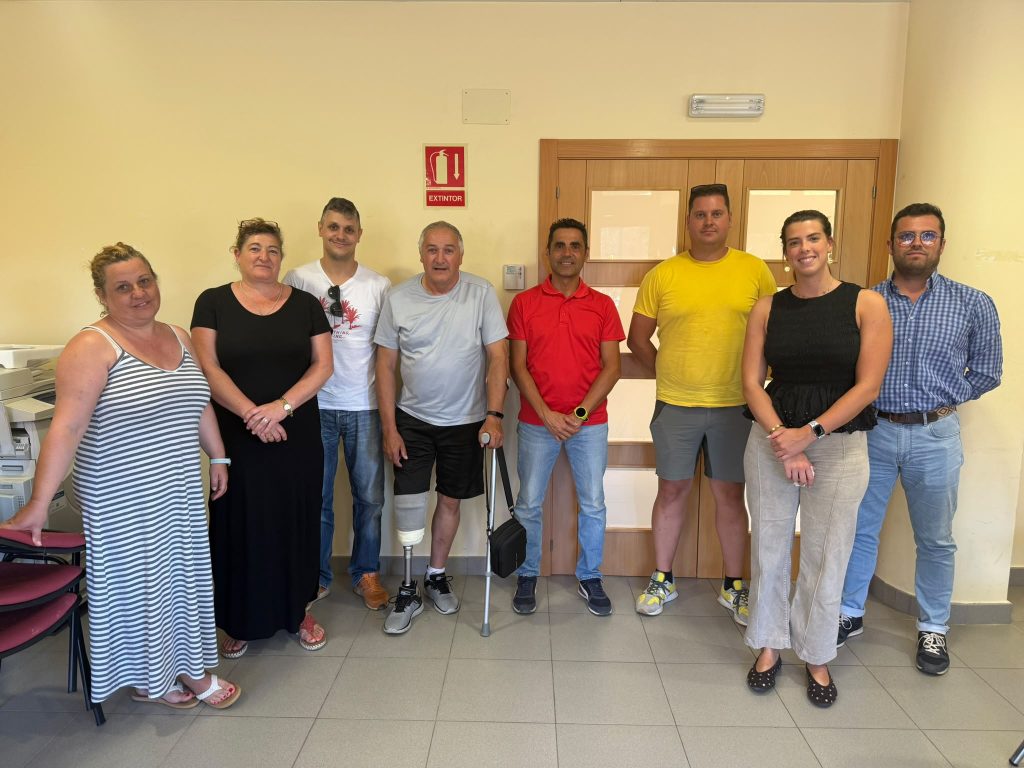
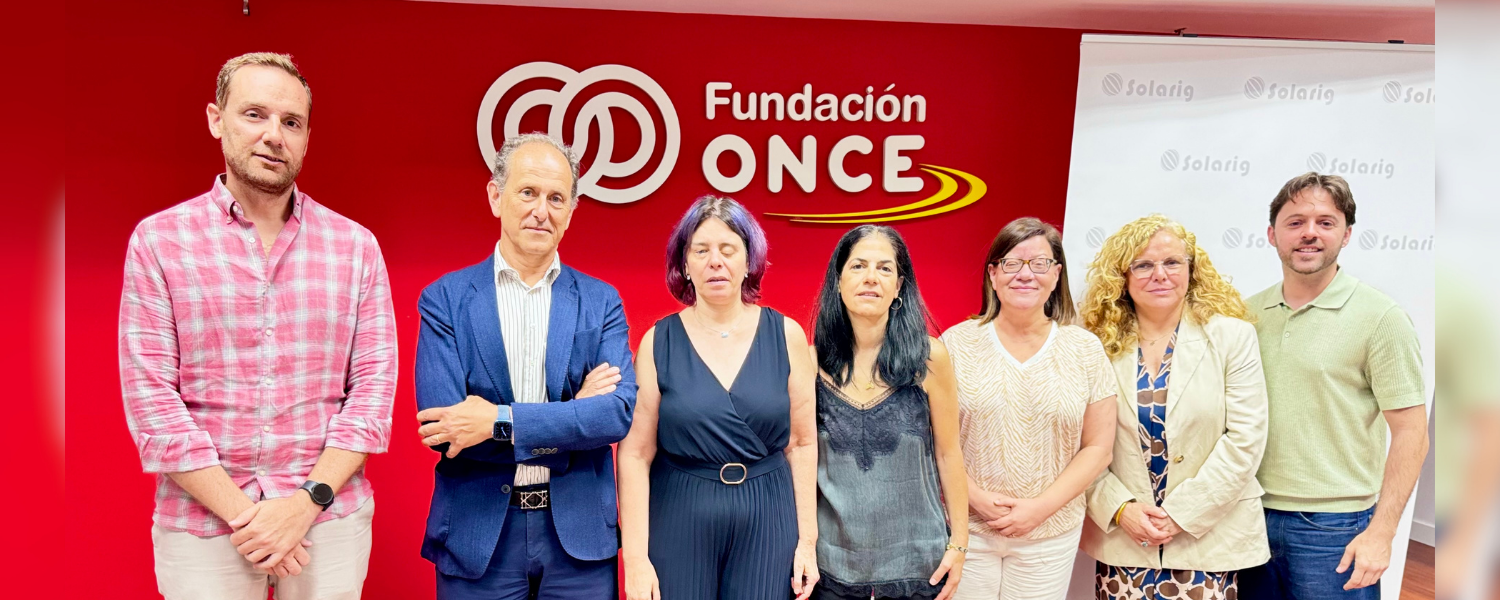
Our collaboration with Fundación ONCE helps bring these opportunities closer to people with disabilities and supports the inclusion of a wider range of profiles in the teams and activities associated with our projects.

In this way, job creation also becomes a tool for promoting equal opportunities and increasing the participation of different groups in the energy transition.

Sharing knowledge with new generations

Our relationship with local communities is also built through education, community engagement and environmental awareness.

Through volunteering activities, Biorig professionals share their knowledge with children in local municipalities, introducing them to concepts related to science, sustainability and renewable energy in a practical and engaging way.

Biorig has carried out these volunteering activities in San Millán de los Caballeros and Cubo del Vino.

Through experiments, games and interactive challenges, participants were able to learn about concepts such as renewable energy, recycling, soil care, biomethane and biogenic CO₂.

The sessions featured Brian Vásquez de la Quintana and his Ciencia Attack project, an initiative that brings science and sustainability closer to participants in an accessible, practical and interactive way.

Biorig’s volunteer professionals accompanied the children throughout the activities, answered their questions and shared some of the solutions that are already being implemented to address environmental challenges.

Do you have any further questions?

Get in touch with us

Do you want to contact us, propose a project, learn about our services? You can reach us at any of our offices, by e-mail or telephone.
Biomethane projects in Europe: Biorig’s international presence

A European green gas platform

Madrid, 4 August 2026. Biorig is developing a European biomethane infrastructure platform aimed at transforming agricultural and livestock waste into renewable energy, bioCO₂ and organic fertilisers. The company handles the development, construction and operation of the facilities, from identifying sites to liaising with farmers, livestock breeders, local authorities and local businesses.

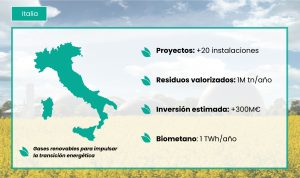
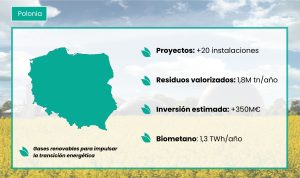
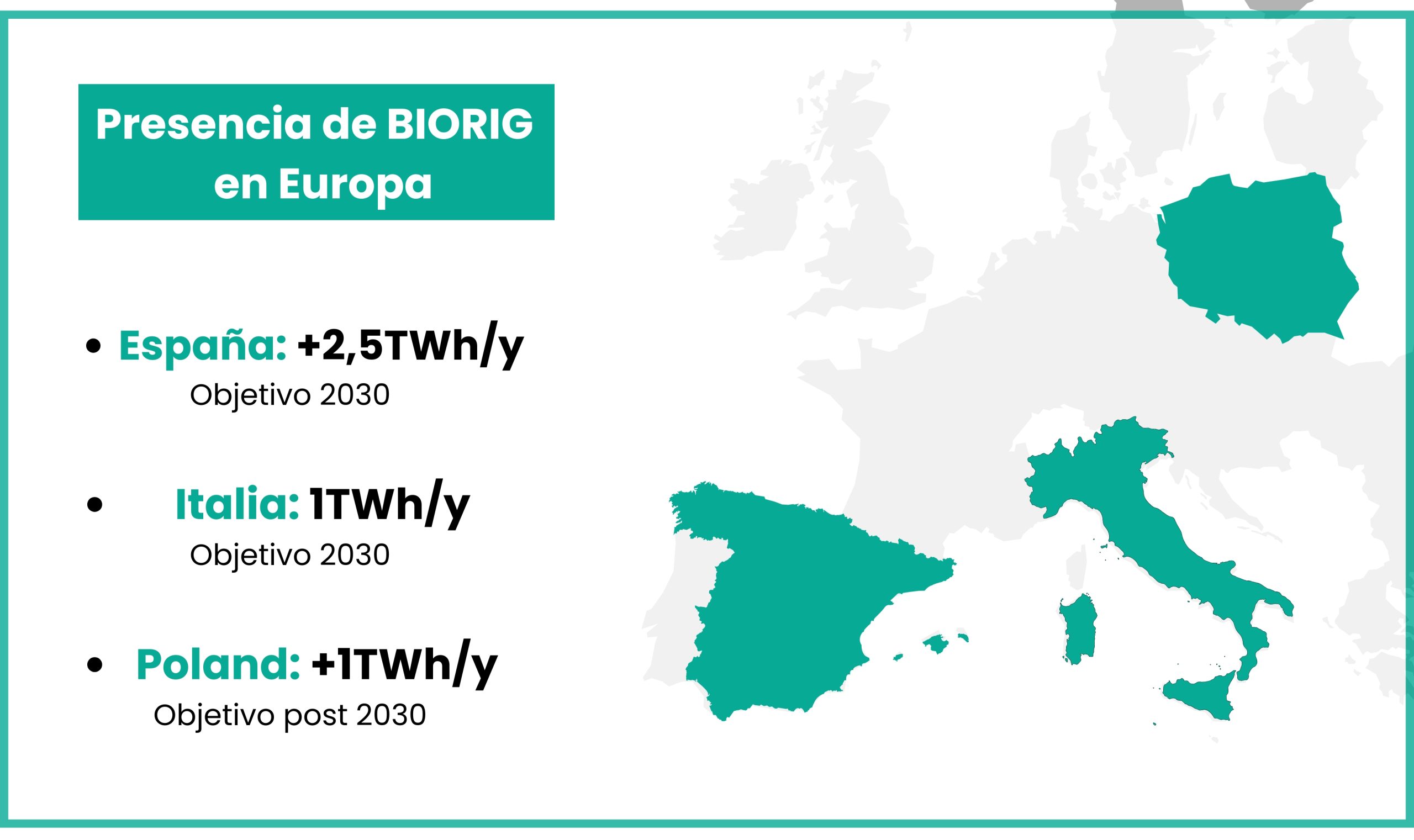
Spain is Biorig’s main market and the centre of its operations. Building on this foundation, the company has begun its international expansion into Italy and Poland, two countries with different but complementary conditions: the Italian market is more developed and has industrial experience, whilst the Polish market offers high growth potential.

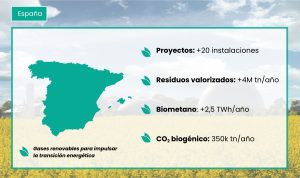
Overall, Biorig has a portfolio of more than 60 projects in Spain, Italy and Poland, with an expected annual production of around 5 TWh of biomethane. This expansion forms part of Solarig’s transformation into a more industrial, competitive and global energy group, committed to the green transition, quality employment and the economic development of the regions.

Main markets

Biorig is expanding across Europe through a strategy tailored to each country. In Spain, Italy and Poland, the company is driving forward projects with local ties, aimed at recovering organic waste, producing renewable energy and generating local economic activity.

Spain

SPANISH DEVELOPEMENT

Spain is the hub of Biorig’s operations and the country in which the company has its most extensive portfolio. Its potential in the agricultural and livestock sectors enables the development of large-scale projects directly linked to the rural economy.

Context: high availability of agricultural and livestock waste and a biomethane market that is still underdeveloped.

Biorig’s plan: to consolidate its extensive project portfolio and make Spain its main production hub.

Activity: developing its own projects from the initial stages, in collaboration with farmers, livestock farmers, local authorities and local businesses.

Plant model: industrial-scale facilities, located close to the source of the waste and fuelled exclusively by agricultural and livestock raw materials.

Italy

ITALY DEVELOPEMENT

Italy enables Biorig to grow in a market characterised by industrial expertise and a specialised supply chain. The company also benefits from the presence and expertise built up by Solarig, Biorig’s parent company, over more than 15 years in the country.

Context: a more mature biomethane market, with specialist suppliers and support schemes for renewable gases.

Biorig’s plan: to accelerate its growth by capitalising on Solarig’s established presence and expertise.

Activity: combining our own projects with the incorporation of local initiatives at advanced stages of development.

Plant model: smaller-scale, more widely distributed facilities, tailored to the local availability of agricultural and livestock waste and agri-food by-products.

Poland

POLAND DEVELOPEMENT

Poland offers an opportunity for long-term growth due to the scale of its agriculture and livestock sector and its need to diversify its energy supply. Biorig aims to build a portfolio there from an early stage of market development.

Context: significant potential for agriculture and livestock farming, coupled with the need to reduce dependence on imported gas.

Biorig’s plan: to build a significant portfolio in one of the European markets with the greatest growth potential.

Activity: combining new projects with the integration of established local initiatives, in collaboration with local developers and partners.

Plant model: facilities tailored to the resources of each agricultural region, designed to make use of local waste and produce biomethane for the Polish market.

Agricultural and livestock raw materials for a circular model

Biorig exclusively recycles by-products generated by the primary sector to produce renewable gases. This model enables waste to be recycled to produce energy and digestate with significant agronomic potential, which can be used to fertilise land.

As such, Biorig’s plants represent key infrastructure for promoting the circular economy in rural areas, as well as a source of investment and economic development in these regions.

Contact

We are close to you

Do you want to contact us, propose a project, learn about our services? You can reach us at any of our offices, by e-mail or telephone.
Biomethane from a scientific perspective: a safe and sustainable solution for the primary sector

How a biomethane plant works: a new episode of ‘Futuro Verde’

Madrid. 14.07.2026. Futuro Verde, Promecal’s podcast for Vive! Radio and El Día de Soria, in collaboration with Solarig, continues to bring the energy transition closer to the public through knowledge, scientific outreach and the expertise of industry professionals. Biomethane, a gas of renewable origin that serves as a substitute for fossil-based natural gas, is one of the energy sector’s key growth drivers. This is why the processes involved in producing biogas to obtain biomethane have generated considerable interest in the scientific community, whose views were featured in episode 3 of the podcast, which brought together scientists specialising in the study of this type of facility.

Given biomethane’s potential to accelerate decarbonisation in sectors that are difficult to electrify, and its contribution to optimising the management of organic waste, this renewable gas presents itself as an energy solution that helps to promote the circular economy.

With the agri-food waste produced in Castile and León, we can produce three times as much natural gas as we consume

Futuro Verde examines in detail, in collaboration with the academic community, the operation of a biomethane plant from a rigorous and scientific perspective. The discussion featured leading researchers, such as Mariano Martín, Professor of Chemical Engineering at the University of Salamanca and a member of the Royal Academy of Exact, Physical and Natural Sciences of Spain; Raúl Muñoz, a researcher at the Institute of Sustainable Processes at the University of Valladolid and professor of Environmental Technologies; and María Pilar Martínez, a mining and energy engineer with a PhD from the Polytechnic University of Madrid and currently a postdoctoral researcher at the UPM.

From Waste to Resource: The Biomethane Process

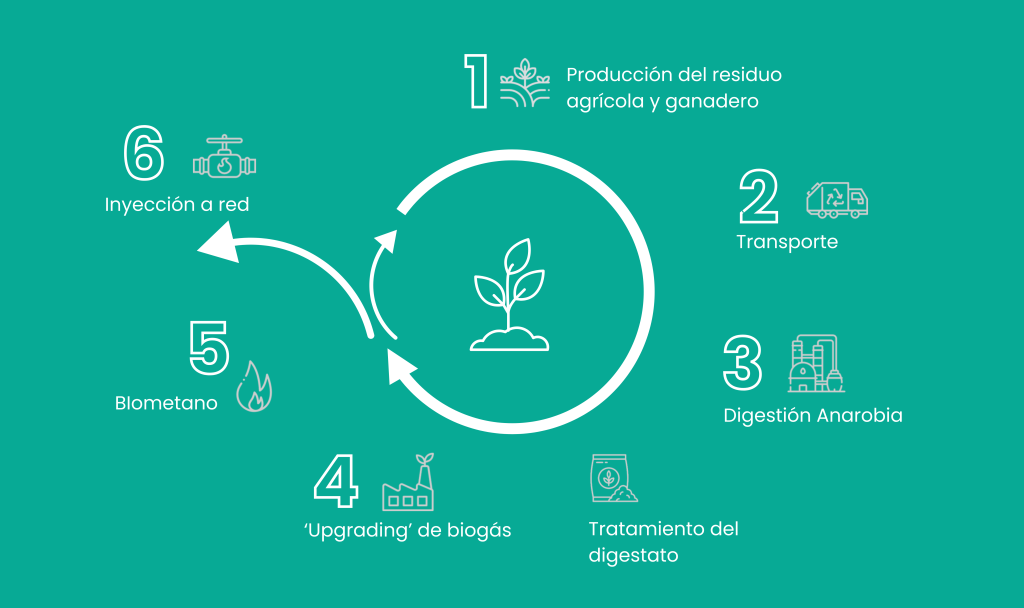
The episode provides a step-by-step analysis of how these plants operate, from the receipt of raw materials to the production of biomethane ready for injection into the grid or use as a renewable fuel.

Safety and reliability

The safety and reliability of modern biomethane plants, a technology with over 40 years of development in other European countries

Anaerobic digestion

The anaerobic digestion process by which biogas is produced from organic waste

Upgrading

The conversion of biogas into biomethane, a renewable gas with properties equivalent to those of natural gas

Green energy

The role of these infrastructures in reducing emissions and achieving energy independence

Digestate to close the cycle

Uno de los aspectos más importantes del proceso es la gestión y la recuperación del digestato, un subproducto que desempeña un papel fundamental en el modelo circular. El digestato es un acondicionador orgánico del suelo con un elevado potencial agronómico que contribuye a devolver los nutrientes al suelo, mejorar su estructura y reducir la dependencia de los fertilizantes químicos.

Biorig produces biomethane exclusively from agricultural and livestock waste (slurry, manure, and straw), which yields a digestate classified as CMC 5. The company further processes this digestate to produce an organic fertilizer certified under European CFP 3 standards, which is stabilized and sanitized and enables traceability of the nutrients used in the field.

Digestate is not dangerous; what is dangerous is failing to manage waste sensibly and professionally

An energy model based on circularity

If managed properly, biomethane plants benefit everyone.

This new episode of Futuro Verde highlights how biomethane offers a comprehensive solution: it not only generates renewable energy, but also enables efficient waste management and produces resources that benefit the local community.

A clear example of how the energy transition can go hand in hand with rural development, environmental sustainability, and the creation of long-term value.

Contact

We are close to you

Do you want to contact us, propose a project, learn about our services? You can reach us at any of our offices, by e-mail or telephone.
Soil conservation: turning waste into fertility

Soil: a living and strategic resource

Madrid. 07.07.2026. Every 7 July, International Soil Conservation Day is celebrated – a day that serves as a reminder of something essential: soil is not just the surface on which we grow food, but a living, finite and strategic resource. Agricultural productivity, biodiversity, water quality and the resilience of rural areas to climate change all depend on its condition.

The FAO points out that healthy soils are the foundation of agricultural development, food production and numerous ecosystem services. It also warns that soil degradation takes many forms: loss of organic matter, erosion, salinisation, compaction, loss of fertility and deterioration of soil structure.

In Spain, this debate has a particularly significant dimension for the agricultural and livestock sector. Agriculture and livestock farming generate organic materials with agronomic value — such as slurry, manure, plant residues and straw — but their management must be carried out with proper planning, traceability and technical criteria. When these material flows are not managed properly, they can lead to environmental externalities, including emissions, local nuisances and diffuse nitrate pollution. In this article, we will explain best practices for ensuring that soils remain healthy, primarily through the recovery of organic matter for use as energy and organic fertilisers.

An environmental and production challenge

Soil degradation can manifest itself through erosion, loss of organic matter, compaction, salinisation or non-point source pollution. In agricultural areas, this challenge calls for solutions that enable productivity to be maintained without compromising natural resources. It is therefore necessary to move towards models that help the primary sector to produce better, more efficiently and with less environmental impact.

Loss of organic matter.
01 Loss of organic matter.
Unbalanced nutrient utilisation.
02 Unbalanced nutrient utilisation.
Erosion caused by wind or water.
03 Erosion caused by wind or water.
Diffuse pollution associated with the improper management of fertilisers or manure.
04 Diffuse pollution associated with the improper management of fertilisers or manure.
Reduced ability of the soil to retain water and carbon.
05 Reduced ability of the soil to retain water and carbon.

From waste to resource: an opportunity for the region

Agriculture and livestock farming produce organic materials of agronomic value, such as slurry, manure, plant residues and straw. If managed correctly, these materials can become a source of nutrients and organic matter for the soil.

The right approach is not to single out the livestock sector, but to provide it with technical, traceable and viable solutions. Farmers and livestock farmers play a vital role in soil conservation, as they work directly on the land and need tools that enable them to meet increasing environmental requirements without losing competitiveness.

The problem is not farming and livestock rearing itself, but the lack of adequate tools to make good use of their organic waste streams.

The circular economy makes it possible to turn an environmental burden into a useful resource.

The proximity between waste generation, recovery and agricultural use reduces logistical and environmental impacts.

Biomethane and digestate to close the nutrient cycle

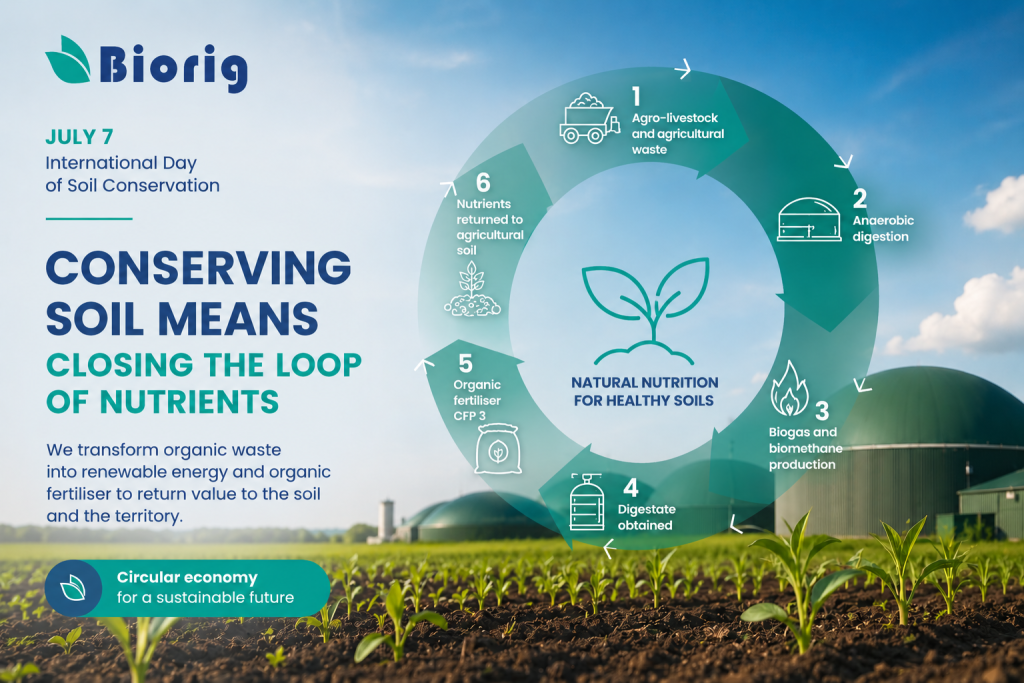
Biorig’s operations are based on the recovery of organic waste through anaerobic digestion. This process enables agricultural and livestock materials to be converted into biogas, which is then purified to produce biomethane. At the same time, it produces digestate, a stream rich in organic matter and nutrients that can be used as a basis for the production of organic fertilisers.

Incoming organic waste from agriculture, livestock farming and the agri-food industry.

Receipt of materials such as slurry, manure, straw or organic by-products for processing.

Anaerobic digestion under controlled conditions.

An anaerobic biological process that converts organic matter into biogas within monitored digesters.

Biogas production and subsequent upgrading to biomethane.

Biogas production and the removal of impurities to obtain a renewable gas suitable for use as an energy source.

Production of digestate.

Production of the organic material resulting from anaerobic digestion, which is rich in nutrients and organic matter.

Utilisation of digestate as an organic fertiliser.

Treatment of digestate to convert it into a useful, safe and regulated fertiliser.

Returning nutrients to agricultural soil.

Agronomic use of organic fertiliser to restore nutrients and organic matter to the soil.

From digestate to an organic soil improver

One of the key distinguishing features of the Biorig model is the recovery of digestate as CFP 3 organic fertiliser, in accordance with Regulation (EU) 2019/1009. This means that digestate is not treated as a waste product with no intended use, but rather as a recoverable material that must meet quality, stability and safety requirements for its use in agriculture.

The CFP 3 organic fertiliser adds organic matter and nutrients to the soil, helping to improve its fertility and reduce dependence on mineral fertilisers. Furthermore, as it is subject to a regulatory framework, it facilitates more traceable, planned application that is tailored to the actual needs of the crops.

More organised management to protect soil and water

Nitrate pollution is one of the major challenges associated with nutrient management in agricultural and livestock farming areas. The use of digestate as a regulated organic fertiliser can contribute to more orderly management, as it provides a better understanding of the origin, composition and fate of the nutrients applied to the soil.

The aim is not to replace agronomic judgement, but to reinforce it. Organic fertilisers must be applied as part of fertilisation plans that take into account the crop’s needs, soil characteristics, appropriate application periods and the limits set by the regulations.

Soil conservation is, ultimately, about protecting the productive and environmental foundation of our regions. The recovery of agricultural, livestock and agro-industrial waste through anaerobic digestion enables us to move towards a more circular model, in which nutrients are recovered, managed with traceability and returned to the fields in the form of organic fertiliser. At Biorig, we are working to ensure that this process contributes to more efficient waste management, the production of renewable energy and more sustainable fertilisation, thereby reinforcing the role of the primary sector as an essential ally in soil conservation and the ecological transition.

Contact

We are close to you

Do you want to contact us, propose a project, learn about our services? You can reach us at any of our offices, by e-mail or telephone.
Anaerobic digestion and biomethane: key to the energy transition

From organic waste to biogas through anaerobic digestion

Madrid, 30 June 2026. Green energy is the cornerstone of the energy transition and one of the main ways to reduce emissions, improve energy independence and move towards a more sustainable model. Against a backdrop characterised by the need to decarbonise the economy and reduce dependence on external sources, generating energy through anaerobic digestion is emerging as a strategic solution to ensure a more secure and competitive energy supply that is aligned with European climate targets.

La digestión anaerobia (o también “digestión anaeróbica”) es un proceso biológico en el que la materia orgánica se descompone en ausencia de oxígeno. Este fenómeno ocurre de forma natural, pero en las plantas de tratamiento se reproduce en condiciones controladas para maximizar su eficiencia. Su desarrollo permite no solo sustituir fuentes fósiles, sino también transformar la forma en la que se producen, gestionan y consumen los recursos energéticos.

How does anaerobic digestion work?

During the anaerobic digestion process, microorganisms convert organic waste into biogas (composed mainly of methane and carbon dioxide) and a by-product known as digestate. Following a purification process, this biogas can be converted into biomethane, a renewable gas with properties equivalent to those of natural gas and suitable for use as an energy source.

In this way, what has traditionally been treated as waste is transformed into a resource. Methane is no longer released into the atmosphere as fugitive emissions but is captured for energy recovery, thereby reducing emissions and improving the system’s efficiency. At the same time, the digestate can be used as an organic fertiliser, helping to improve soil quality and reduce dependence on chemical fertilisers.

Why is this process important?

The management of organic waste has become one of the major environmental and production challenges of our time. In sectors such as agriculture and livestock farming, where millions of tonnes of slurry, manure and agricultural waste are generated every year, the problem lies not only in the volume of waste but also in the way it is managed.

When this waste decomposes unchecked, it releases methane into the atmosphere – a gas with a significant impact on the climate. Furthermore, this traditional management approach can lead to odour problems, soil and water pollution, and increasing regulatory pressure on farmers and livestock breeders. In this context, addressing this challenge requires solutions that are effective, practical and sustainable over the long term, such as anaerobic digestion, to optimise the management of this waste.

Anaerobic digestion: the driving force behind the energy transition

Beyond waste management, anaerobic digestion plays a strategic role in the energy transition. It helps to reduce emissions, optimise resources and generate renewable energy in a manageable and localised way.

At Biorig, we are working to address this challenge through an integrated and community-focused approach, transforming agricultural and livestock waste into renewable energy and organic fertilisers, and contributing to a more efficient and sustainable management of resources.

In this way, we are moving towards a more balanced energy model, one that is connected to the local area and aligned with the principles of the circular economy.

In this way, we are helping to transform waste management into an opportunity for energy and regional development.

Contact

We are close to you

Do you want to contact us, propose a project, learn about our services? You can reach us at any of our offices, by e-mail or telephone.
What is green energy, and why is it key to the future of energy?

The cornerstone of the energy transition

Madrid. 19.05.26. Green energy is the cornerstone of the energy transition and one of the main ways to reduce emissions, improve energy independence and move towards a more sustainable model.

Against a backdrop characterised by the need to decarbonise the economy and reduce dependence on external sources, green energy is emerging as a strategic solution for ensuring a more secure and competitive energy supply that is aligned with European climate targets. Its development makes it possible not only to replace fossil fuels, but also to transform the way in which energy resources are produced, managed and consumed.

An energy model in transition

Green energy is energy generated from natural and renewable sources, that is, resources that are continuously replenished and are not depleted through use.

This type of energy significantly reduces environmental impact, particularly in terms of greenhouse gas emissions, and is emerging as a genuine alternative to the traditional energy system.

This concept encompasses technologies such as solar, wind and hydro power, as well as solutions based on waste recovery, such as biogas and biomethane.

Why is it becoming increasingly important?

The push for green energy is a response to a number of challenges affecting both the global and local levels. On the one hand, there is the need to reduce emissions and make progress towards decarbonisation targets. On the other, there is the importance of reducing dependence on foreign energy sources and making use of resources available within the country itself.

Added to this is the need to build a more stable energy system, capable of responding to market fluctuations and ensuring long-term supply.

Key aspects of green energy

Beyond electricity

There are solutions that enable the decarbonisation of sectors where electrification is challenging, such as industry and heavy transport. In this context, renewable gases play a key role, as they allow existing infrastructure to be utilised and organic waste to be converted into usable energy.

Environmental, economic and regional impact

Green energy not only reduces emissions, it also creates economic opportunities. It drives new industries and promotes development in the regions where it is implemented. Furthermore, its roll-out helps to revitalise rural areas, create local jobs and improve resource management, linking sustainability with economic growth.

Towards a more sustainable energy system

The energy transition is not simply a matter of swapping one energy source for another, but of transforming the way we understand energy. In this process, green energy enables us to move towards a model that is more efficient, more independent and better suited to today’s challenges.

The shift towards a new energy model

In this context, the development of sustainable energy solutions is key to moving towards a more efficient and resilient model.

At Biorig, we are working to drive this transformation by developing renewable gas projects that enable green energy to be integrated into the existing system, thereby reducing emissions and making the most of the resources available in the region. In this way, we are helping to accelerate the transition towards a more sustainable and efficient energy system.

Contact

We are close to you

Do you want to contact us, propose a project, learn about our services? You can reach us at any of our offices, by e-mail or telephone.
Myths and facts of biomethane: odors, logistics, and rural employment from the perspective of an operational facility

Here’s how a biomethane plant with over 20 years of operational experience works

Madrid. 06.04.26. Biomethane is a renewable energy source produced from organic waste. This technology, which has been in development for over 40 years in other European countries, will have only about 15 operational facilities by early 2025, according to the latest data collected by the European Biogas Association (EBA). Given this reality, information and outreach regarding the technology are vital to unlocking biomethane’s full potential—both from an energy perspective and in terms of waste management and the social and economic development of rural areas.

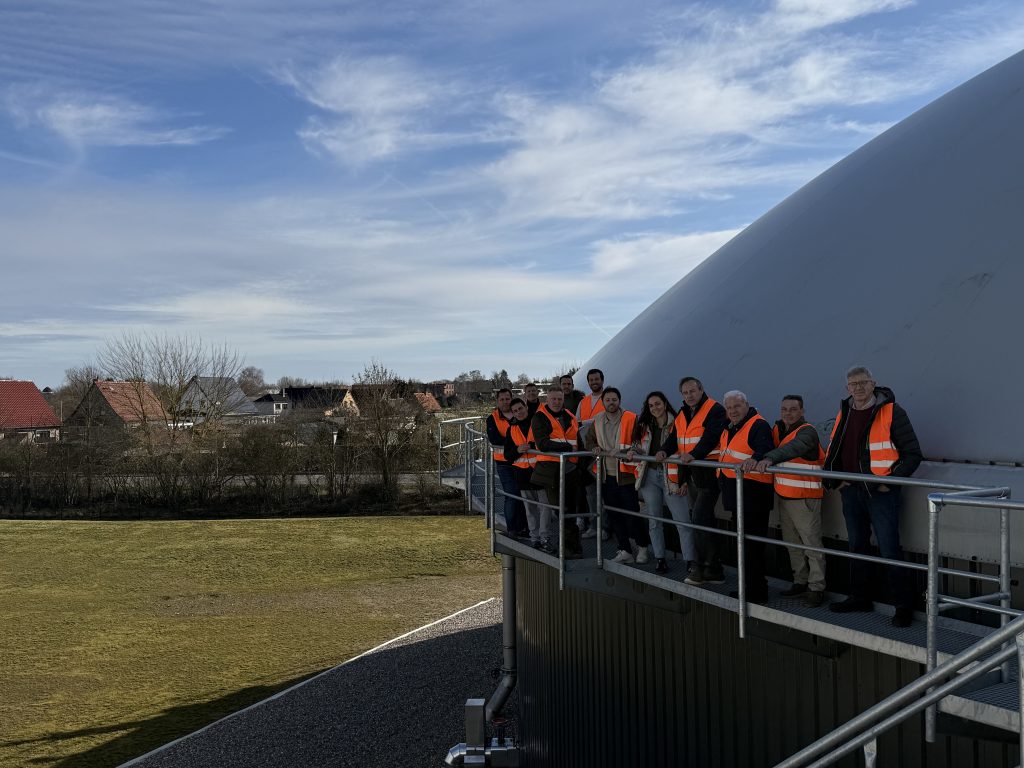
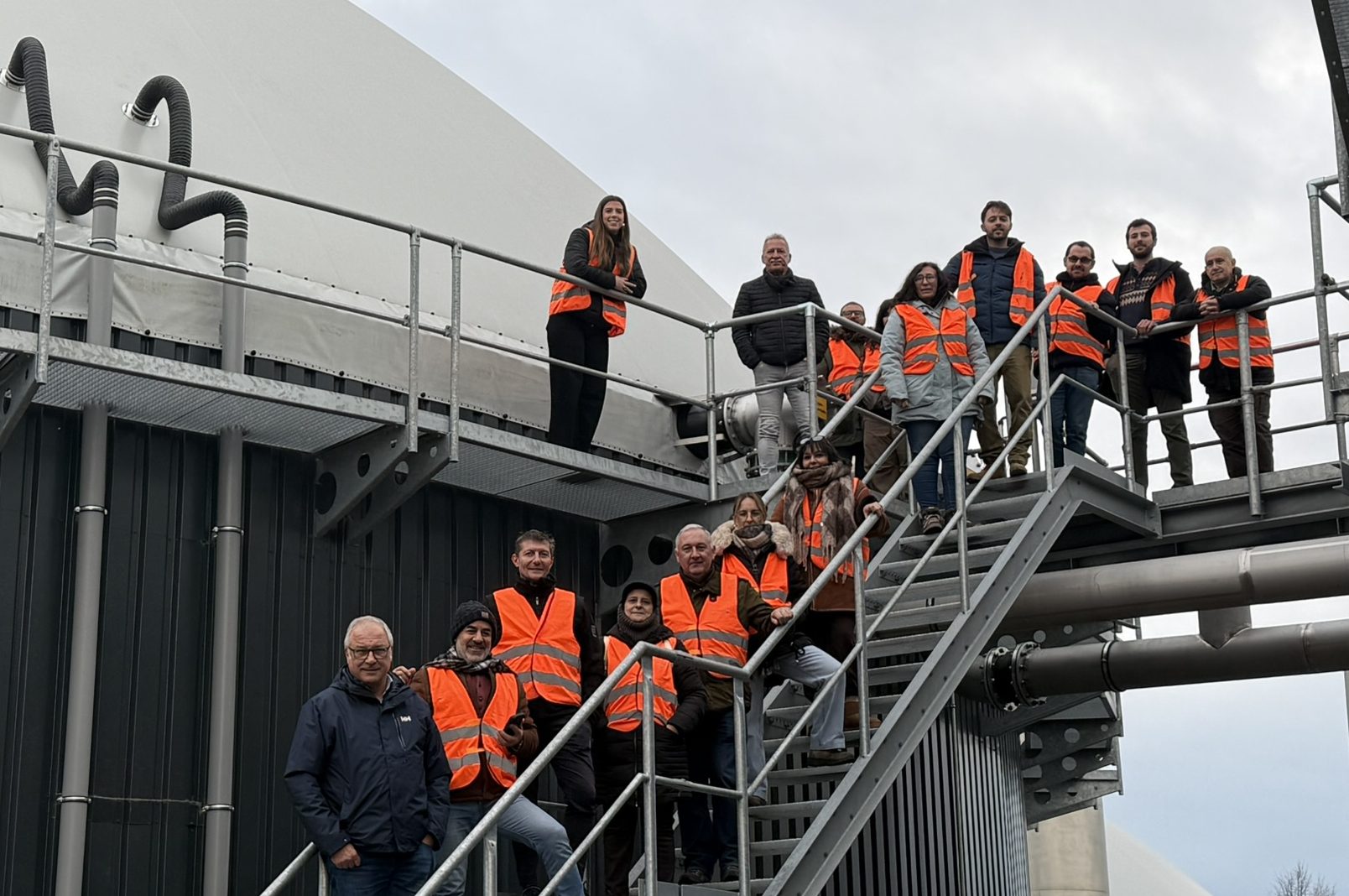
To this end, Biorig organized a trip to Friedland (Germany) with residents of Castellanos de Villiquera (Salamanca) to demonstrate how an operational biomethane plant works and how it integrates into the surrounding environment. The plant, owned by EnviTec Biogás, processes approximately 145,000 tons of exclusively agricultural and livestock waste (slurry, manure, chicken manure, and crop residues). Friedland has been in operation since 2007 and is located just 100 meters from residential areas, coexisting normally with a population of nearly 7,000 residents.

The model is similar to that of Biorig, which recycles raw materials from the primary sector: specifically, slurry, manure, and straw. In this way, the plants operated by the company provide a solution for improving the management of these local waste streams at existing farms; combined with the use of the latest technologies and best available techniques, this ensures that the operation of these facilities does not cause any inconvenience to the nearby population.

Myths and Realities of Biomethane

“Biomethane plants smell”

❌ MYTH: Storage and processing are contained and treated using biofilters. If managed properly, there are no odor emissions to the outside.

“Biomethane can decarbonize natural gas consumption”

✅ FACT: It is equivalent to natural gas and can be injected into the existing network, enabling the decarbonization of industry, transportation, and heating without the need for new infrastructure.

“The proximity to municipalities is problematic”

❌ MYTH: There are plants located just 100 meters from residential areas that are operating normally. The key lies in process management and control.

“The logistics of biomethane cause inconvenience”

❌ MYTH: Waste management already has its own logistics system, which is being replaced by that of biomethane plants. It organizes and optimizes existing flows in the agriculture and livestock sector.

“Plants always handle sludge or hazardous waste”

❌ MYTH: Facilities like Biorig’s process existing, locally sourced agricultural and livestock waste: specifically, slurry, manure, and straw.

“Digestate is liquid and has a strong odor”

❌ MYTH: After spending more than 60 days in the process at high temperatures, the digested material loses the gases that cause odors. It is stable, odorless, and resembles damp soil; in the case of Biorig, it is used as organic fertilizer.

“El biometano genera empleo rural”

✅ FACT: It creates direct and indirect jobs and boosts the local economy. The Friedland plant employs about 20 people in both direct and indirect roles, most of whom are residents of the municipality.

“Plants contaminate aquifers”

❌ MYTH: The facilities are sealed and monitored, allowing for greater control than the current system for managing agricultural and livestock waste. In addition, it regulates the flow of nutrients through waste collection and the delivery of certified organic fertilizers.

Know to Decide

The visit to Germany with residents of Castellanos de Villiquera (Salamanca) is part of Biorig’s strategy to promote understanding and transparency among its various stakeholders. Showcasing real, established, and fully operational examples helps put the company’s projects in Spain into context and explains, using data and proven experience, how these facilities work.

Biorig promotes a circular economy model based on the recovery of agricultural and livestock waste, the production of renewable gas, and the development of the regions where it operates. In regions such as Castile and León, where Biorig is implementing a development plan for ten biomethane plants, these types of outreach initiatives are key to explaining the role of such infrastructure in decarbonization, the efficient management of agricultural and livestock waste, and the strengthening of the primary sector.

Contact

We are close to you

Do you want to contact us, propose a project, learn about our services? You can reach us at any of our offices, by e-mail or telephone.

Biorig establishes the first Green Dialogue Roundtable in San Millán de los Caballeros (León)

It will have €250,000 to reinvest in environmental and sociocultural projects in the municipality.

Madrid. 11.03.26. San Millán de los Caballeros (León) has celebrated the establishment of the first Green Dialogue Table promoted by Biorig, coinciding with the start of construction work on the biomethane plant in the municipality. This new participatory body is set up as a permanent forum for meeting and monitoring between the company, the City Council, and the local social fabric, with the aim of ensuring transparency, channeling proposals, and strengthening the project’s social license. In addition to its role in dialogue and oversight, the Roundtable will manage a budget of €250,000 contributed by Biorig to finance environmental and sociocultural initiatives that will be defined and voted on in the municipality itself.

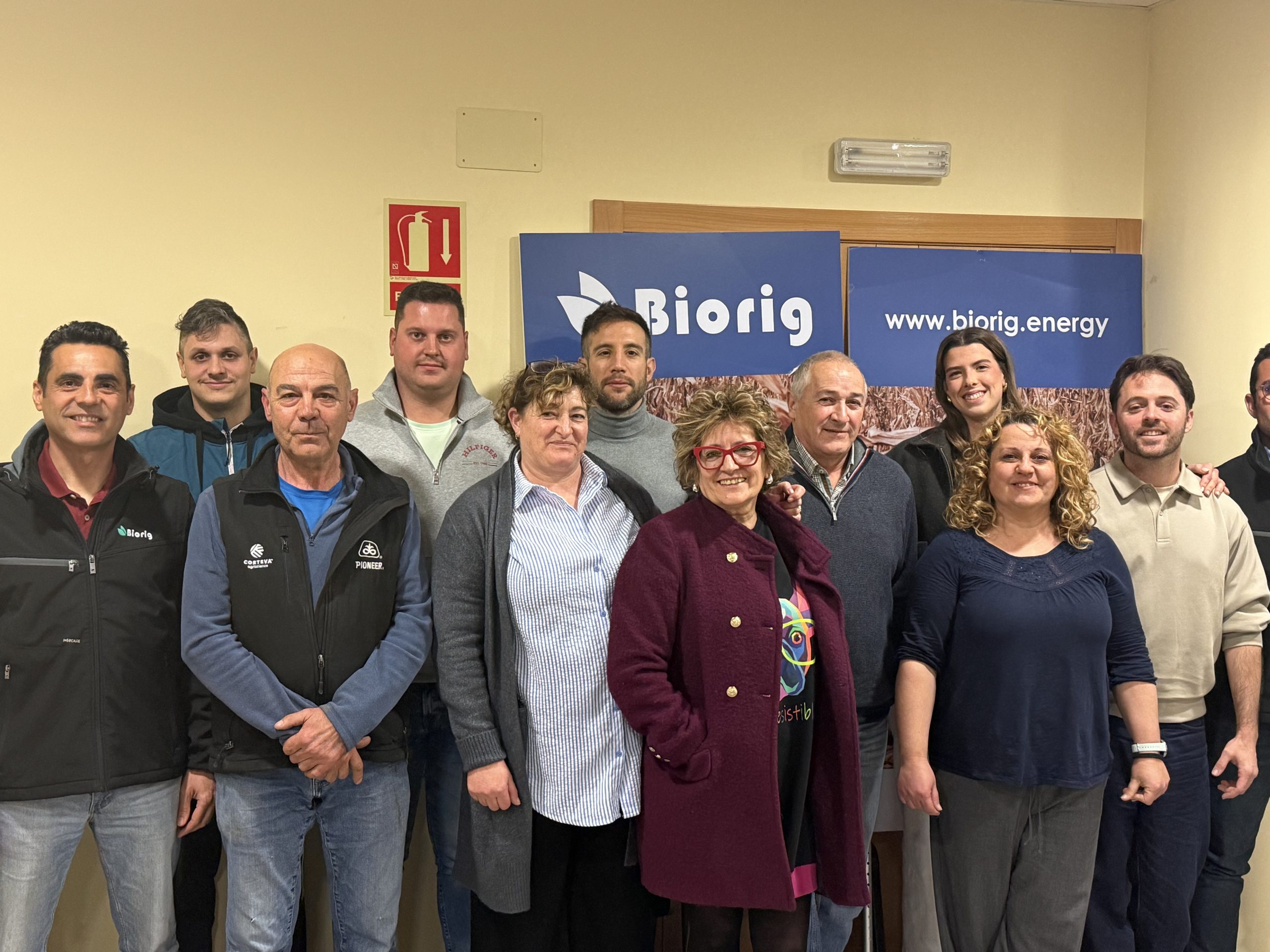
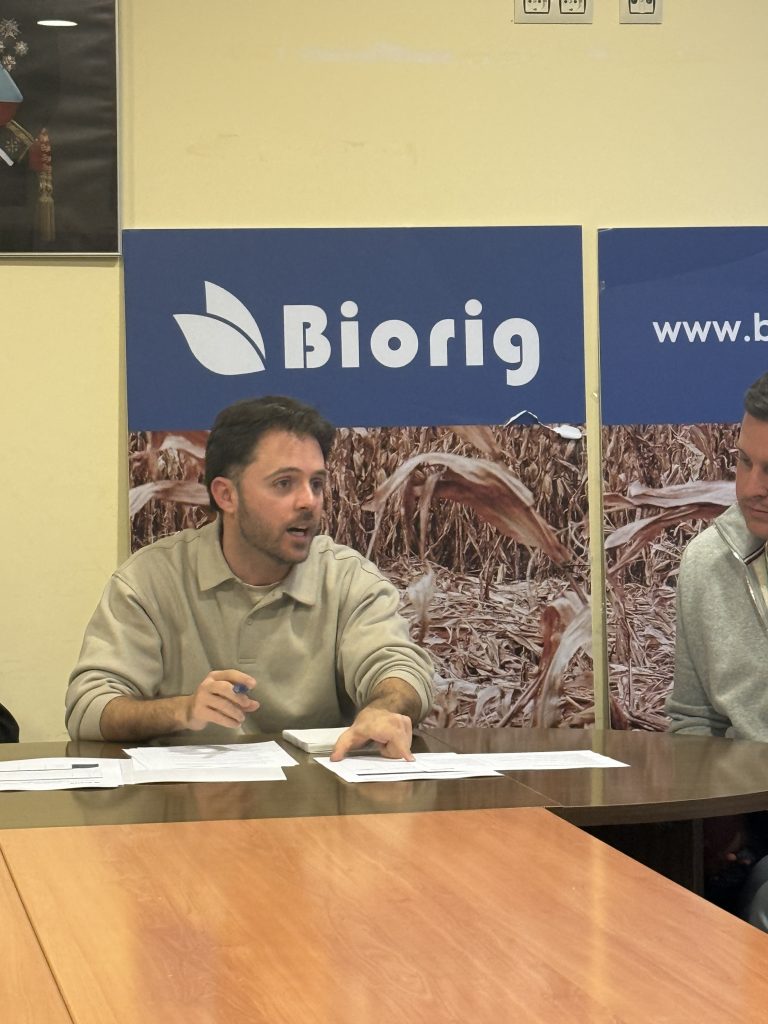
Fourteen representatives participated in the session, held at the end of February. Among the members of the Green Dialogue Committee were representatives from the City Council, the Villanoble Association of San Millán de los Caballeros, independent residents of the municipality, and professionals from Biorig’s EPC, Development, Logistics, and ESG departments. With this first meeting, a stable participatory body has been formally established that will accompany the project throughout its operational life.

A permanent space for informing, listening, and agreeing

The Green Dialogue Table is an instrument included in Biorig’s internal social management procedure. It is configured as a consultative, participatory, and monitoring body that has three main functions: to ensure transparency regarding the plant’s operations, to channel questions or proposals from neighbors, and to evaluate community reinvestment projects.

Helena Amigo, Project Manager at Biorig and member of the Committee, explained that the Committee will allow residents to convey any questions or ideas they may have about social projects, as well as any issues relating to the operation of the plant. “We believe that this Dialogue Committee is very important, and above all, we believe that being able to deal directly with residents on a regular basis sets us apart,” she said.

The Green Dialogue Table will be a group that meets at least twice a year and will keep minutes, follow up on agreements, and evaluate social, environmental, and economic impacts.

Representation and decision-making

One of the distinguishing features of this committee is its diverse composition. In addition to the City Council and the company, local associations and individual residents are also represented, ensuring diversity and balance.

The mayor of San Millán de los Caballeros, Alberto García, particularly appreciated this approach. The initiative, he said, “not only has the support of the City Council, but also of the cultural association and independent residents, who will have a say in the matter.” In his opinion, this formula broadens participation beyond traditional institutional channels and allows the entire municipality to be involved in decisions related to the project.

The previous experience of dialogue was also highlighted by representatives of the associative network. Luis Artero, member of the Villanoble Association and participant in the Round Table, emphasized the willingness shown by the company since the beginning of the project, stressing that technical explanations have been repeated as many times as necessary to resolve doubts.

This educational and outreach component is key to Biorig’s new industrial projects in rural areas, where accurate and accessible information is essential for the proper development of all phases of the biomethane plant life cycle.

250,000 euros for projects decided upon in the municipality

The Green Dialogue Committee will also be responsible for evaluating and selecting community reinvestment projects financed by Biorig. The Green Dialogue Committee of San Millán de los Caballeros will have a budget of €250,000 allocated by the company for disbursement throughout the plant’s useful life.

The initiatives funded allow funds to reach each resident directly through programs and proposals defined by the municipality itself.

Initiatives may be linked to sociocultural, educational, or environmental areas and must meet objective criteria for social impact, technical feasibility, and implementation capacity. Evaluation will be carried out using a transparent scoring system agreed upon by the members of the Committee.

The mayor emphasized that this model represents a different approach to the traditional one-off financial contribution, as it allows for the financing of activities that “directly reach each resident” through specific programs and proposals defined by the municipality itself.

Energy transition with territorial roots

MESADIALOGOVERDE

The establishment of the Committee in San Millán marks the beginning of a model that Biorig will gradually roll out across all its projects. A model that combines technical rigor, citizen participation, and a commitment to local economic development.

At a time when Solarig—Biorig’s parent company—is moving towards becoming a more industrial, competitive, and global energy company, instruments such as the Green Dialogue Table reinforce its commitment to an ecological transition that generates quality employment and economic revitalization in the region.

San Millán de los Caballeros thus becomes the first municipality to formally activate this structured dialogue space, integrating a permanent mechanism for information, monitoring, and shared decision-making from the outset of the project.

Contact

We are close to you

Do you want to contact us, propose a project, learn about our services? You can reach us at any of our offices, by e-mail or telephone.
From methane to biomethane: a solution to an urgent climate challenge

Methane is responsible for one-third of current global warmin

Madrid, 28-01-26. Every 28 January, International CO₂ Emissions Reduction Day is celebrated. However, there is still one major omission from the climate debate: methane. This gas has a global warming potential more than 80 times greater than CO₂ in the short term and, according to the United Nations, is responsible for around a third of current global warming. Taking action on methane is not only necessary: it is the fastest and most effective way to slow global warming in this critical decade.
The latest report, An Eye on Methane 2025, published by the United Nations Environment Programme, clearly defines it: reducing methane emissions is the climate’s ‘emergency brake’. Unlike CO₂, which remains in the atmosphere for centuries, methane has a much shorter atmospheric lifetime. This means that reducing its emissions generates almost immediate climate benefits. The report also highlights that mature, available and low-cost solutions exist to achieve this, especially in sectors where emissions are diffuse and avoidable.

A structural problem affecting the countryside

In this context, the agricultural and livestock sector is currently the main source of methane emissions both globally and in Spain, where there are nearly 270 million head of cattle. According to the latest data from the National Statistics Institute (INE), in 2024 the sector was the leading source of methane emissions, with 904,558.7 tonnes of methane released into the atmosphere. A large part of these emissions come from the uncontrolled decomposition of slurry, manure and other organic waste, which constantly release methane without any energy recovery and with a direct impact on the climate.

Direct emissions of methane into the atmosphere are 80 times more harmful than CO2

Farmers and livestock breeders operate under increasingly stringent regulations and with limited resources, making this a structural and systemic challenge for all societies. Every year, millions of tonnes of agricultural and livestock waste are generated, which must be managed in a context of greater environmental, regulatory and social pressure. Addressing this challenge requires collective, technologically mature and environmentally effective solutions.

From diffuse emission to energy resource

From a climate perspective, methane emissions associated with traditional waste management are a cause for alarm. From an energy perspective, they represent a key opportunity. The methane that is currently emitted unchecked is, in fact, renewable energy that is being lost.

This is where anaerobic digestion and biomethane establish themselves as an immediate and proven solution. Anaerobic digestion is a technology that has been developed in Europe for decades, based on a controlled biological process, in the absence of oxygen, which transforms organic waste into biogas — composed mainly of methane — and into a stabilised digested material.

Applied to slurry, manure and agricultural waste, this technology captures methane before it is emitted into the atmosphere, significantly reducing emissions associated with its management, minimising odours and transforming problematic waste into two key resources: renewable energy and organic fertiliser.

The Biorig model: immediate, local and circular management

At Biorig, we tackle this challenge from an integrated, local industrial perspective. We exclusively manage agricultural and livestock waste (slurry, manure and straw), avoiding prolonged storage and diffuse methane emissions. The captured biogas—with an approximate composition of 55% methane—is transformed into biomethane, a locally produced renewable gas that is injected into the network and made available to households and industries.

But the process does not end there. The resulting digestate undergoes additional treatments that allow it to be transformed into certified organic fertilisers in accordance with Regulation (EU) 2019/1009. These products are returned to the field with traceability, known composition and regulatory compliance, facilitating more orderly nutrient management and contributing to compliance with regulations on sustainable soil nutrition.

This closes the nutrient cycle, improves soil fertility, reduces emissions associated with the manufacture of conventional fertilisers and returns value to the land. It is an approach that is fully aligned with the principles of the circular economy and sustainable intensification.

A strategic part of the energy transition

Beyond waste management, biomethane plays a strategic role in the energy transition. It is a renewable, storable and manageable energy source, compatible with existing gas infrastructure and particularly relevant for decarbonising applications that are difficult to electrify, such as certain industrial processes and heavy transport.

Curbing methane emissions, optimising waste management in the primary sector and generating value in rural areas is not a promise for the future. It is a reality available today.

With mature technology, dialogue with the region and a stable regulatory framework that provides certainty, Spain has the opportunity to turn one of its main environmental challenges into a lever for sustainability, quality employment and rural development. Taking action on methane means taking action on climate change. And doing so now makes all the difference.

Contact

We are close to you

Do you want to contact us, propose a project, learn about our services? You can reach us at any of our offices, by e-mail or telephone.