A European green gas platform

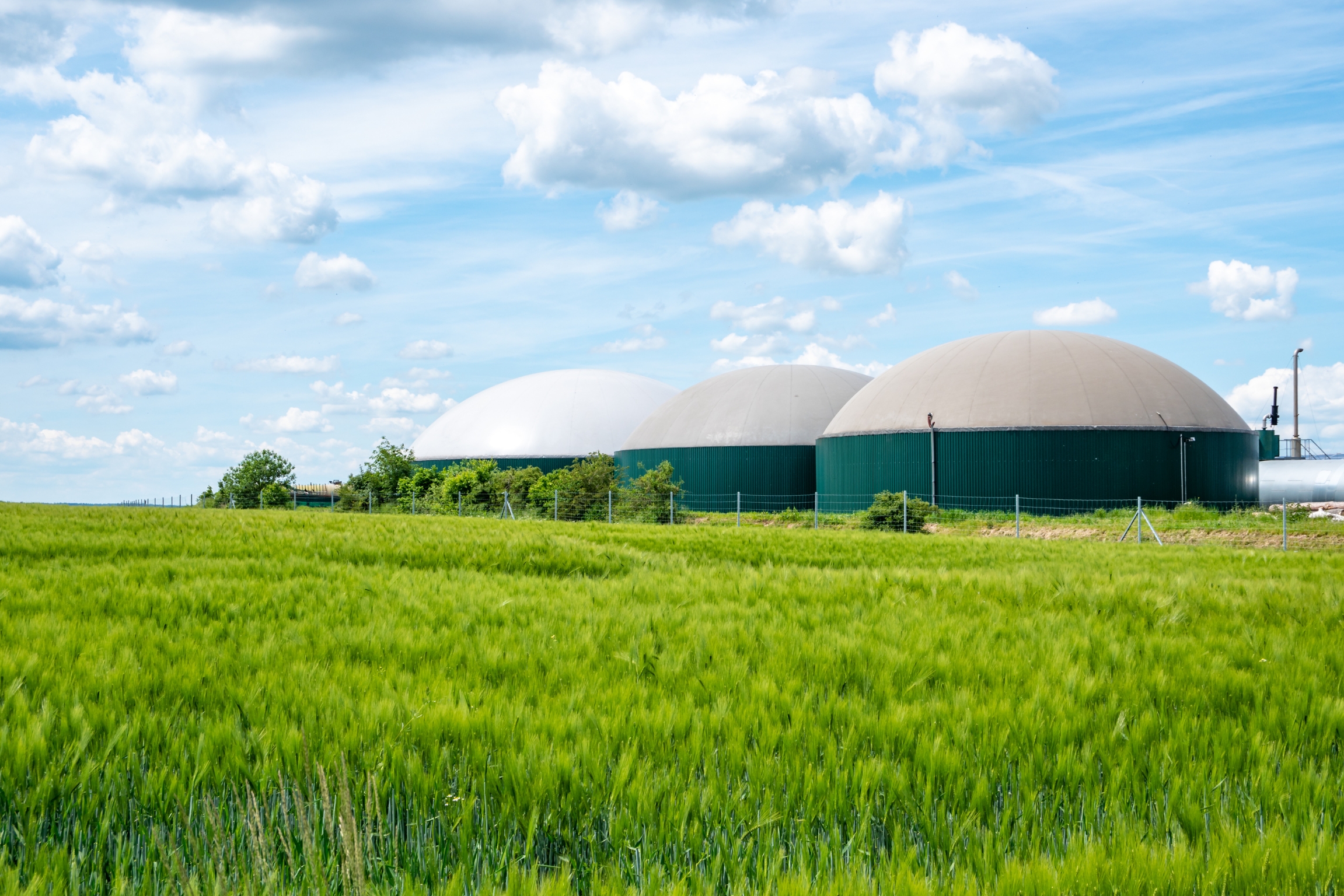
Madrid, 4 August 2026. Biorig is developing a European biomethane infrastructure platform aimed at transforming agricultural and livestock waste into renewable energy, bioCO₂ and organic fertilisers. The company handles the development, construction and operation of the facilities, from identifying sites to liaising with farmers, livestock breeders, local authorities and local businesses.
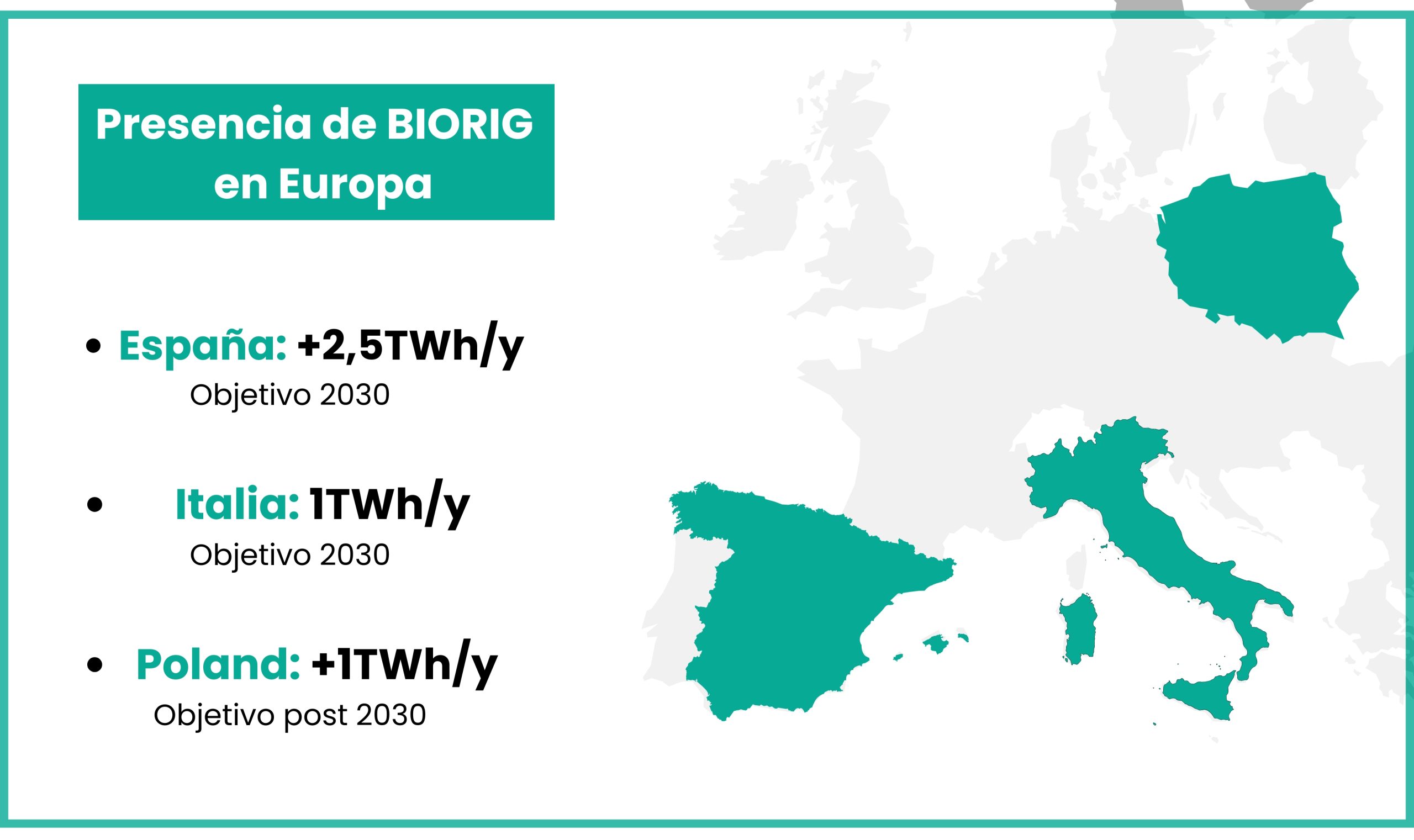
Spain is Biorig’s main market and the centre of its operations. Building on this foundation, the company has begun its international expansion into Italy and Poland, two countries with different but complementary conditions: the Italian market is more developed and has industrial experience, whilst the Polish market offers high growth potential.
Overall, Biorig has a portfolio of more than 60 projects in Spain, Italy and Poland, with an expected annual production of around 5 TWh of biomethane. This expansion forms part of Solarig’s transformation into a more industrial, competitive and global energy group, committed to the green transition, quality employment and the economic development of the regions.
Main markets
Biorig is expanding across Europe through a strategy tailored to each country. In Spain, Italy and Poland, the company is driving forward projects with local ties, aimed at recovering organic waste, producing renewable energy and generating local economic activity.
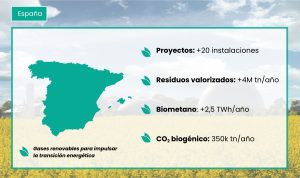
Spain is the hub of Biorig’s operations and the country in which the company has its most extensive portfolio. Its potential in the agricultural and livestock sectors enables the development of large-scale projects directly linked to the rural economy.
Context: high availability of agricultural and livestock waste and a biomethane market that is still underdeveloped.
Biorig’s plan: to consolidate its extensive project portfolio and make Spain its main production hub.
Activity: developing its own projects from the initial stages, in collaboration with farmers, livestock farmers, local authorities and local businesses.
Plant model: industrial-scale facilities, located close to the source of the waste and fuelled exclusively by agricultural and livestock raw materials.
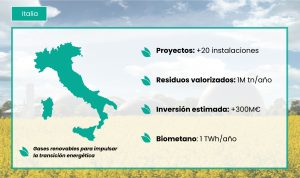
Italy enables Biorig to grow in a market characterised by industrial expertise and a specialised supply chain. The company also benefits from the presence and expertise built up by Solarig, Biorig’s parent company, over more than 15 years in the country.
Context: a more mature biomethane market, with specialist suppliers and support schemes for renewable gases.
Biorig’s plan: to accelerate its growth by capitalising on Solarig’s established presence and expertise.
Activity: combining our own projects with the incorporation of local initiatives at advanced stages of development.
Plant model: smaller-scale, more widely distributed facilities, tailored to the local availability of agricultural and livestock waste and agri-food by-products.
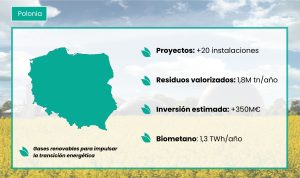
Poland offers an opportunity for long-term growth due to the scale of its agriculture and livestock sector and its need to diversify its energy supply. Biorig aims to build a portfolio there from an early stage of market development.
Context: significant potential for agriculture and livestock farming, coupled with the need to reduce dependence on imported gas.
Biorig’s plan: to build a significant portfolio in one of the European markets with the greatest growth potential.
Activity: combining new projects with the integration of established local initiatives, in collaboration with local developers and partners.
Plant model: facilities tailored to the resources of each agricultural region, designed to make use of local waste and produce biomethane for the Polish market.
Agricultural and livestock raw materials for a circular model
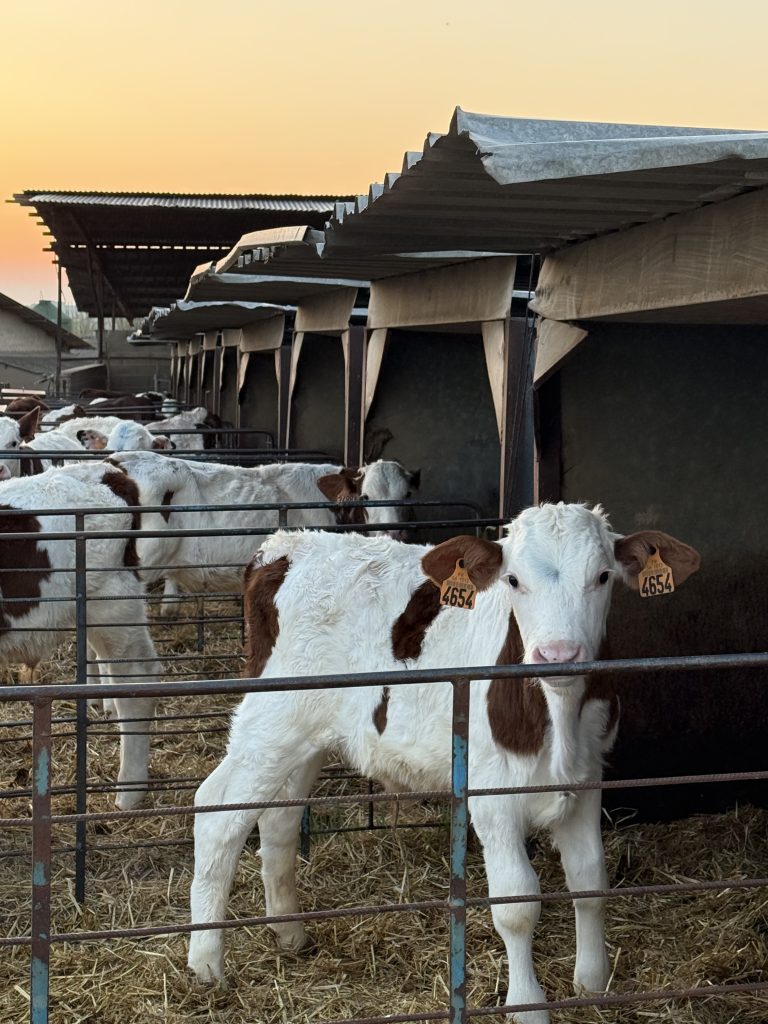
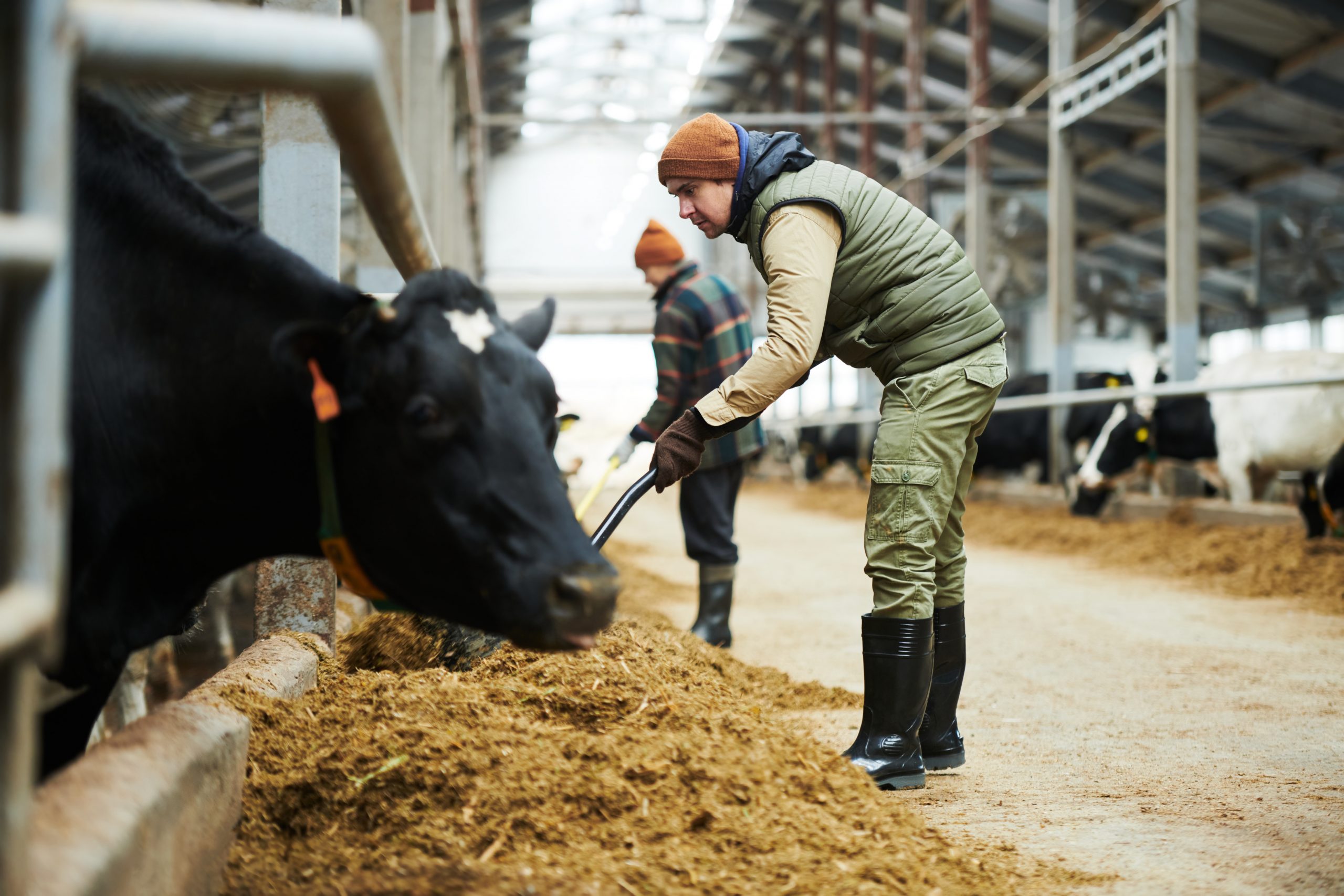
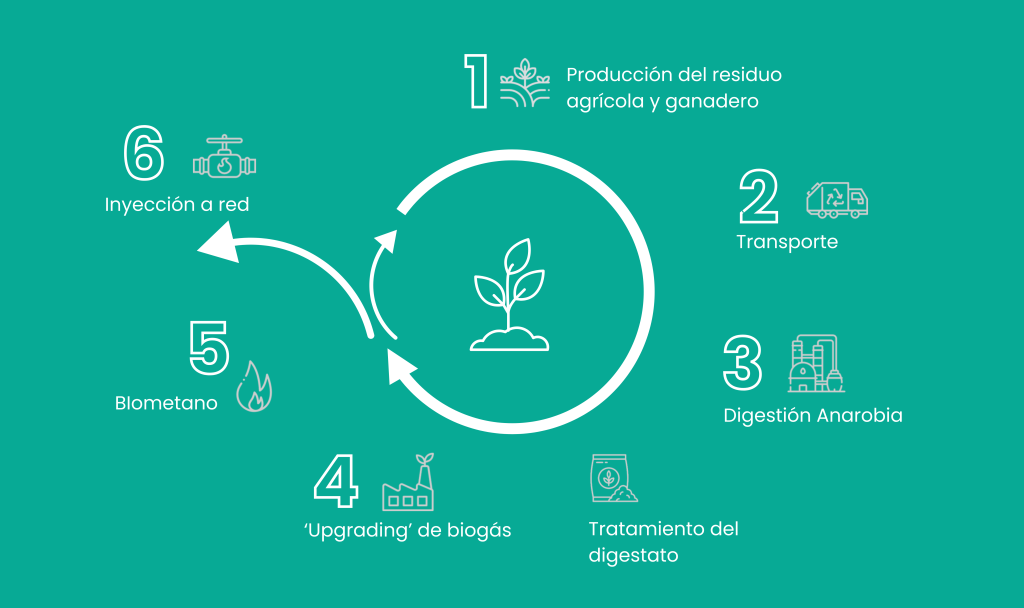
Biorig exclusively recycles by-products generated by the primary sector to produce renewable gases. This model enables waste to be recycled to produce energy and digestate with significant agronomic potential, which can be used to fertilise land.
As such, Biorig’s plants represent key infrastructure for promoting the circular economy in rural areas, as well as a source of investment and economic development in these regions.
Other blog posts

Biorig impulsa la producción de biometano en Italia con una inversión de más de €300M hasta 2030

Biorig refuerza su liderazgo en la producción de biometano en Europa con el despliegue de 20 plantas en Polonia

El biometano en Europa: una industria de éxito de Dinamarca a Italia


We are close to you
Do you want to contact us, propose a project, learn about our services? You can reach us at any of our offices, by e-mail or telephone.