Biorig to Build a Biomethane Plant in León with a Capacity of 90 GWh/year

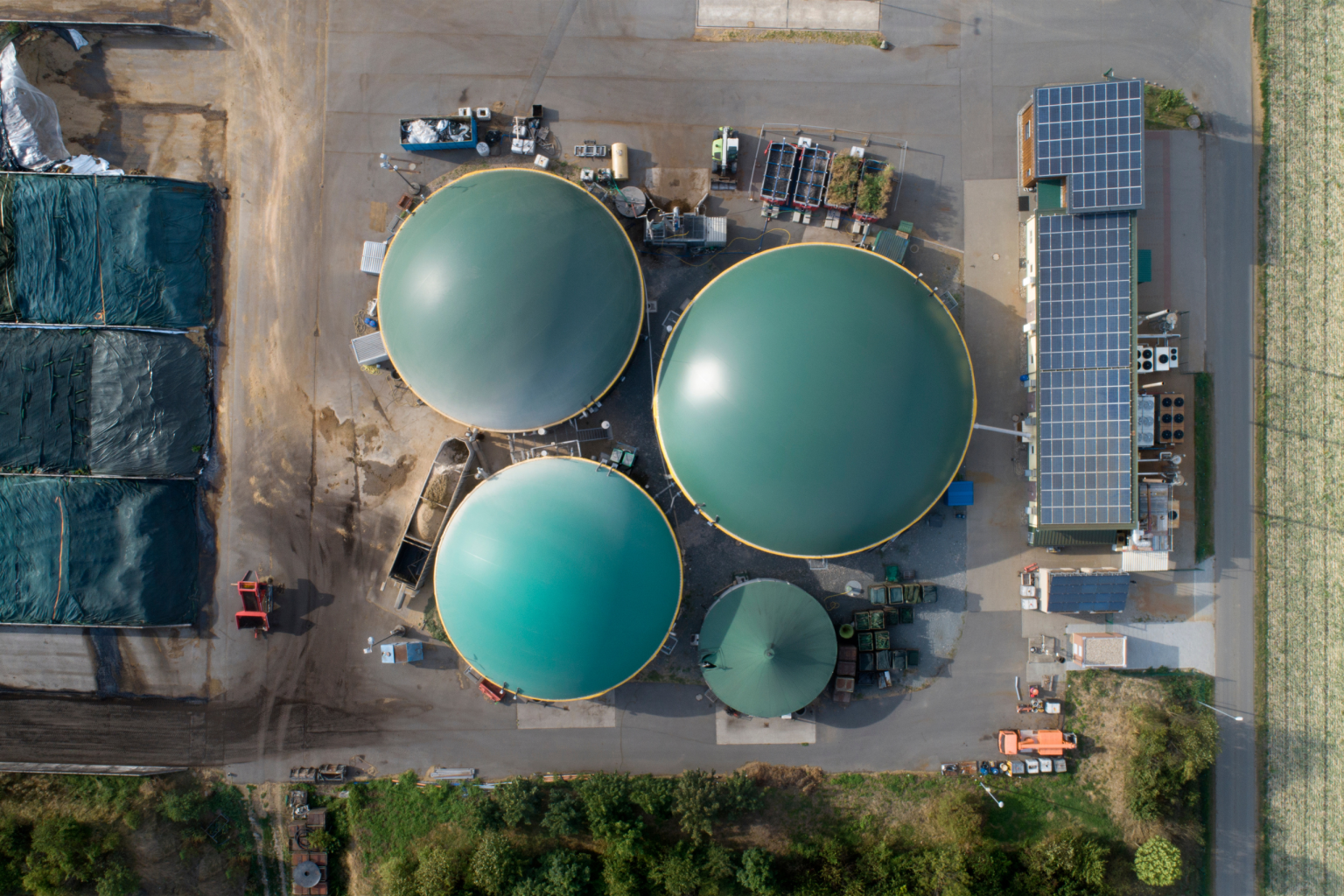
Biorig will build and operate a new facility in the municipality of San Millán de los Caballeros, in the province of León, with an annual capacity of 90 GWh — equivalent to the yearly gas consumption of 13,000 households. With an estimated investment of €26 million, the project will create over 35 jobs and is expected to become operational by the end of 2025.

The plant will recover local agricultural and livestock waste to produce renewable gas, helping to avoid the emission of more than 30,000 tonnes of CO₂ each year. It will also incorporate cutting-edge technology to capture 10,000 tonnes of biogenic CO₂ annually, and will generate by-products that will support the sustainable fertilisation of farmland in the region.

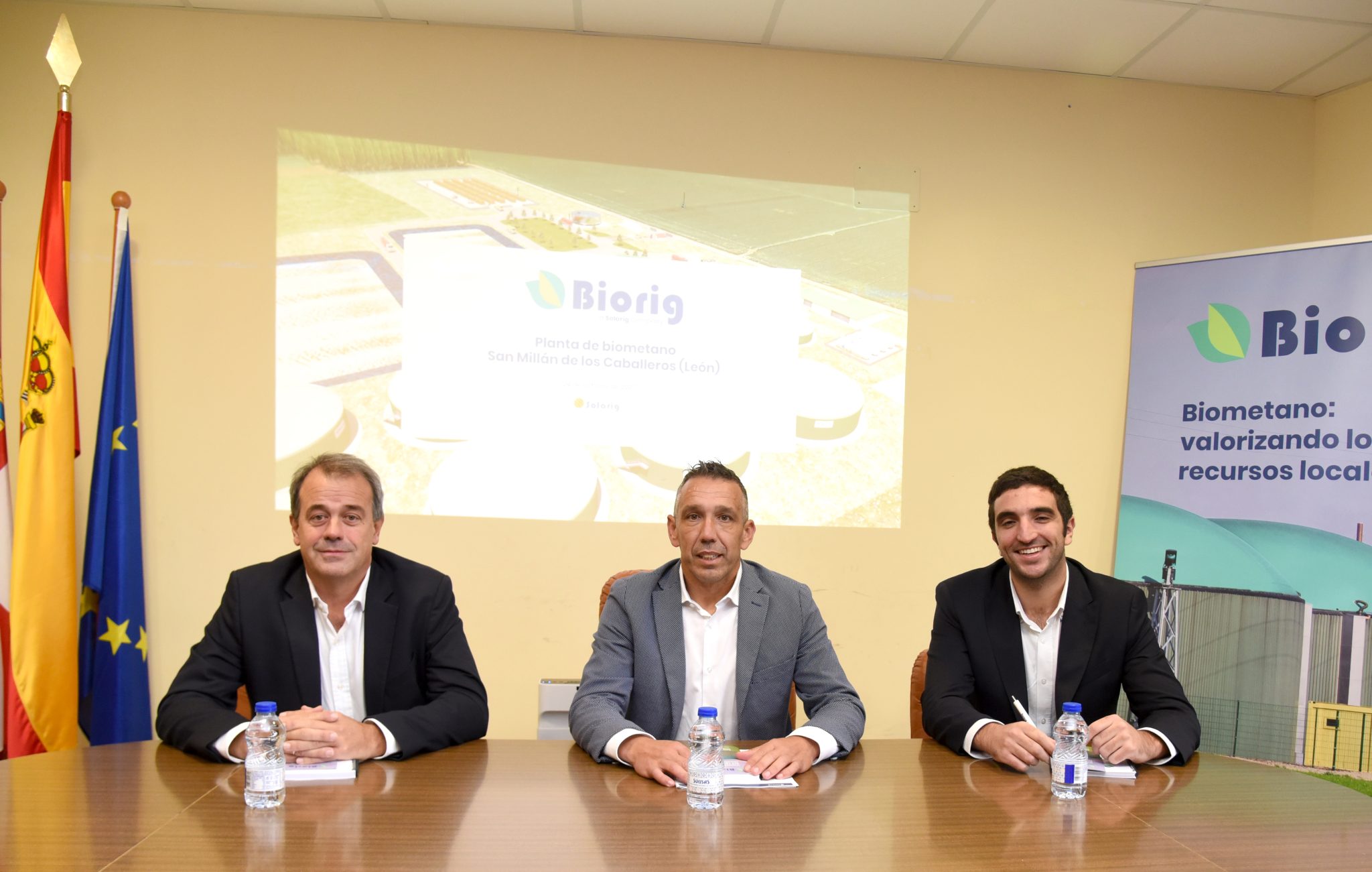
Biorig has announced the construction and operation of a new biomethane production plant near the municipality of San Millán de los Caballeros, León. The facility will inject 90 GWh of clean, renewable energy per year into the natural gas transmission network — equivalent to the annual gas consumption of 13,000 households. The project, with an estimated investment of €26 million, will create over 35 jobs and was officially presented at San Millán de los Caballeros Town Hall in an event presided over by the town’s mayor, José Alberto García Rodríguez; alongside Biorig’s General Manager, Manuel Alonso.
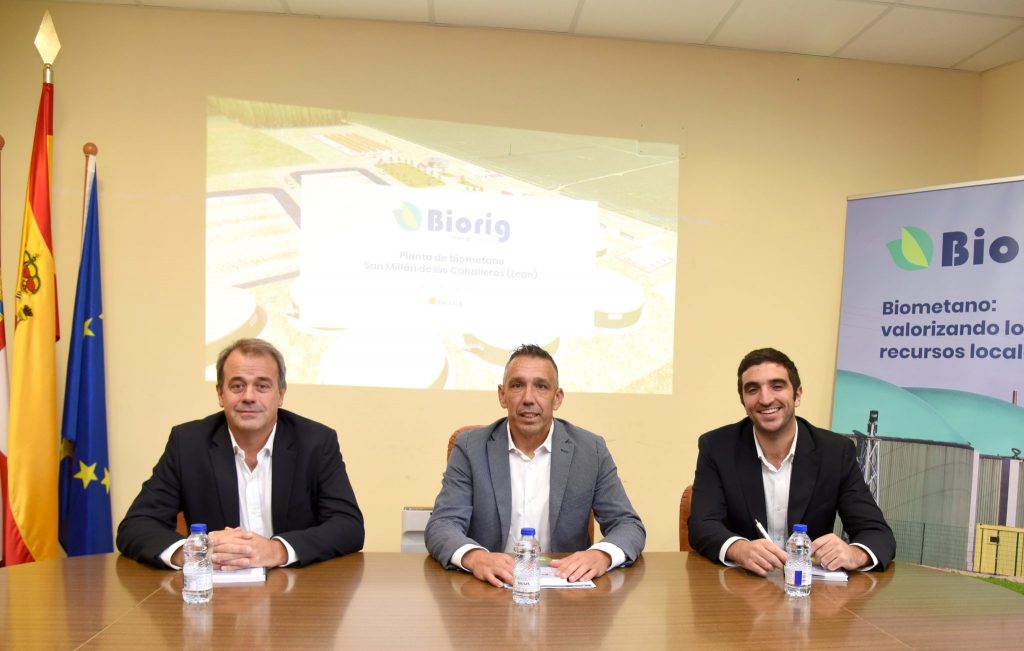
This new biomethane production plant will enable the recovery of more than 150,000 tonnes per year of agricultural and livestock waste from the region, which will prevent the emission of 30,000 tonnes of CO₂ into the atmosphere. It will feature state-of-the-art technology to capture around 10,000 tonnes per year of biogenic CO₂, an essential element for the production of green methanol and SAF (sustainable aviation fuels).

The facility will produce by-products of high agronomic value for local farmers, thus helping to comply with sustainable fertilisation plans for agricultural soils. In addition, an internal system for water reuse and rainwater harvesting will be installed, allowing for zero water consumption, while also preventing the discharge of any type of wastewater.

“It will be a 100% sustainable, zero-emission facility, respectful of the environment and of the rural and local surroundings, and it will comply with the strictest safety standards. This is the first of the 20 plants we plan to develop in Spain. This project will help give a second life to the region’s waste by transforming it into green energy. Biomethane is a renewable gas that constitutes a fundamental pillar for advancing towards the decarbonisation targets of both Spain and the European Union,”said Manuel Alonso, General Manager of Biorig.

For his part, José Alberto García Rodríguez , Mayor of the Municipality of San Millán de los Caballeros, explained: “This biomethane plant will offer a sustainable and efficient alternative for the management of the region’s agricultural and livestock waste, as well as providing a local economic benefit, boosting job creation and the growth of key sectors such as agriculture and livestock. From the town council, we promote projects and initiatives that encourage population settlement both in the municipality and in the surrounding region and that combat the depopulation suffered by the rural world. This facility is an example of that and will help position the municipality of San Millán de los Caballeros as a benchmark in sustainability in the province of León.”

Solarig, a benchmark in the energy transition

Biorig is a part ofSolarig, a vertically integrated international developer of renewable projects with solid experience in the development, construction, financial structuring, and operation of large-scale renewable energy facilities. With headquarters in Madrid, it operates in Europe, Central and South America, Japan, and Australia. With more than 18 years of experience and more than 1,000 professionals, Solarig has a renewable energy project portfolio exceeding 14 GW worldwide.

Solarig is committed to promoting the energy transition towards global decarbonisation and helps achieve energy independence in the markets where it operates. Solarig’s purpose is to contribute to the sustainable development of society through the rapid deployment of renewable energy and to generate a positive impact on its surroundings through its operations and its relationships with shareholders, clients, collaborators, and suppliers.

Biorig takes part in the 103rd edition of the Agricultural Machinery Fair in Valencia de Don Juan (León).

Biorig develops 10 biomethane production facilities in Castilla y León

Biorig has taken part in the 103rd edition of the Agricultural Machinery Fair in Valencia de Don Juan (León). This is the largest multi-sector trade fair in Castilla y León, featuring a total of 150 exhibitors, one of which was Biorig. The event is a key meeting point for professionals in the primary sector and serves as a central hub for the agricultural and livestock sector in the region. During the fair, technical sessions and presentations were held on innovation and new technologies within the sector.

Biorig professionals presented to visitors the benefits of biomethane for the agricultural and livestock industry, as well as its many applications as a sustainable alternative to natural gas. Biomethane contributes to waste management, the reduction of greenhouse gas emissions, and the production of a renewable fuel that can be stored and transported using existing infrastructure. It also supports the circular economy by transforming organic waste into sustainable energy and fertilisers.

Biorig is developing 10 biomethane production facilities in Castilla y León, which will prevent the emission of 300,000 tonnes of CO₂ and create around 350 jobs (both direct and indirect). These infrastructures are of strategic importance for the sustainable rural development of the region and are essential for the long-term management and recovery of waste in the territory.

Biorig will invest 250 million euros to build 10 biomethane production facilities in Castilla y León.

The group of facilities will produce biomethane equivalent to 20% of the annual gas consumption of households in Castilla y León. The plants, which will be built in rural areas of the provinces of León, Zamora, Salamanca, Valladolid, Burgos, and Soria, are expected to be operational by the end of 2025.

These infrastructures have a strategic nature for the sustainable rural development of the region, boosting wealth and population retention by creating more than 350 local jobs. The 10 plants will enable the reuse of more than one and a half million tonnes of agricultural and livestock waste, producing a renewable gas that will avoid the annual emission of 300,000 tonnes of CO₂ into the atmosphere.

Organic-based fertilisers will also be produced, and state-of-the-art technology will be incorporated to capture biogenic CO₂ and achieve zero discharge in operations.

Biorig, the biomethane division of Solarig, has announced an investment of 250 million euros for the development, construction and operation of 10 biomethane production facilities in the region of Castilla y León.

The group of plants will produce an amount of biomethane equivalent to the total annual gas consumption of 20% of households in the autonomous community. The new facilities will be located in rural areas of municipalities in the provinces of León, Zamora, Salamanca, Valladolid, Burgos and Soria, generating a significant positive impact on the rural and sustainable development of the region. Likewise, this project will create more than 350 jobs and will allow the recovery of more than one and a half million tonnes per year of agricultural and livestock waste, which will prevent the emission of 300,000 tonnes of CO₂ into the atmosphere. The facilities, whose development has already begun, are expected to be operational by the end of 2025. The development project of the first of these facilities was presented last October in San Millán de los Caballeros (León).

“Castilla y León has the greatest potential for biomethane generation in Spain. These facilities, in addition to being new sources of green energy production, constitute essential infrastructures for the correct management and long-term recovery of waste in the region. Fifteen years ago, we invested in and built the largest solar energy plant in Castilla y León, in the municipalities of Frechilla de Almazán and Coscurita (Soria), an infrastructure that continues to produce renewable energy steadily to this day. Today we announce the development of 10 plants that represent our commitment to biomethane in this autonomous community,” explained Miguel Ángel Calleja, President of Solarig. Miguel Ángel Calleja, presidente de Solarig.

“We are already developing the 10 facilities that will all use agricultural and livestock waste, manure, slurry and agricultural residues as their main energy source. They will be 100% sustainable, zero-emission plants, respectful of the rural environment and fully compliant with the most rigorous environmental and sustainable soil fertilisation regulations. Our growth plan in Castilla y León is a differential factor for its energy development and a driver of growth for strategic sectors such as agriculture and livestock,” , said Manuel Alonso, General Manager of Biorig.

Zero Discharge Technology

The 10 facilities will feature state-of-the-art technology to ensure zero discharge: from the capture of biogenic CO₂ to the reuse of rainwater, enabling zero water consumption and guaranteeing zero discharge. In addition, the by-products or digestates (the waste remaining after the energy production process) will be treated to be converted into organic fertilisers. In this way, dependence on chemical fertilisers will be reduced, contributing to more sustainable fertilisation of agricultural soils in the region.

BIORIG, circular economy and energy sustainability

Biorig is the biomethane production division of Solarig. It was created with the aim of providing innovative solutions in the field of renewable gases and CO₂ capture. CO2. Its activity focuses on the management of organic waste for its transformation into renewable gases and the promotion of project development within the framework of the energy transition and the circular economy.

Solarig, sustainable energy solutions for society

Solarig develops the infrastructure needed for the energy transition, and builds, operates, and financially structures large-scale renewable energy projects. It currently manages more than 10 GW of photovoltaic assets and has a portfolio of more than 20 GW in 16 countries. The company promotes global decarbonisation in the regions where it operates through renewable energy and green gas solutions. Headquartered in Madrid, Spain, it has a strong presence in Europe, Central and South America, Japan and Australia. Committed to innovation and sustainability, Solarig has a team of more than 1,000 professionals.

Solarig works towards the energy transition and global decarbonisation and contributes to achieving the highest levels of energy independence in the markets where it operates. Solarig’s purpose is to play a key role in the sustainable progress of society, leading the transition towards cleaner energy sources. The company aspires to generate a positive impact on the environment through its operations and its relationships with public authorities, shareholders, clients, professionals, partners and suppliers.

Biorig Takes Part in “Biogas: An Alternative to Slurry in the Circular Economy”

Biorig has recently announced a €250 million investment in the construction of 10 biomethane plants in Castilla y León.

Manuel Alonso, director of Biorig — the biomethane division of Solarig — participated last Friday in a roundtable discussion organized by the Provincial Association of Pig Farmers of Soria (Aporso). The event also featured representatives from other companies in the sector, farmers, and members of the Castilla y León Regional Government.

The discussion addressed institutional support and the European Union’s push for decarbonization plans, the economic and environmental challenge of transforming slurry into an energy resource, the management of livestock by-products, perspectives from other countries, and projects currently underway in the province of Soria.

Representing Biorig, Manuel Alonso explained the differences between biomethane and biogas, the benefits of biomethane for the agricultural and livestock sector, the variety of waste materials that can be used in its production, the energy potential of slurry, and the necessary evaluations, measurements, and social agreements required to establish these plants.

Biorig has recently announced a €250 million investment for the construction of 10 biomethane plants in Castilla y León. Collectively, these plants will produce the equivalent of 20% of the total annual gas consumption of households in the region. The facilities will be located in rural areas across the provinces of León, Zamora, Salamanca, Valladolid, Burgos, and Soria.

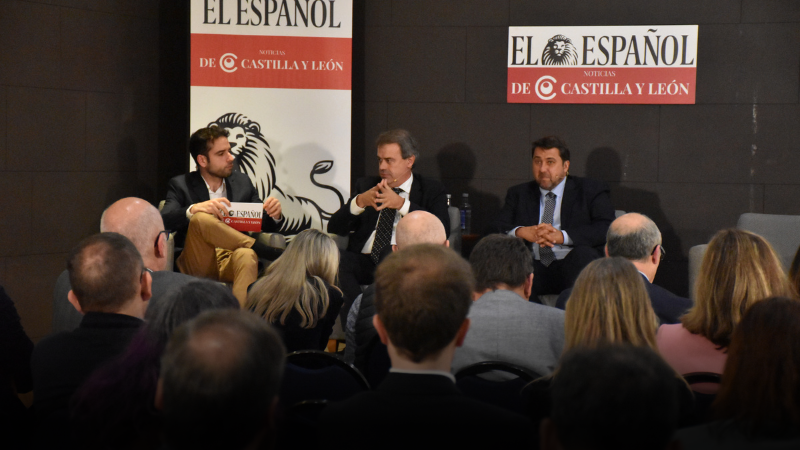
Biorig is part of El Español’s Energy Forum

In it, representatives of leading renewable energy companies in Spain have analysed current and future strategies to face the challenges of the energy transition, as well as the strengths and resources available to the community.

The event was opened by Juan Carlos Suárez-Quiñones, Minister for the Environment, Housing and Territorial Planning of the Regional Government of Castilla y León, and also included the participation of José Manuel Jiménez, General Director of Infrastructure and Environmental Sustainability of the Regional Government of Castilla y León and CEO of SOMACYL.

Manuel Alonso, General Manager of Biorig, took part in the round table “Development of biomethane in Castilla y León: Power in Europe and environmental solution”, together with Joan Batalla, President of the Spanish Gas Association (SEDIGAS). During the session, he presented Biorig’s Castilla y León Plan, with 10 biomethane production facilities and a capacity of nearly 1 TWh of renewable gas. He also highlighted the benefits and opportunities this will bring to the region.

“Castilla y León has a potential of around 37–38 terawatt-hours, approximately 23% of the national potential, and nearly 10 points ahead of the second-ranked region, which is Andalusia. Moreover, this potential is divided into two areas: a short-term potential, based on agriculture, livestock farming or municipal solid waste, amounting to around 11–12 terawatt-hours and which could be addressed immediately; and a medium-term potential, based on intermediate crops, where much work remains to be done, and which would amount to 18–19 terawatt-hours,” said Manuel Alonso.

“The 10 plants Biorig is promoting in Castilla y León focus solely on agricultural and livestock waste, manure, slurry and agricultural residues, and the aim is to be located where the waste is, near the gas pipelines in the region. There is much talk about organic fertilisers and biogenic CO₂. In all our plants, we have a biogenic CO₂ capture system, an essential element, along with renewable hydrogen, for the production of sustainable fuels such as SAF or green methanol,” Manuel concluded.

BIORIG, circular economy and energy sustainability

Biorig is the biomethane production division of Solarig. It was created with the aim of providing innovative solutions in the field of renewable gases and CO₂ capture. CO2. Its activity focuses on the management of organic waste for its transformation into renewable gases and the promotion of project development within the framework of the energy transition and the circular economy.

Full article in El Español

Biorig takes part in the “Energy Transition and Circular Economy” forum organised by KREAB.

Biorig has taken part in the event “Energy Transition and Circular Economy” organised by the public affairs consultancy KREAB. The round table titled “Biomethane: The Real Opportunity of the Circular Economy” brought together experts from various companies to discuss the potential of biomethane in Spain, its advantages, as well as regulatory and infrastructure aspects.

The session, moderated by Miguel Alba, Partner of Communication at Kreab, featured the participation of Manuel Alonso, General Manager of Biorig; Joan Batalla,President of Sedigas – Spanish Gas Association; Felipe Requejo, General Manager of Nortegas; Alfonso Pascual, PhD, ESG and New Business Director at ENGIE Spain; and representatives from Cepsa.

Manuel Alonso, General Manager of Biorig, explained that “biomethane is a renewable gas that is essential to accelerating the energy transition. It contributes to sustainable development, the proper recovery of agricultural and livestock waste, economic revitalisation, and the creation of green jobs.”
“At Biorig, we are driving solutions for the production of organic fertilisers from agricultural and livestock waste, as well as for the capture and use of biogenic CO₂, an essential element in the production of sustainable fuels.”

Biorig is currently developing 10 biomethane facilities in Castilla y León, and has a portfolio of over 20 projects across Spain. Biomethane is a renewable fuel that can be injected into the gas grid. It is obtained through the purification of biogas, which is itself produced via anaerobic digestion of organic waste. It is considered an essential renewable source for advancing the development of energy decarbonisation.

BIORIG, circular economy and energy sustainability

Biorig is the biomethane production division of Solarig. It was created with the aim of providing innovative solutions in the field of renewable gases and CO₂ capture. CO2. Its activity focuses on the management of organic waste for its transformation into renewable gases and the promotion of project development within the framework of the energy transition and the circular economy.

Biorig organises a visit to various biomethane facilities in Germany.

Biorig continues its efforts to raise awareness about the operation of biogas and biomethane plants and their contribution to the energy transition.

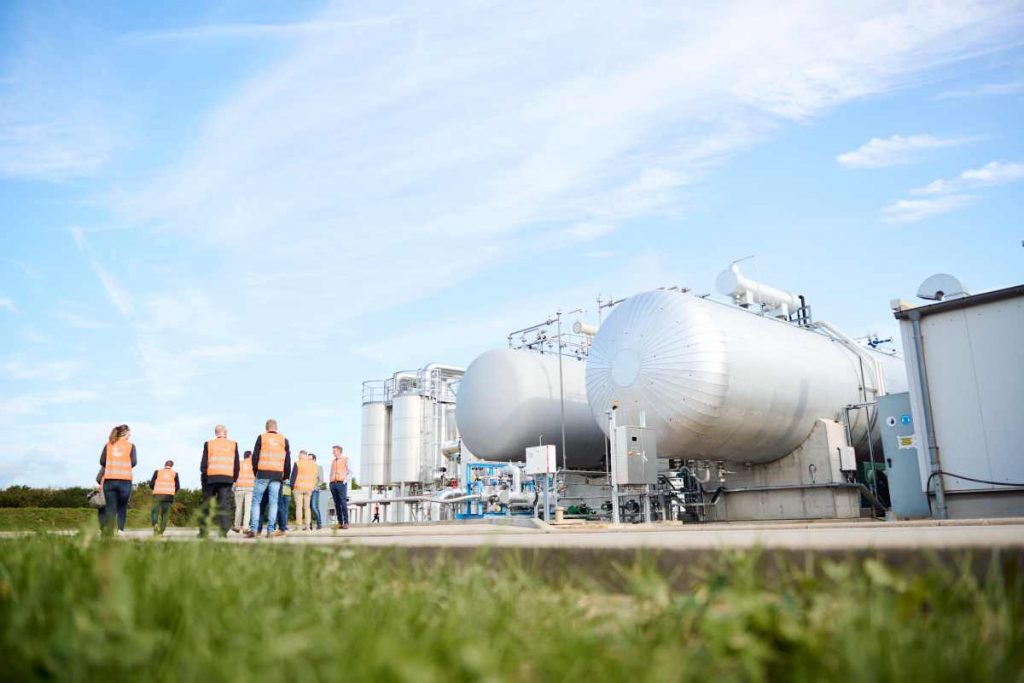
Biorig has recently organised a visit to Germany to offer first-hand insight into the operation of biogas and biomethane plants, the different types of technologies, products and by-products derived from the transformation of agricultural and livestock waste into renewable gases, their surroundings and locations, as well as the benefits they bring to rural areas.

This visit was carried out with various stakeholders from Zamora, specifically from the municipality of El Cubo de Tierra del Vino, where Biorig is currently developing a biomethane production plant.

Germany is one of the leading European countries in the development of biogas and biomethane, and currently has nearly 11,000 plants. Other leading countries in renewable gases include France and Denmark, which are already promoting the use of this technology for the decarbonisation of their economies.

Visit to the Güstrow, Bützow and Friedland facilities

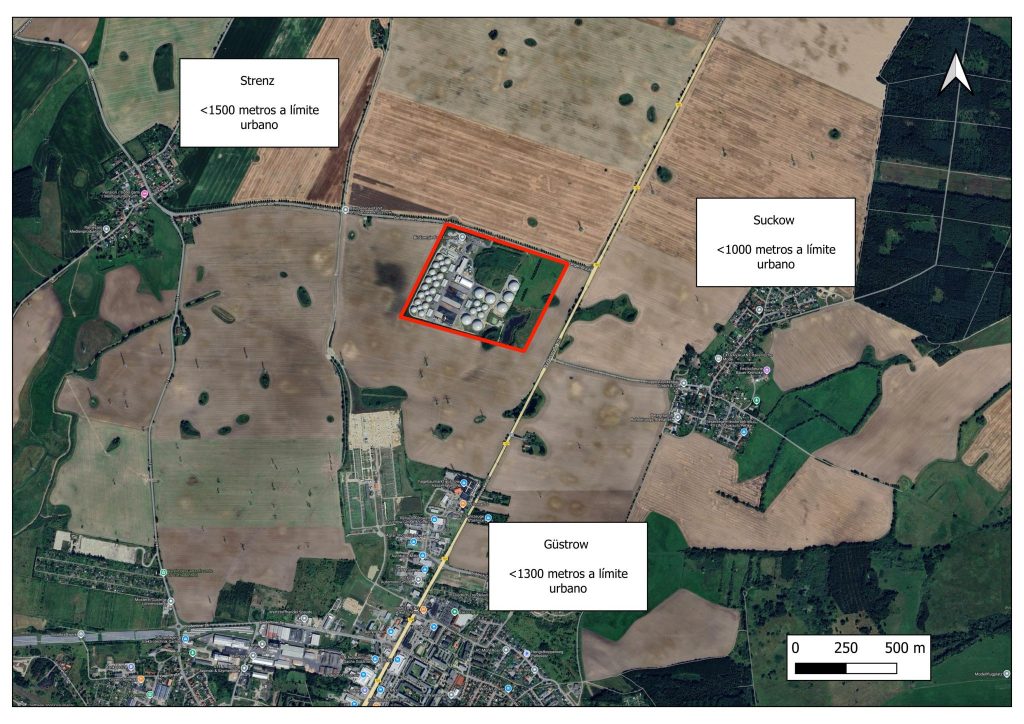
The visit included the biomethane plant located near the city of Güstrow, north of Berlin, one of the major references at the European level. This plant stands out for its production capacity, estimated at around 200 GWh/year (twice the capacity of the one planned in El Cubo de Tierra del Vino), and for its technological diversification: it produces biomethane injected into the gas grid, bio-LNG, electricity and heat, as well as 18,000 tonnes of liquefied CO₂ per year for later use in industries such as the food sector.

Location map of the Güstrow biomethane plant

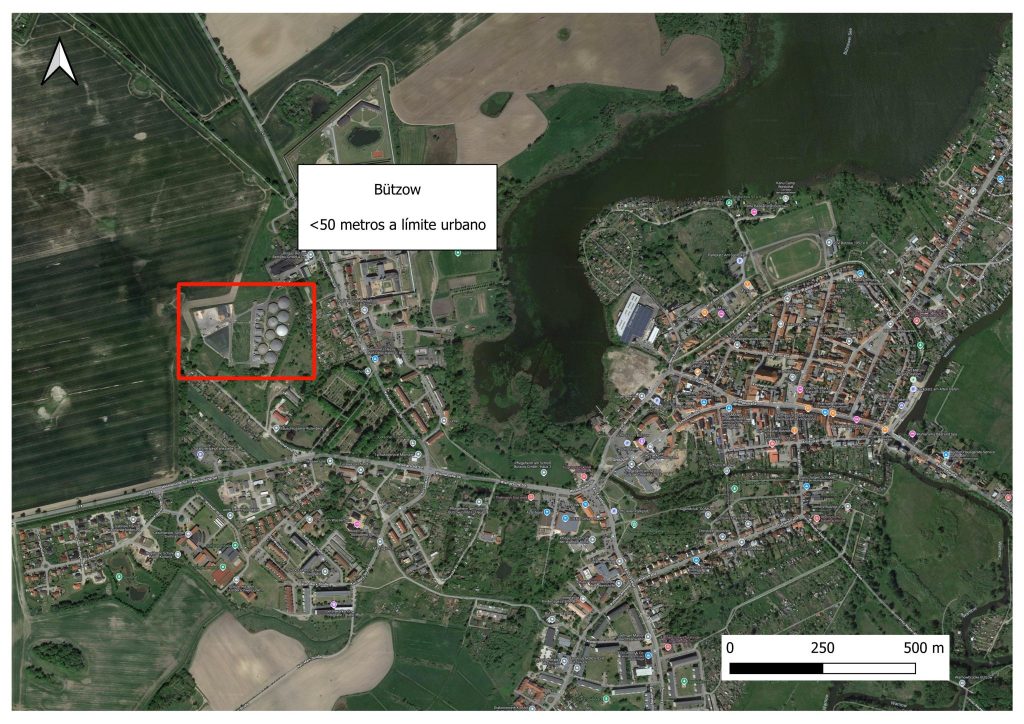
During the journey between facilities, the importance of these plants in Germany could be observed, with over 20 plants identified, most of them large-scale. In addition to the Güstrow facility, the biogas plant in the town of Bützow was visited, with a size similar to the one projected in El Cubo de Tierra del Vino.

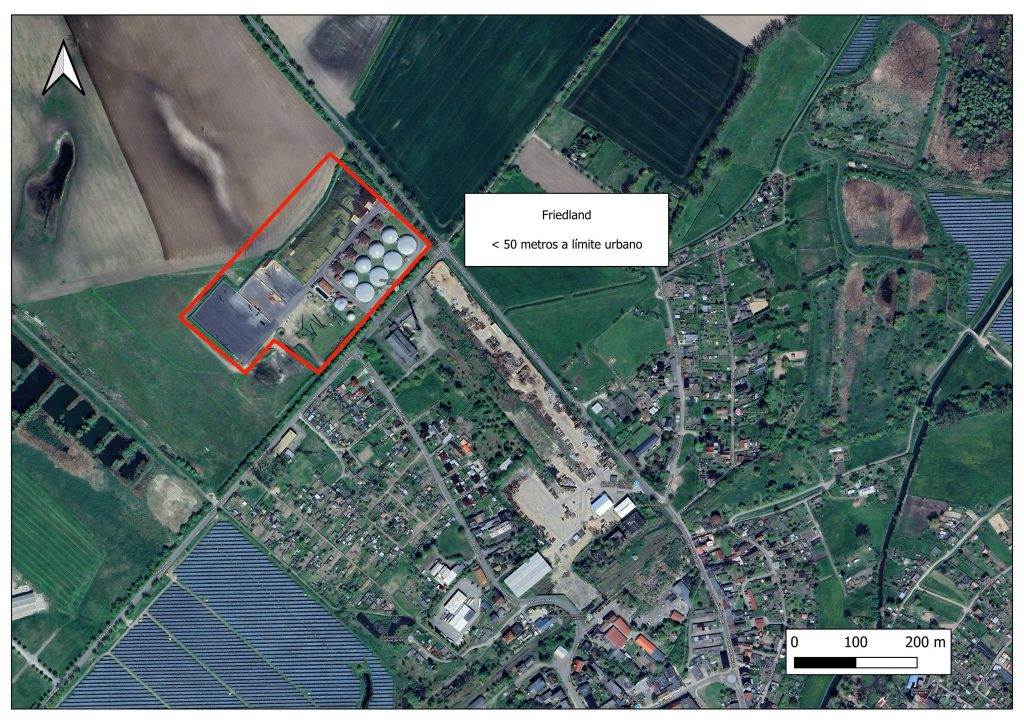
The plant near the municipality of Friedland was also visited, which burns renewable gas (biomethane) to supply the municipality with a heating network in a process known as district heating — a heating system directly distributed through the urban grid. This requires the plant to be close to the town centre, with only 50 metres between the plant and the nearest homes.

Location map of the Friedland plant
Location map of the Bützow plant

The biomethane production process: from waste to green energy

As shown during the visits to the plants in Germany, the production of biomethane starts with the collection and deposition of agricultural and livestock waste and its placement in the digesters, where anaerobic digestion takes place. This process occurs under mesophilic conditions (at 40°C) and, thanks to the gasification of sulphur compounds, significantly reduces any odour from the raw materials.

In the specific case of the El Cubo de Tierra del Vino plant, an additional thermophilic phase lasting more than 20 days at 55°C is included, which ensures the proper hygienisation of the materials and allows their subsequent recovery as a fertiliser product compliant with EU Regulation 2019/1009.

Afterwards, the gas obtained from anaerobic digestion enters the purification (upgrading) process,
converting the biogas into biomethane, ready to be injected into the gas grid.

Agricultural and livestock waste: manure, maize silage, and slurry

All three facilities use only manure, maize silage, and pig slurry, agriculatural and livestock waste similar to those that will be used in El Cubo de Tierra del Vino (mainly manure, slurry, and maize straw). Under no circumstances will Biorig’s plants process sewage sludge, animal carcasses, agri-food waste, municipal waste, or oils.

Slurry is used more frequently in Spain than in Germany, as the latter’s water abundance removes the need for liquid input for proper fermentation in digesters. Nonetheless, the Friedland plant provided a good example of a biogas facility using slurry, handling tens of thousands of cubic metres of pig slurry annually.

The plants are integrated into the local agricultural and livestock ecosystem, fulfilling a function of hygienisation and improvement of slurry and manure, turning them into organic fertilisers. Farmers and livestock breeders provide manure in exchange for the same tonnage of digestate, which is more easily absorbed by crops, and does not generate odour problems during field application. It was also confirmed that the odour from the resulting organic fertiliser is practically non-existent.

Zero odour emissions outside the facilities

Odour is limited exclusively to the areas close to waste storage and not to the entire facility — and certainly not outside the plant.

The visit revealed the large number of biogas and biomethane plants in Germany and their successful integration into local communities as an industry contributing to decarbonisation, proper management of agricultural and livestock waste, development of the primary sector, and creation of skilled local employment.

Knowledge and transparency on biomethane

This visit to various biomethane production plants in Germany aimed to provide and share technical information with real-life examples of how the plants Biorig is devoloping in Spain will operate.
It highlights the key role such facilities play in meeting the country’s energy needs and improving waste management, being fully integrated into rural economies and contributing through employment generation, investment in small towns, and the sustainability of the primary sector.

Specifically in Castilla y León, the company has a development plan for 10 facilities, including the El Cubo de Tierra del Vino (Zamora) plant. This outreach initiative is part of a broader set of actions promoted by Biorig to bring knowledge and transparency to various stakeholders.