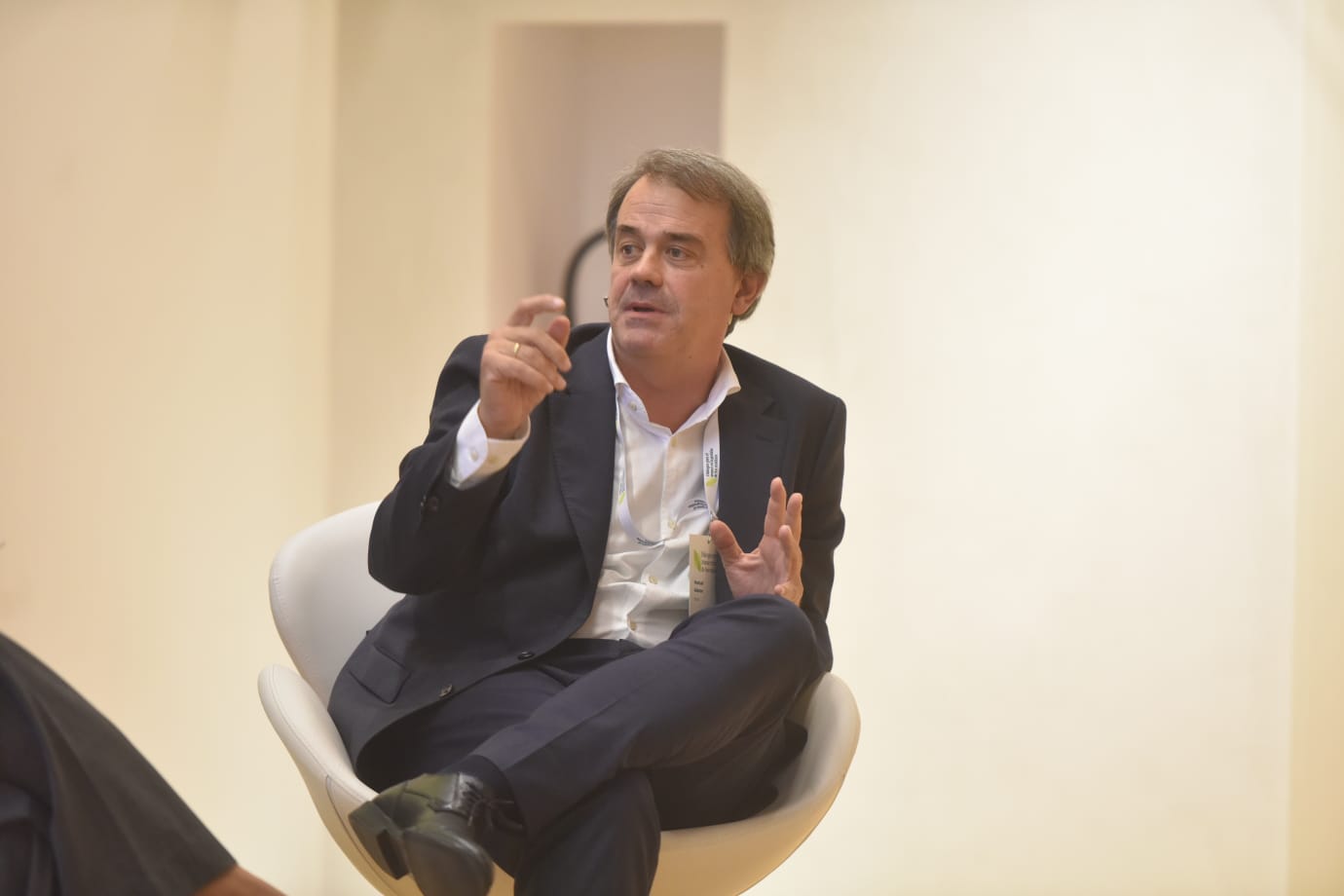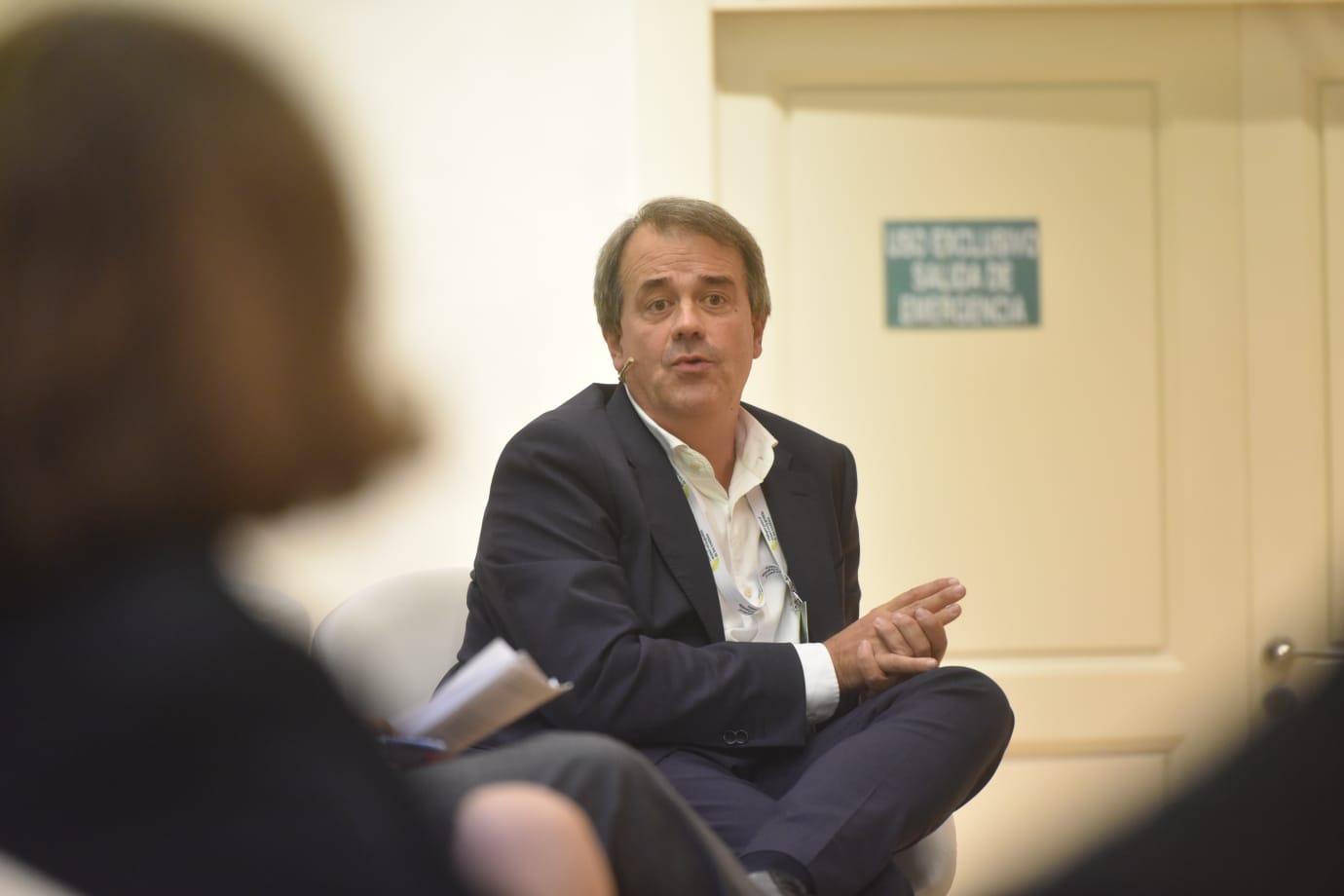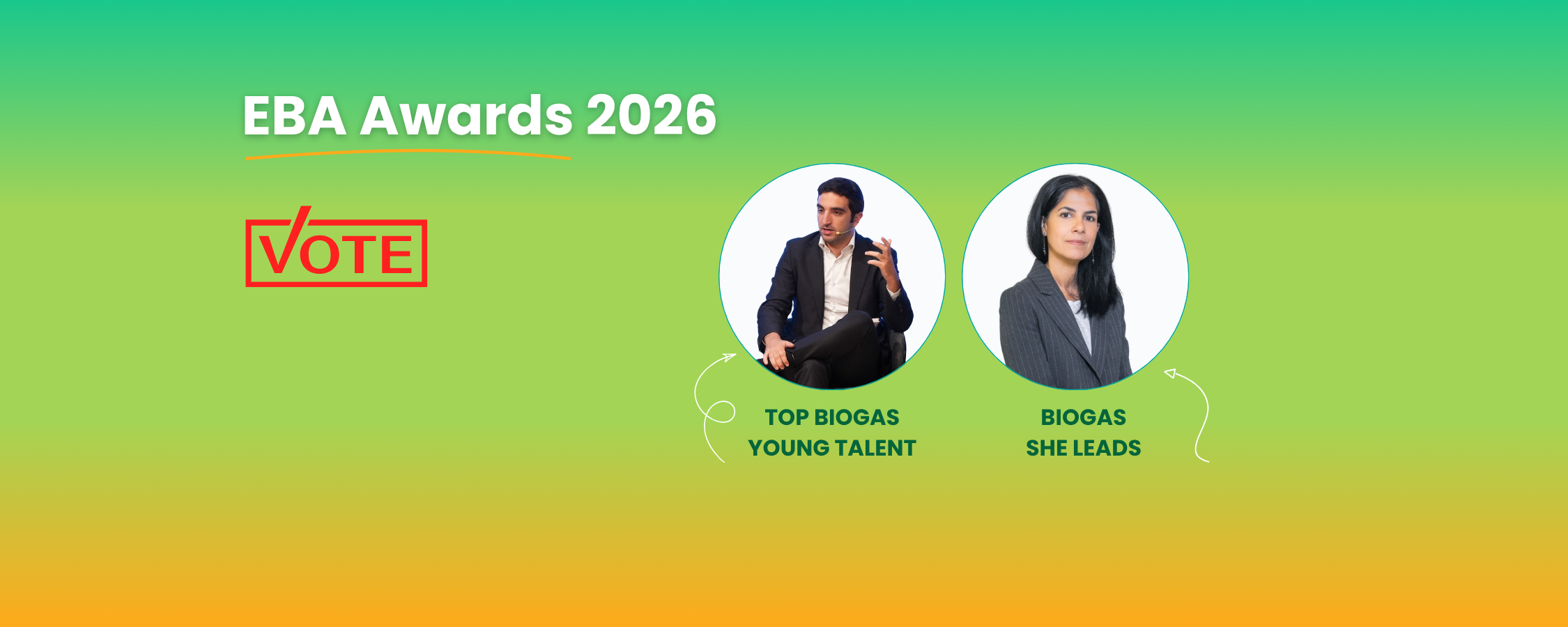
Carlos Aguilar and Cecilia Carballo, finalists in the 2026 EBA Awards

Biorig executives are in the running for the European Biogas Association’s (EBA) Young Talent and Women in Leadership awards

Madrid, 5 October 2026. Biorig has two finalists in the 2026 EBA Awards, organised by the European Biogas Association (EBA). Carlos Aguilar Aguirre, Director of Development and M&A, is in the running for the Top Biogas Young Talent Award, whilst Cecilia Carballo de la Riva, Director of Sustainability and Communications, is a finalist for the Biogas She Leads Award. Both nominations highlight their contribution to the sector’s development in complementary areas: driving new projects and integrating sustainability and local participation.

Los galardones celebran su sexta edición y se entregarán en Bruselas durante la Conferencia Europea de Biogás, en el marco de la Semana Europea del Biometano, del 12 al 16 de octubre de 2026. Estos premios reconocen a profesionales y proyectos por su aportación a la transición energética y las energías renovables. Las votaciones estarán abiertas hasta el próximo 15 de octubre.


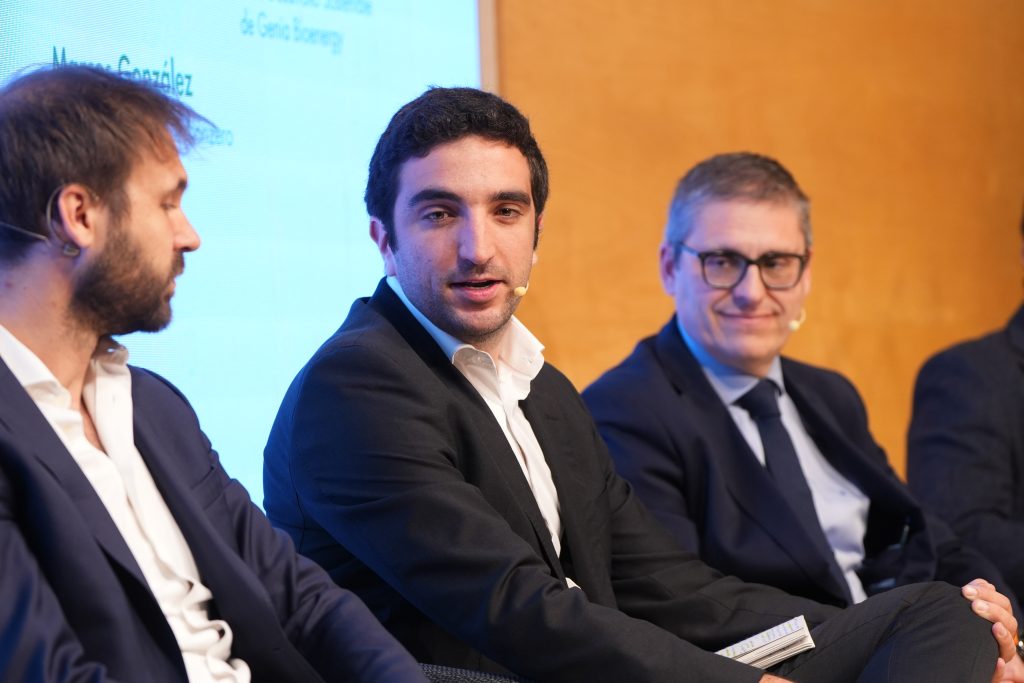
Carlos Aguilar: a rising star set to drive the growth of biomethane in Europe
EPEGASESRENOVABLES02

Carlos Aguilar joined Biorig in 2023, coinciding with the launch of Solarig’s renewable gas platform. Since then, he has helped to develop a portfolio of more than 20 biomethane projects in Spain and has supported the company’s expansion into Italy and Poland.

His work covers key aspects involved in turning development opportunities into viable projects: the availability of raw materials, access to the grid, the processing of permits and long-term commercial viability. In her application, the EBA highlights the responsibility she has taken on from an early stage in her career and her ability to combine an international perspective with knowledge of local markets.

Aguilar also links the growth of biomethane to the creation of opportunities for younger generations in rural areas. He has highlighted its potential to attract and retain talent, opening up new career paths for young people in the agriculture and livestock sector, technicians, engineers and environmental specialists. This vision positions training and social and labour market integration as integral parts of project development, in line with Biorig’s commitment to creating quality jobs and contributing to the progress of local communities.


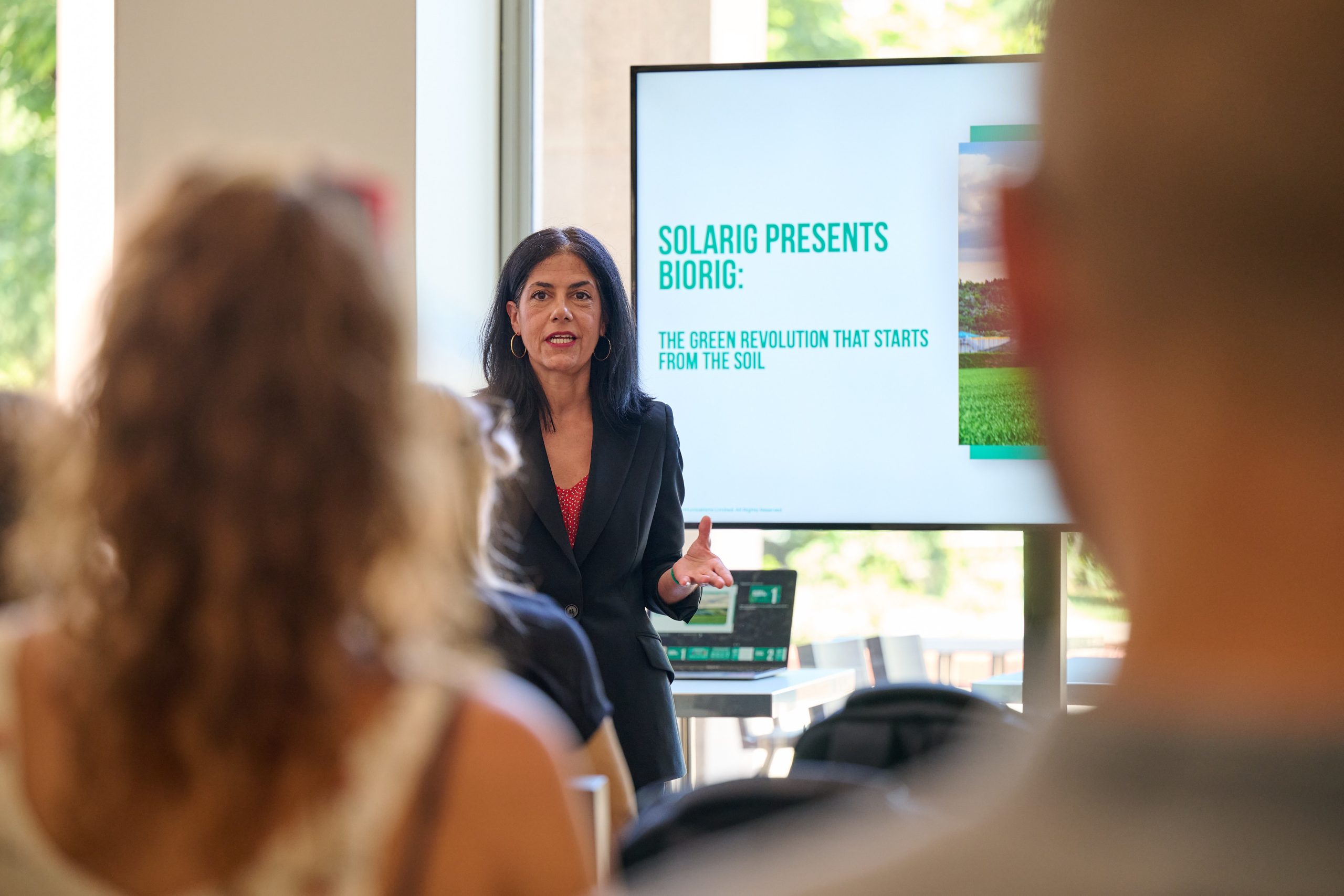
Cecilia Carballo: sustainability and dialogue with the local community

With over 30 years’ experience in environmental protection, climate transition and social development, Cecilia Carballo has championed the integration of sustainability into Biorig’s strategy, project development and governance. Her nomination for the women’s leadership award highlights a vision that links industrial development with environmental responsibility and engagement with rural communities.

Among the initiatives it has promoted are the ‘Green Dialogue Roundtables’, designed to enable local councils and residents to participate in monitoring the company’s commitments and identifying social and environmental initiatives. In addition, the company promotes local employment and training, reinvests in communities and supports vulnerable groups.
CECILIAITALIA

BIORIG, circular economy and energy sustainability

Biorigis Solarig’s biomethane production division. It was created with the aim of providing innovative solutions in the field of renewable gases, such as biomethane. Its activity is focused on the management of organic agro-livestock raw materials for their transformation into renewable gases and to promote the development of projects in the field of energy transition and circular economy.

Biorig is committed to a circular economy model based on the recovery and management of agricultural and livestock raw materials, commitment to the development of local communities, and the promotion of the production of renewable gases to accelerate the energy transition in the places where it operates.

Biorig takes part in Warsaw Biomethane Congress to promote its investment strategy in Poland

Biorig discussed the factors that make a biomethane project a truly viable investment opportunity

CongresoPolonia

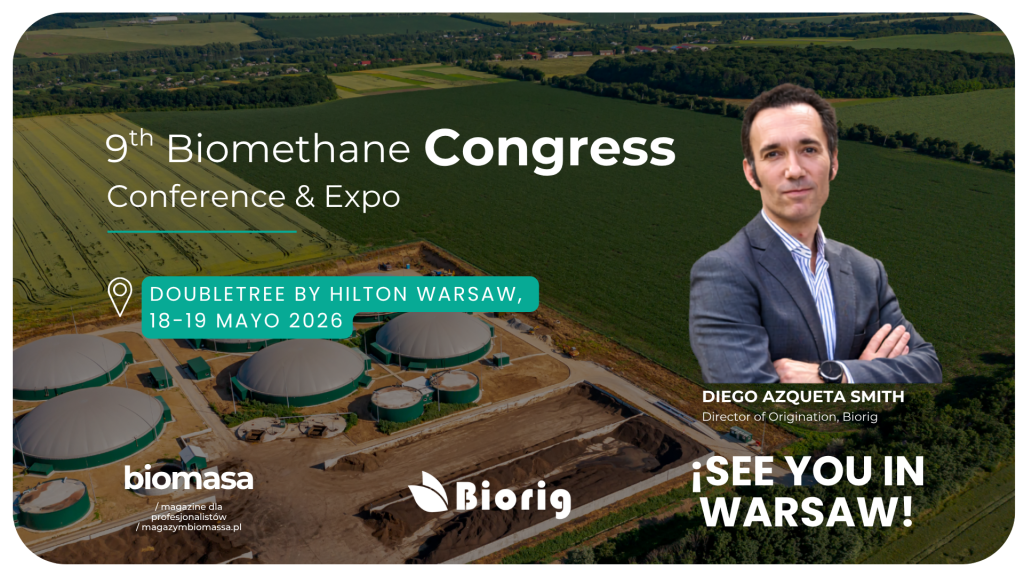
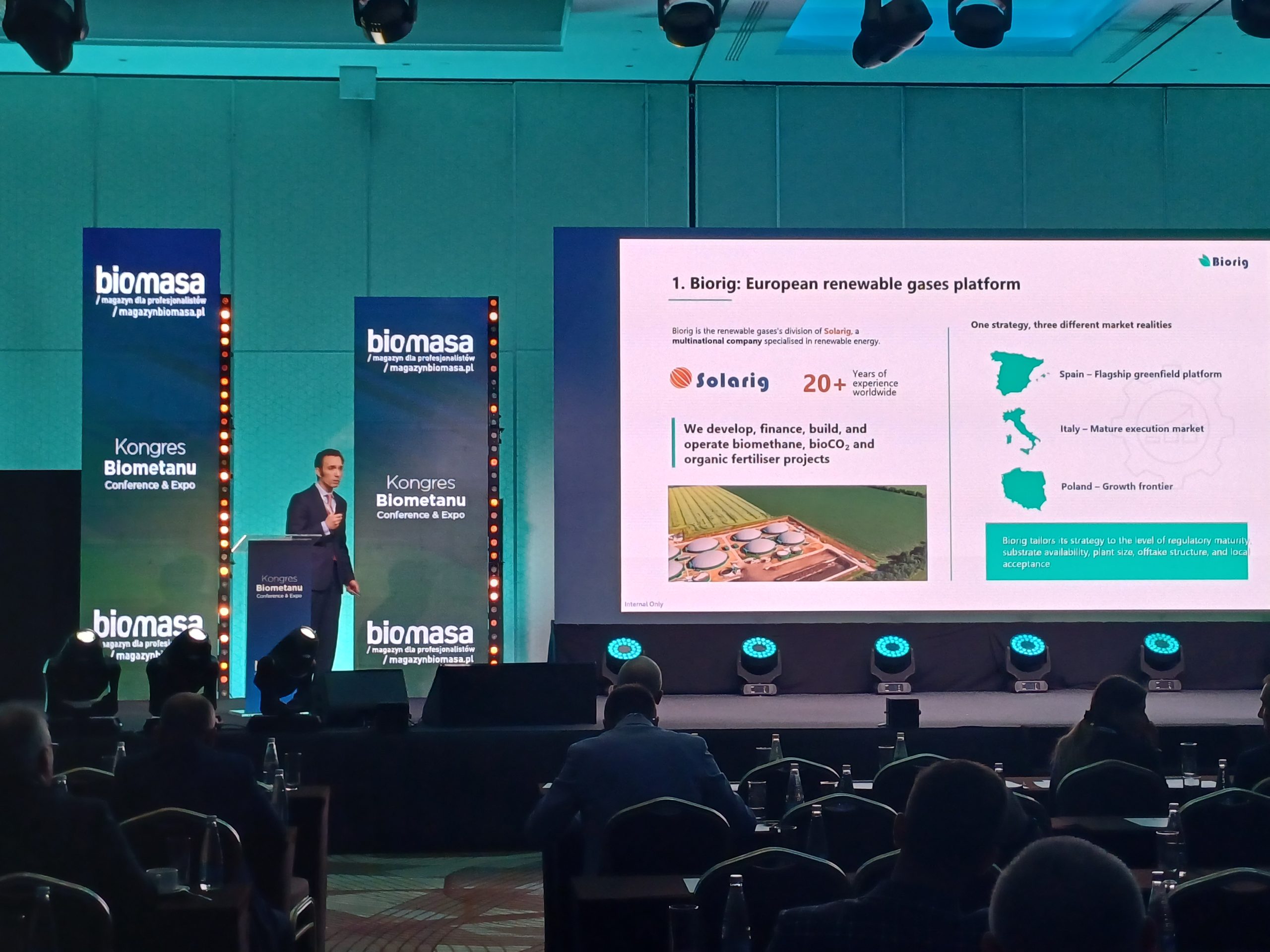
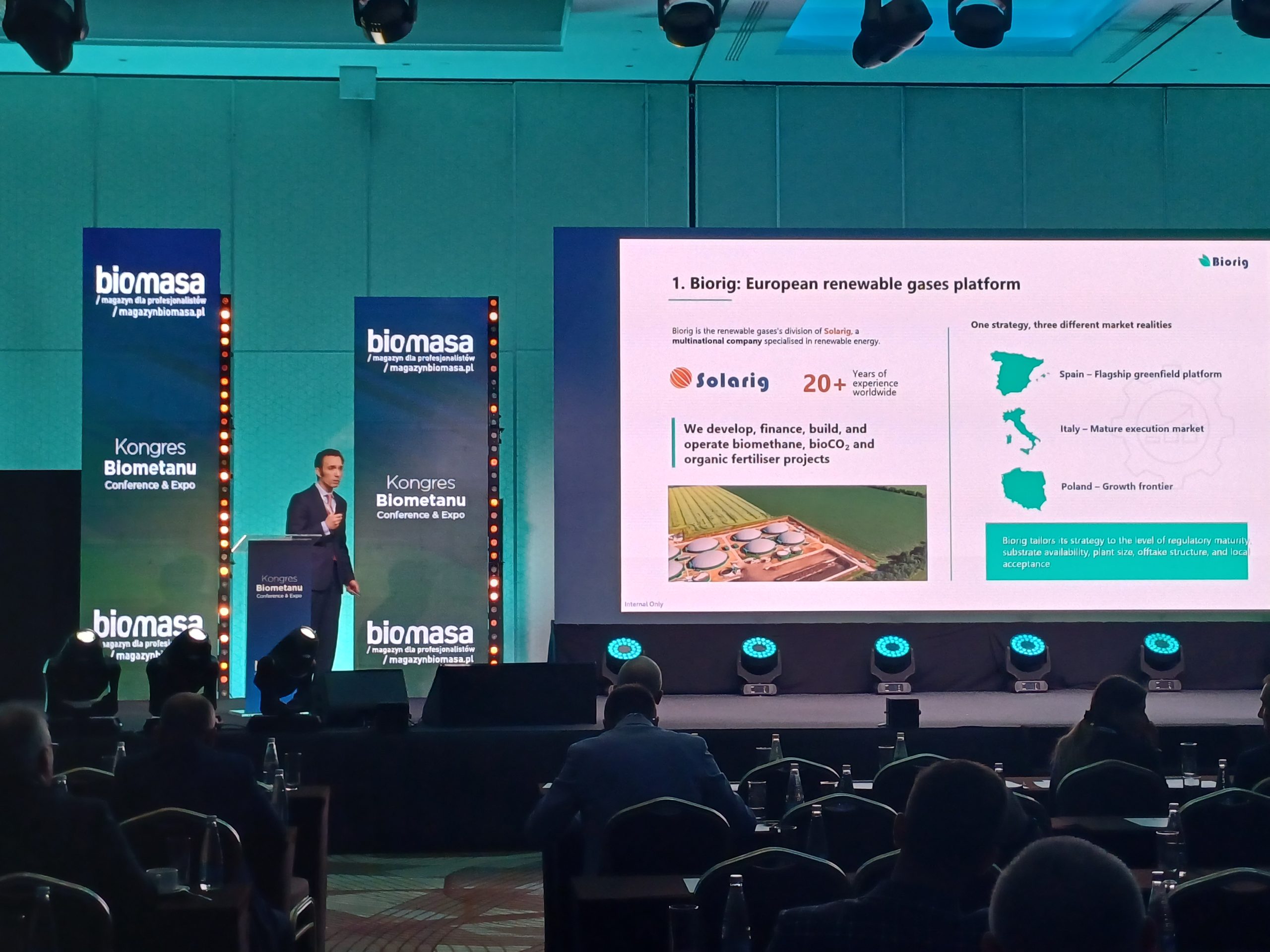
Madrid, 18-05-26. Biorig took part in the Warsaw Biomethane Congress, one of the leading events for the Polish biogas and biomethane market, which was held on 18 and 19 May at the DoubleTree by Hilton in the Polish capital.

The event, organised by the publisher of Biomasa Magazine, brought together investors, developers, biogas plant owners, operators, farmers, agri-food companies, technology suppliers, energy sector companies and representatives of the public administration. The aim was to address the main challenges facing the roll-out of biomethane in Poland: regulation, certification, grid connection, financing, procurement, market models and collaboration between local and international stakeholders.

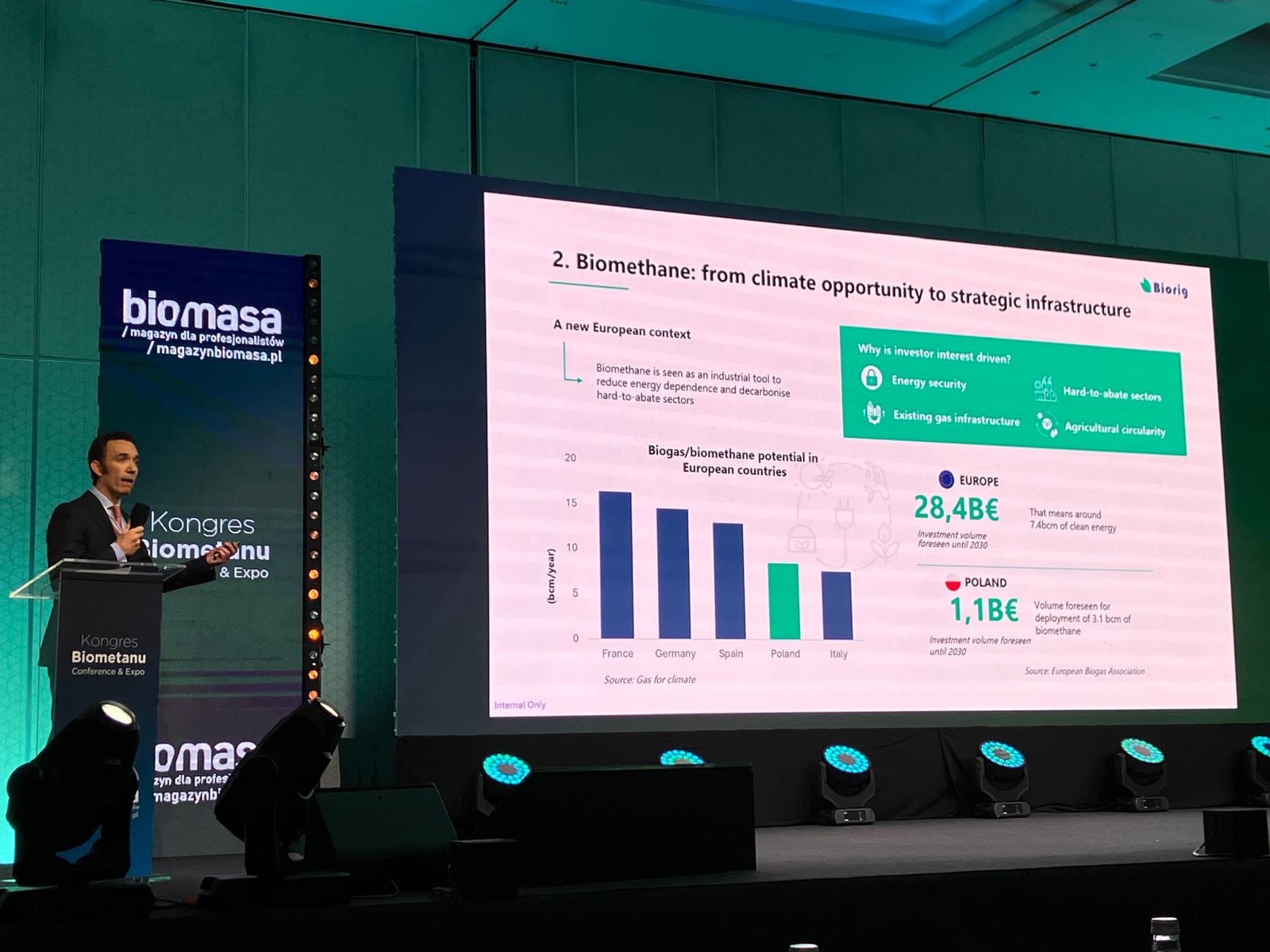
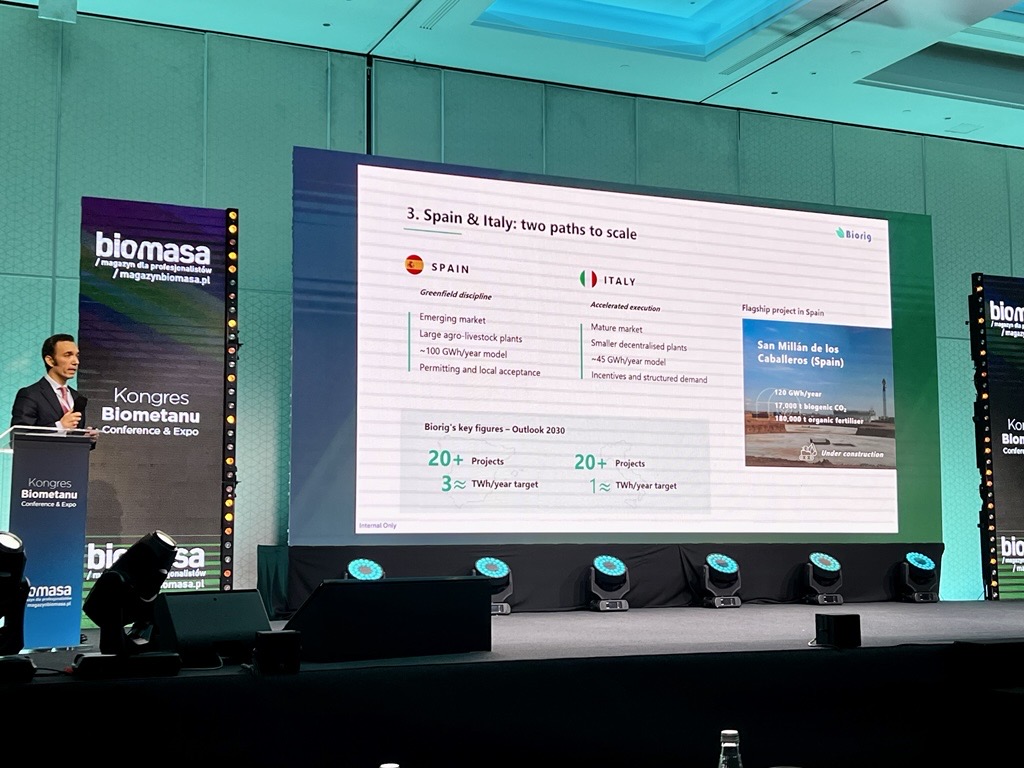
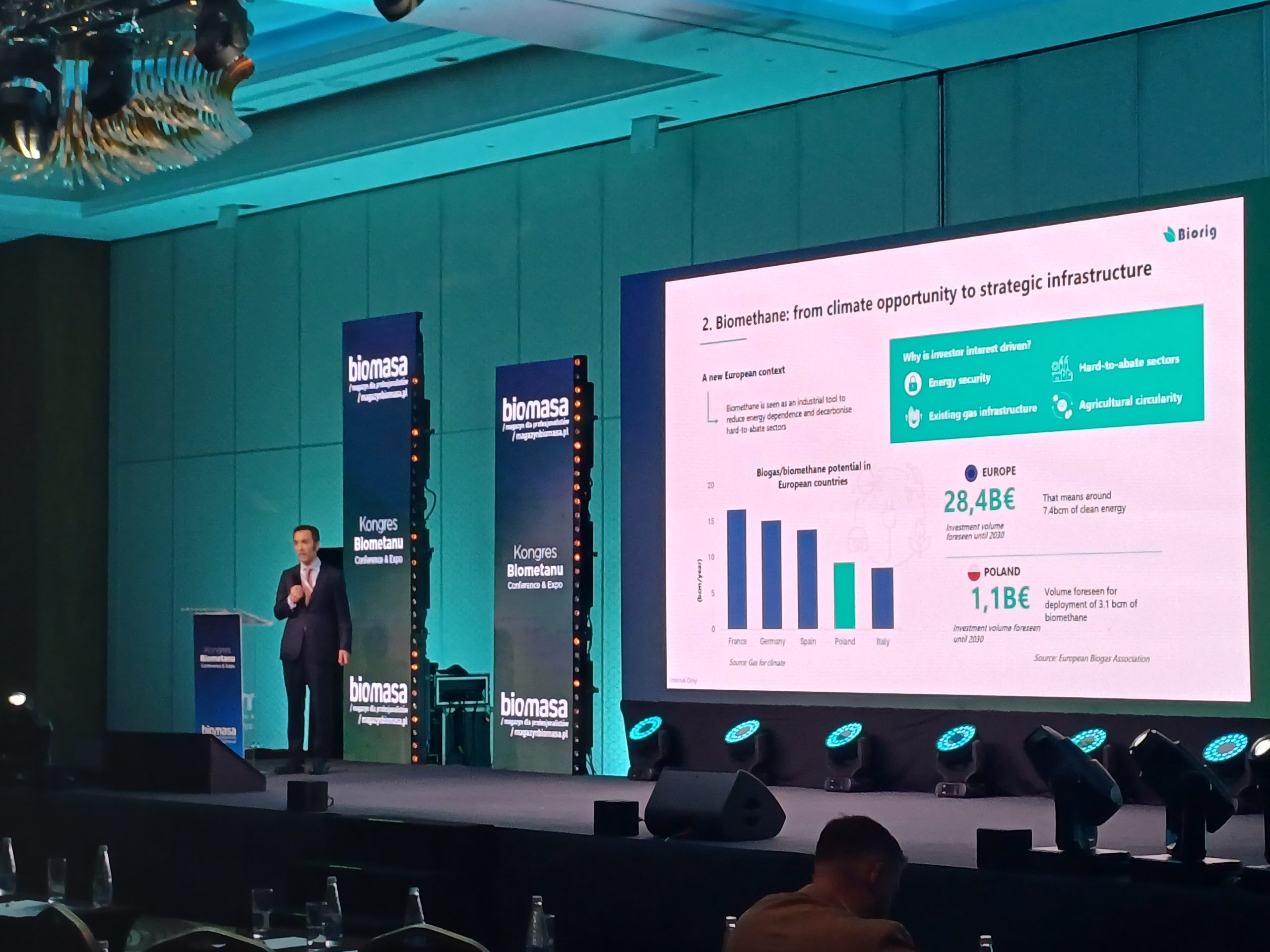
In this context, Diego Azqueta Smith, Director of International Development at Biorig, gave a presentation entitled “What does an investor look for in the biomethane sector? Criteria, valuation and best practices in partnerships: perspectives from Spain, Italy and Poland”. His presentation was part of the session dedicated to European biomethane markets and the lessons that can be drawn to accelerate the sector’s development in Poland.

During his presentation, Azqueta discussed the factors that make a biomethane project a truly viable investment opportunity. These include the availability of agricultural and livestock feedstock, regulatory certainty, the maturity of the regulatory process, grid connection, the structure of supply and sales contracts, and the presence of local partners with a genuine capacity for implementation.

Biorig’s vision is based on a central idea: potential alone is not enough. To attract investment, projects need visibility, structure and the ability to become bankable assets. This approach is underpinned by the company’s experience in Spain, where it is developing a portfolio of over 20 projects based on larger-scale plants and agricultural and livestock raw materials, and in Italy, a more mature market with regulations and incentives that have enabled the accelerated roll-out of decentralised facilities.

Biorig in Poland

Biorig’s participation in the conference follows the company’s announcement in Poland that it plans to develop more than 20 biomethane plants in the country. This plan envisages a capacity of over 1 TWh per year of renewable energy production, with the first plant scheduled to come on stream in 2030.

Poland represents one of the main growth frontiers for biomethane in Europe. The country has a large-scale agricultural and agri-food sector, a strategic need for energy diversification, and a market that is still in its early stages. For Biorig, this context presents a clear opportunity: to transform local resources into renewable energy, organic fertilisers and industrial development in the region.

In Poland, Biorig is seeking to collaborate with developers, biogas plant owners and platforms with project portfolios at advanced stages of development or ready for construction. The company aims to provide capital, technical expertise, industrial discipline and a long-term vision to turn local projects into robust and competitive renewable energy assets.

BIORIG, circular economy and energy sustainability

Biorig is Solarig’s biomethane production division. It was created with the aim of providing innovative solutions in the field of renewable gases, such as biomethane. Its activity is focused on the management of organic agro-livestock raw materials for their transformation into renewable gases and to promote the development of projects in the field of energy transition and circular economy.

Biorig is committed to a circular economy model based on the recovery and management of agricultural and livestock raw materials, commitment to the development of local communities, and the promotion of the production of renewable gases to accelerate the energy transition in the places where it operates.

Biorig Calls for a Regulatory Framework to Accelerate Biomethane at the 4th Renewable Gases Forum

The meeting examined the role of renewable gases in the creation of a new energy market in Spain

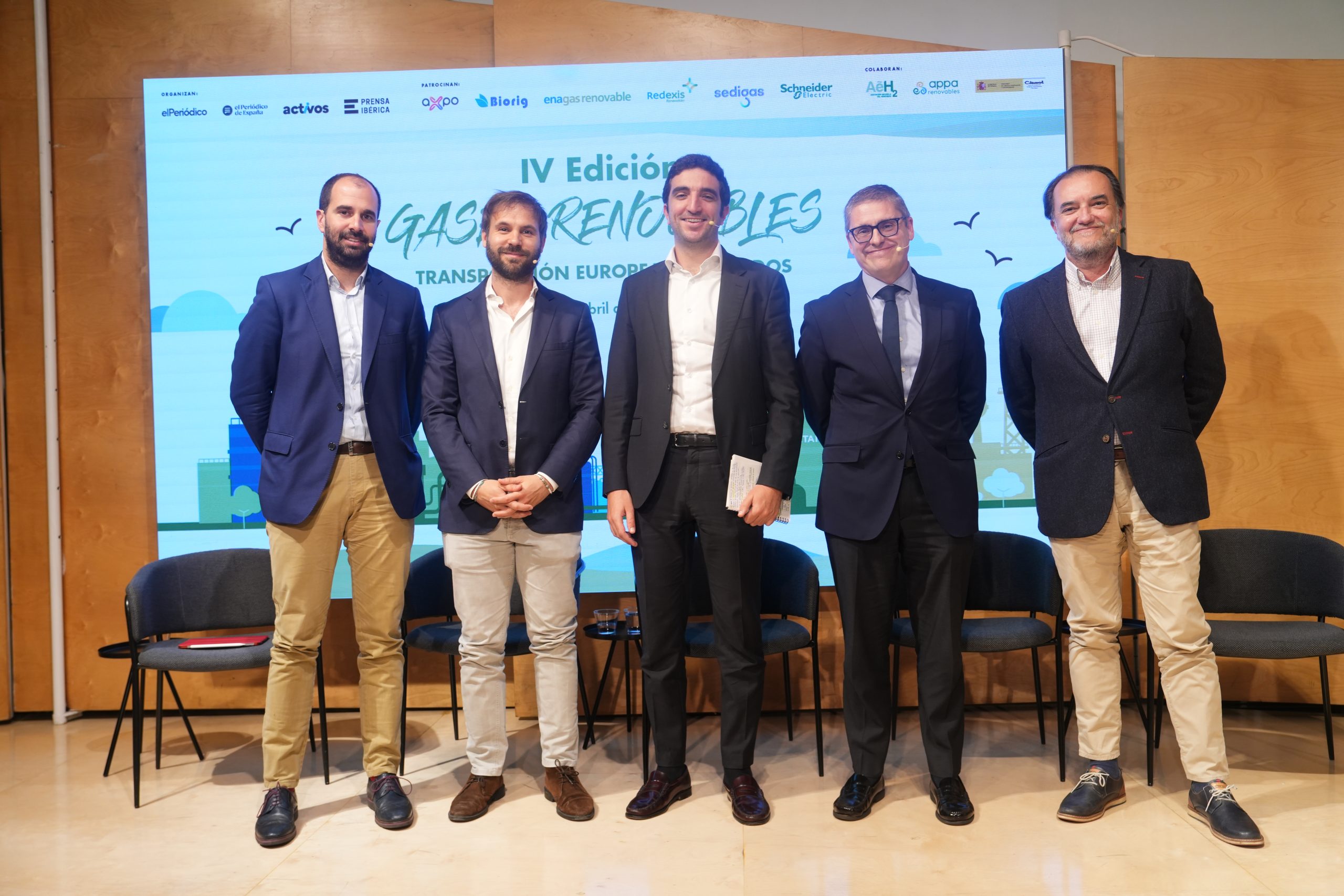
Madrid, 12-05-26. Biorig, Solarig’s renewable gases division, participated in the 4th Renewable Gases Forum, organized by EL PERIÓDICO, El Periódico de España, Activos, and Prensa Ibérica. The event, held on April 16 at the Espacio Bertelsmann in Madrid, brought together institutional representatives, energy companies, research centers, and industry associations to analyze the role of renewable gases in decarbonization and in the consolidation of a new energy market in Spain.

The event took place against a backdrop marked by the need to strengthen Europe’s energy independence, accelerate the green transition, and provide renewable solutions for sectors where electrification is not always sufficient. During the meeting, key issues for the development of renewable hydrogen and biomethane were addressed, including regulation, financing, demand, guarantees of origin, public acceptance, and access to infrastructure.

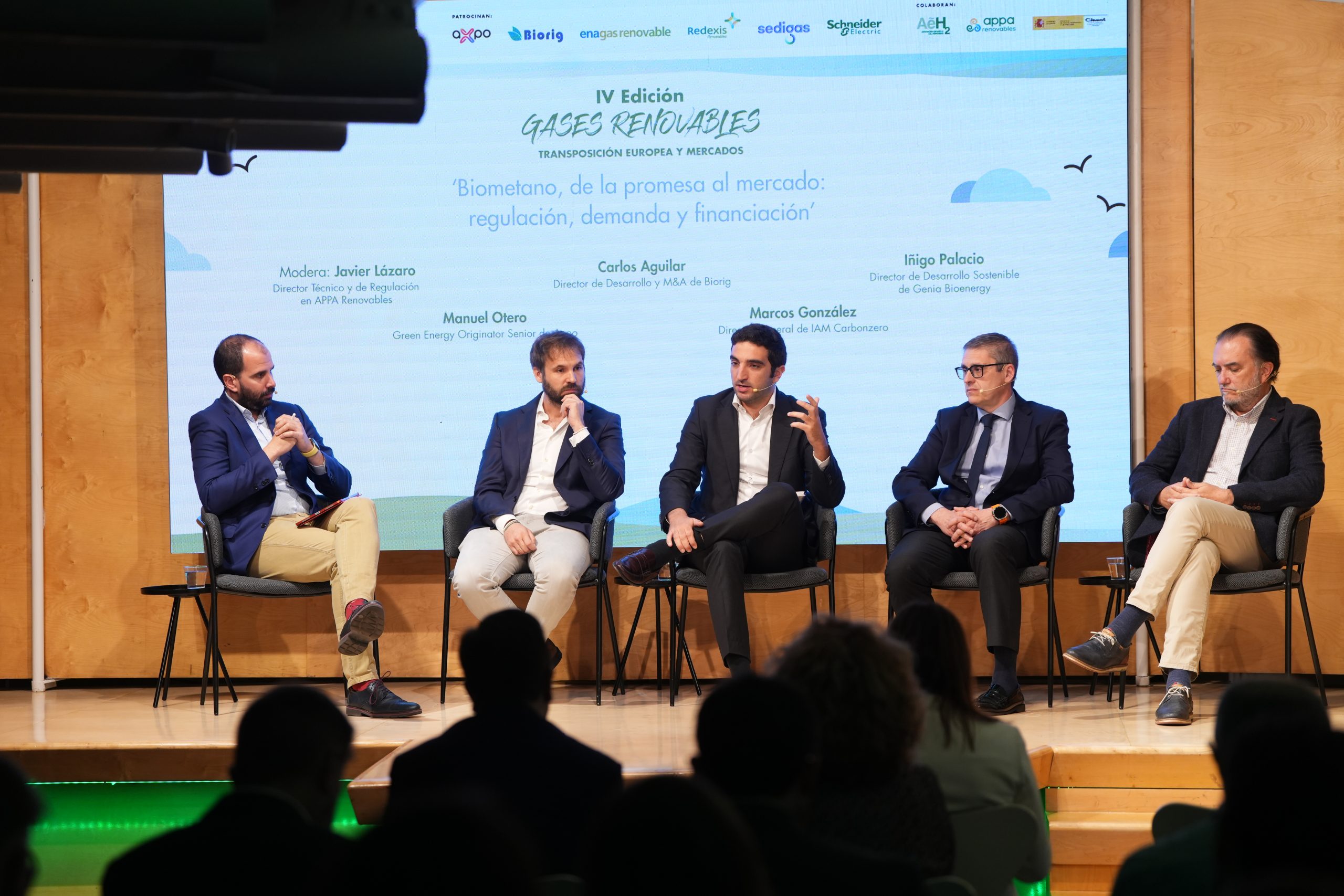
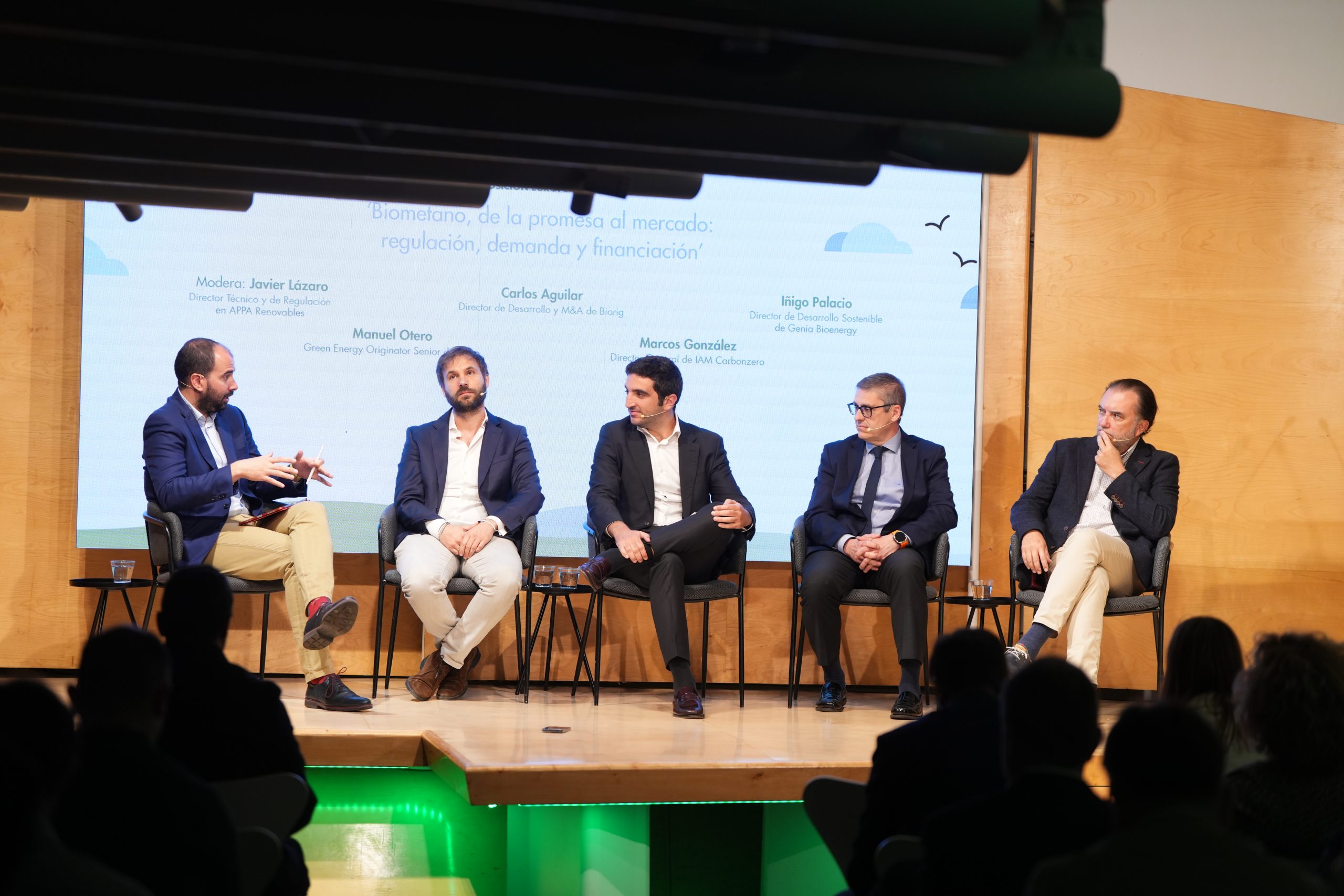
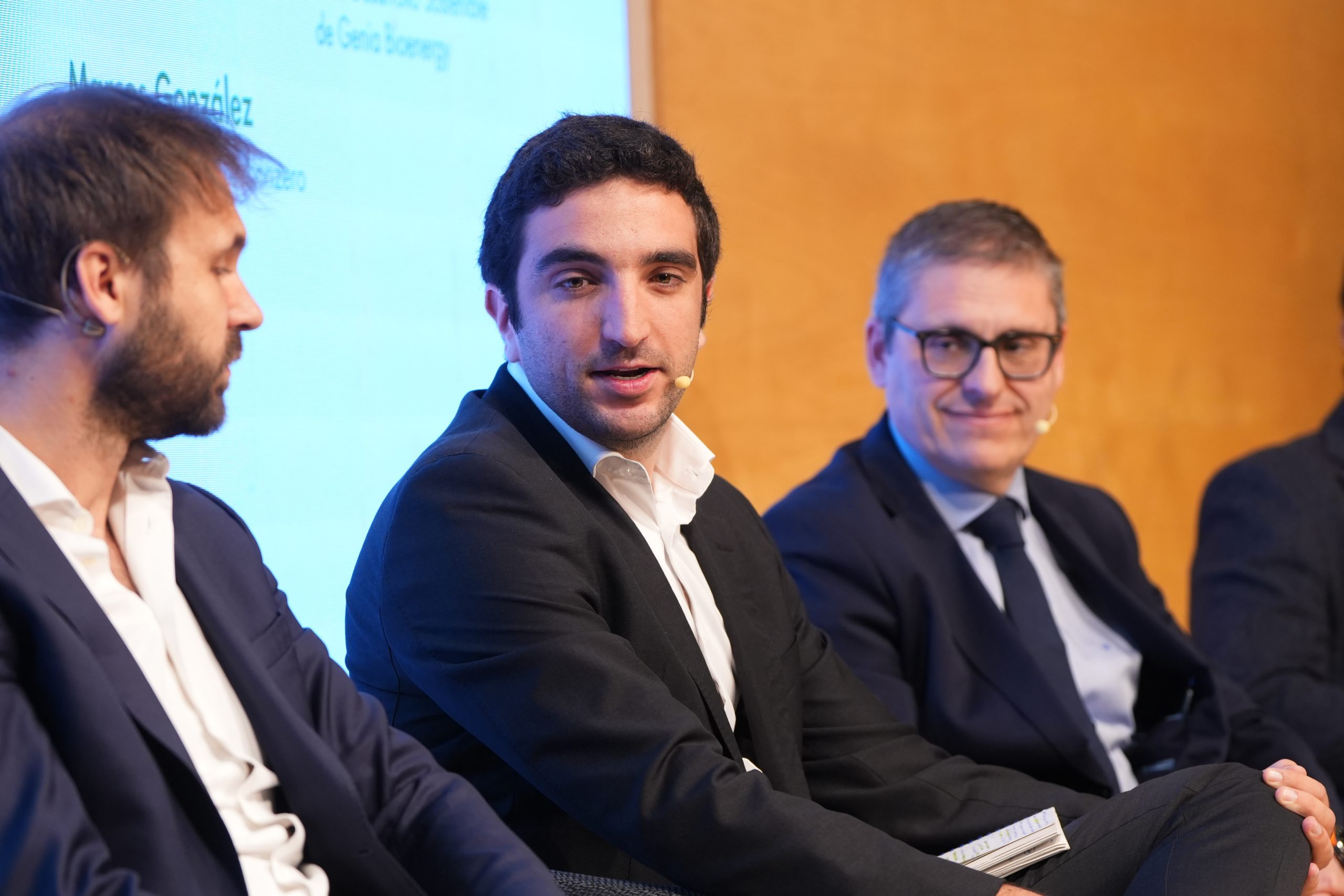
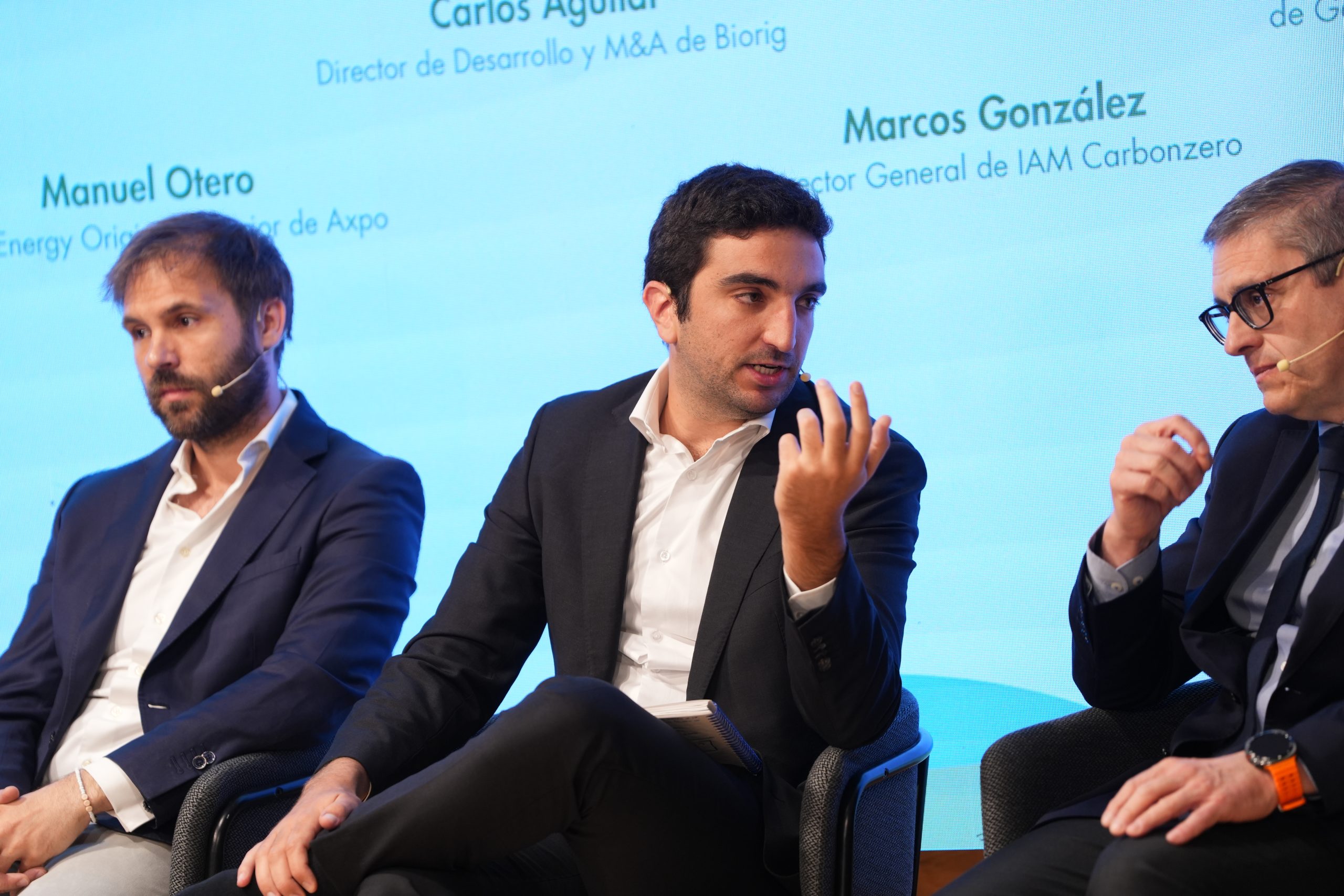
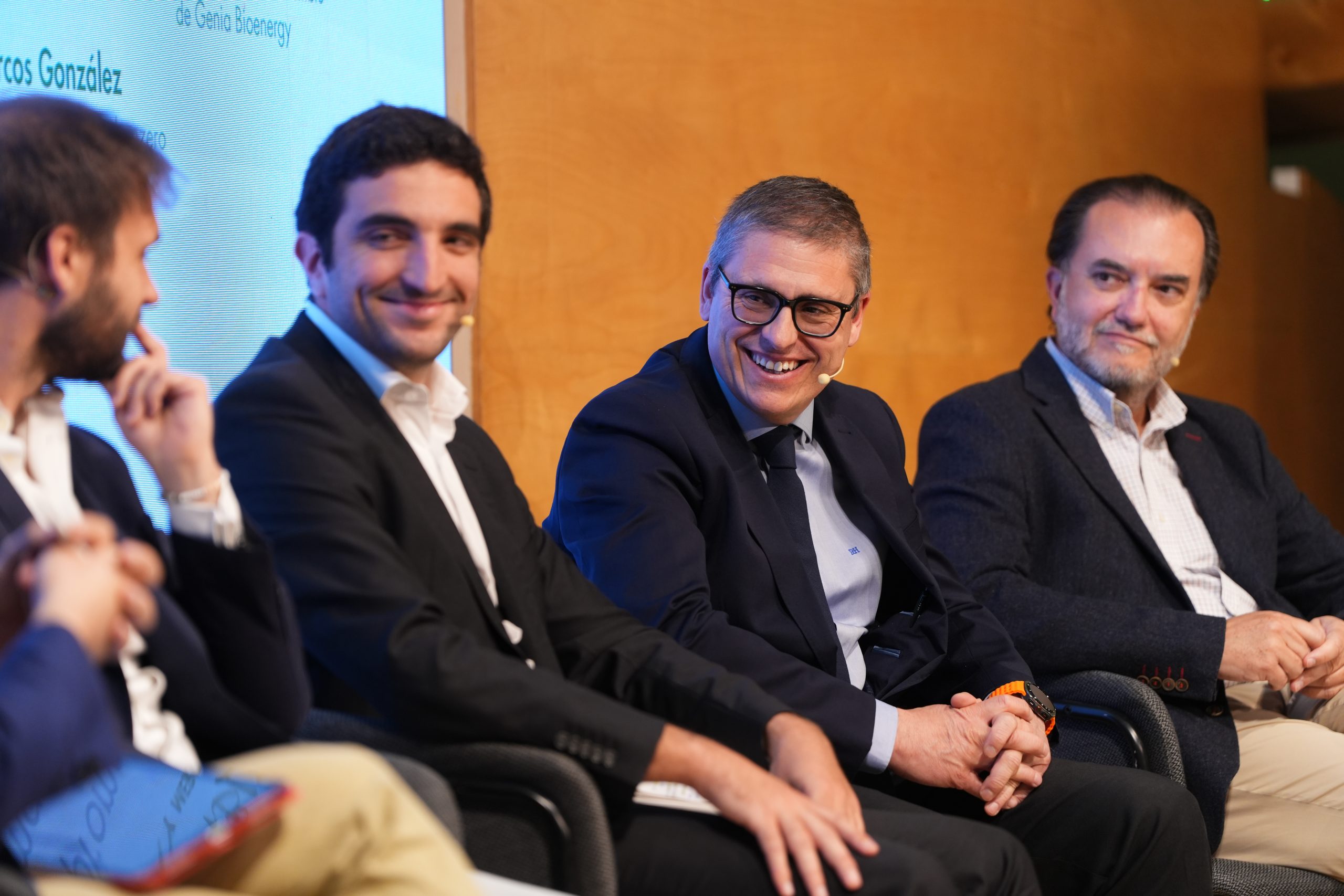
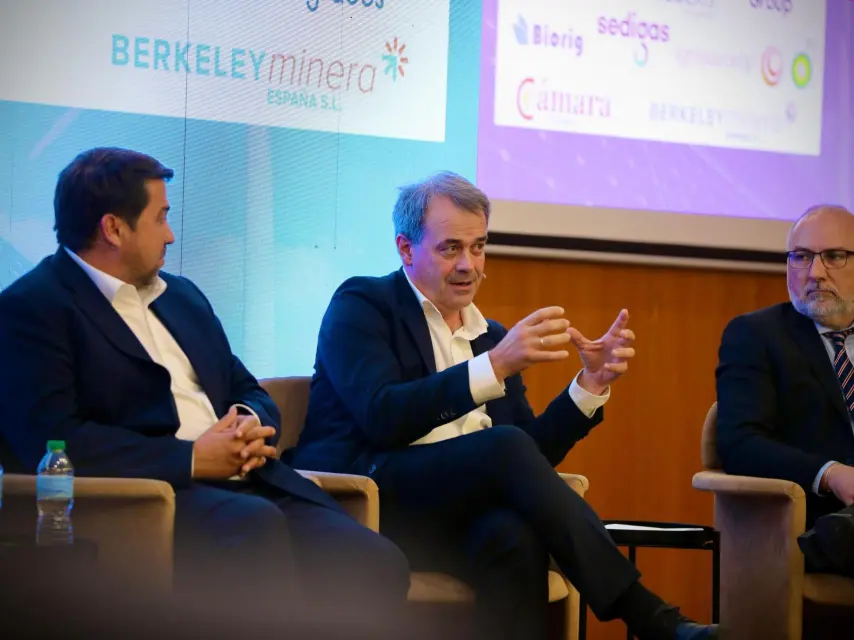
Representing Biorig, Carlos Aguilar, the company’s Director of Development and M&A, participated in the roundtable discussion “Biomethane: From Promise to Market,” moderated by Javier Lázaro, Technical and Regulatory Director at APPA Renovables. During this session, he joined representatives from Axpo, IAM Carbonzero, and Genia Bioenergy in a discussion about the main bottlenecks the sector faces in converting biomethane’s potential into connected and operational plants.

During his remarks, Aguilar provided an update on Biorig’s portfolio, which includes 24 projects currently in development, four positive environmental impact statements, and two integrated environmental permits. In this regard, he noted that the development of biomethane requires companies with sufficient technical, financial, and industrial capacity to navigate lengthy and complex administrative processes.

“A biomethane plant can take two or three years to get approved. That timeline requires financial resources that very few companies have, especially when it comes to projects that haven’t yet generated any value,” Aguilar explained during the panel discussion.

A uniform regulatory framework in Spain to accelerate the adoption of renewable gases

One of the key messages put forward by Biorig was the need to move toward a more uniform regulatory framework across the autonomous communities. The company believes that the current diversity in regulations creates uncertainty for projects and hinders industrial planning in a sector that requires scale, technical rigor, and legal certainty.

“Right now, moving from one autonomous community to another is almost like moving to a different country,” Aguilar said, referring to the importance of establishing a minimum set of common regulations that facilitate the orderly development of projects without compromising environmental, social, and technical standards.

Biorig also highlighted the need to streamline connections to the electricity and gas grids, especially in rural areas where many of these facilities are located. Biomethane plants are industrial facilities rooted in the local community, capable of transforming agricultural and livestock waste into renewable energy, biogenic CO₂, and certified organic fertilizer. However, their development requires adequate infrastructure to enable them to operate, inject renewable gas into the grid, and generate value for the energy system.

By participating in the 4th Renewable Gases Forum, Biorig is reinforcing its position as one of the key players driving the development of biomethane in Spain. The company continues to expand its portfolio of projects aimed at transforming the country’s agricultural and livestock potential into renewable energy, circular solutions, and development opportunities for local communities.

BIORIG, circular economy and energy sustainability

Biorigis Solarig’s biomethane production division. It was created with the aim of providing innovative solutions in the field of renewable gases, such as biomethane. Its activity is focused on the management of organic agro-livestock raw materials for their transformation into renewable gases and to promote the development of projects in the field of energy transition and circular economy.

Biorig is committed to a circular economy model based on the recovery and management of agricultural and livestock raw materials, commitment to the development of local communities, and the promotion of the production of renewable gases to accelerate the energy transition in the places where it operates.

Biomethane: A Sustainable Solution for 35 Million Tons of Waste in Castile and León

The livestock and scientific sectors, along with the Regional Government of Castile and León, are supporting the growth of this sector at an event organized in partnership with La Gaceta de Salamanca

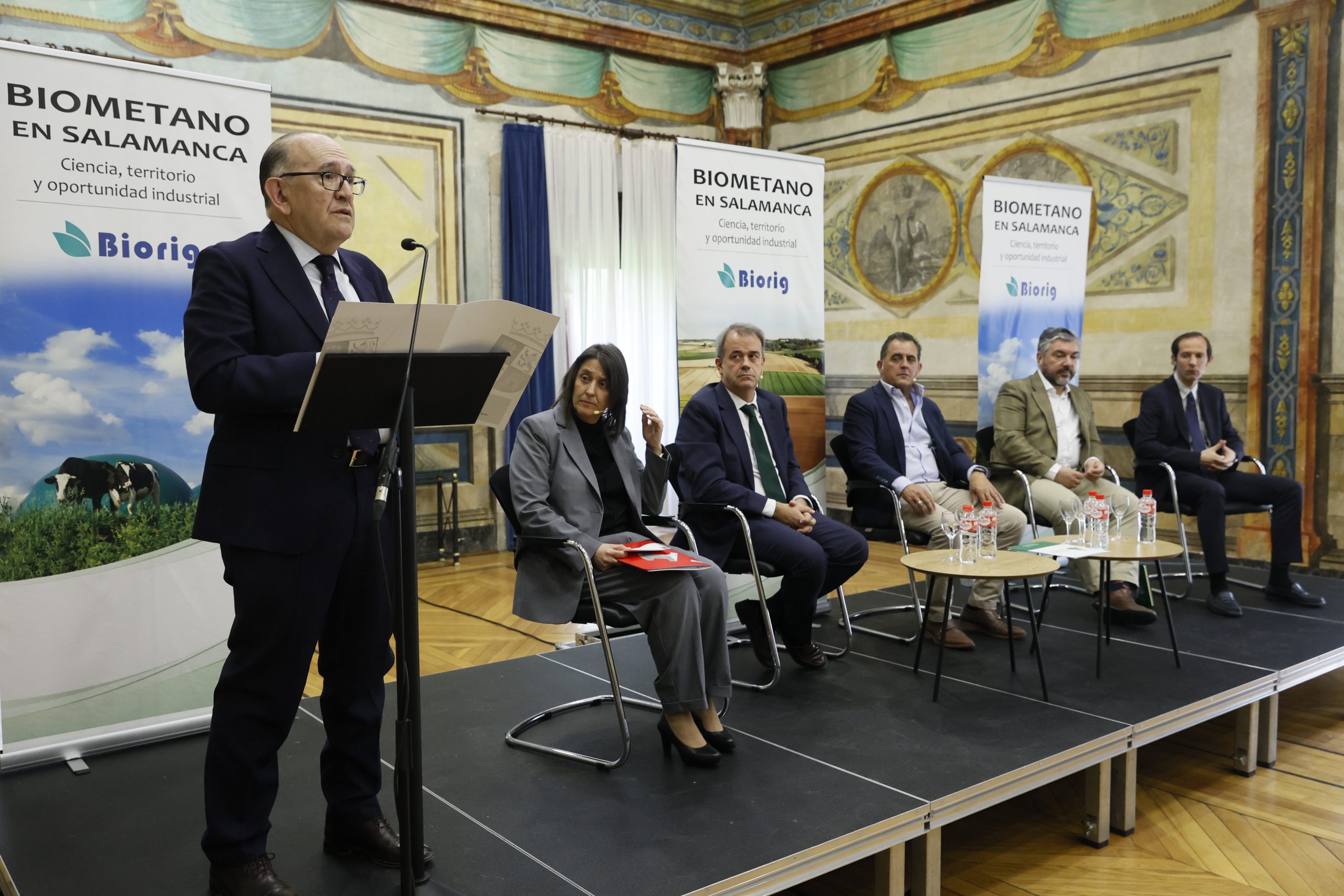
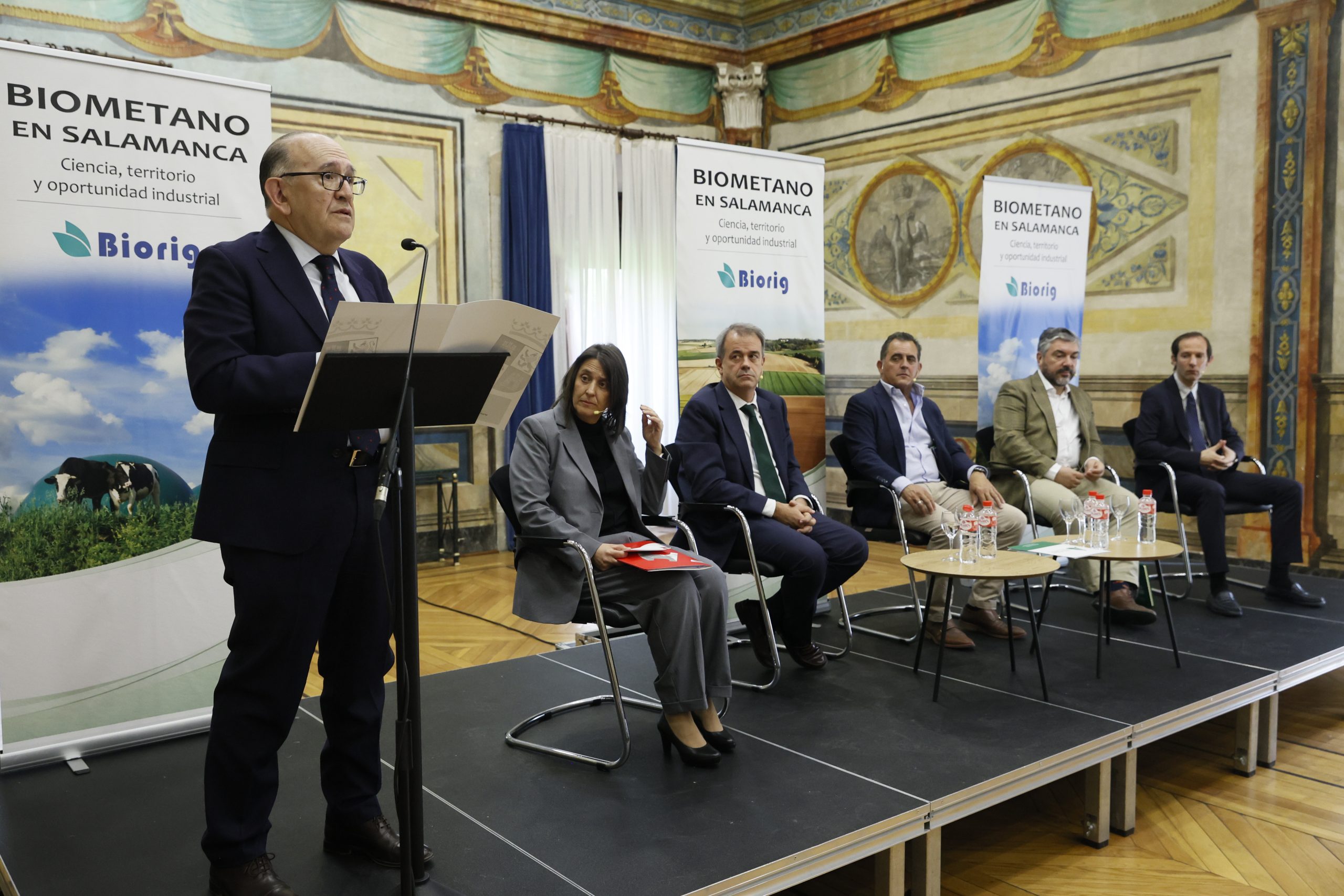
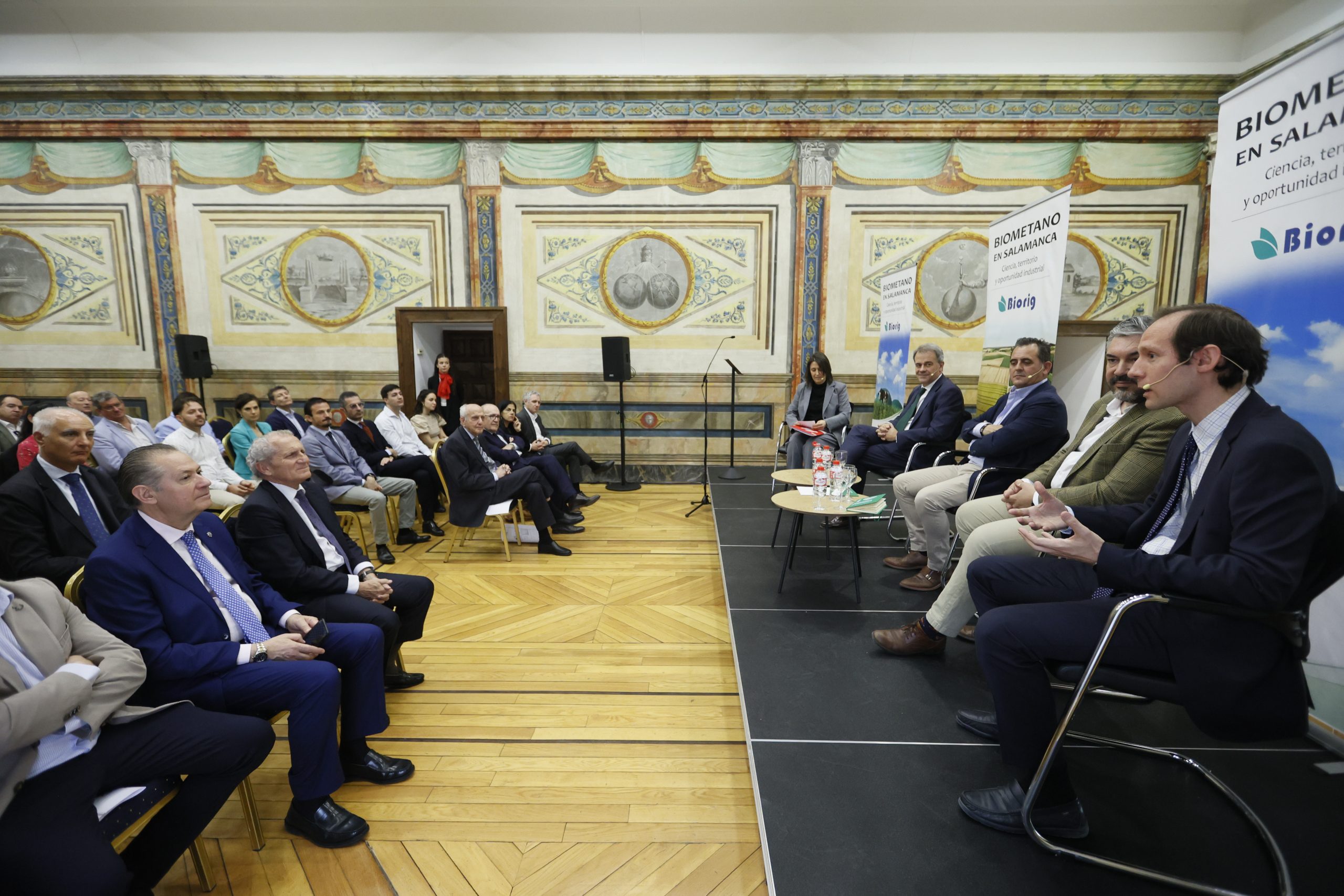
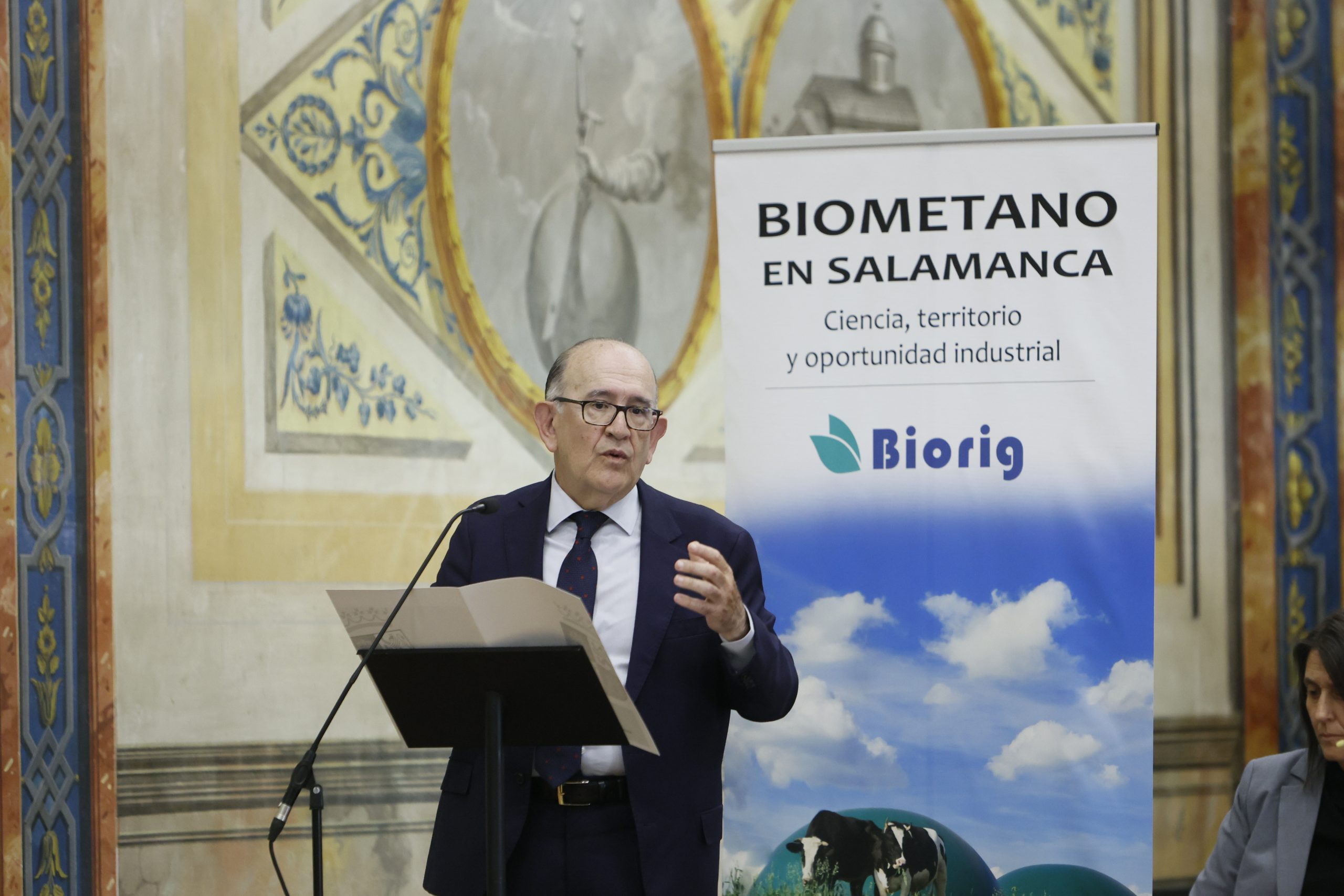
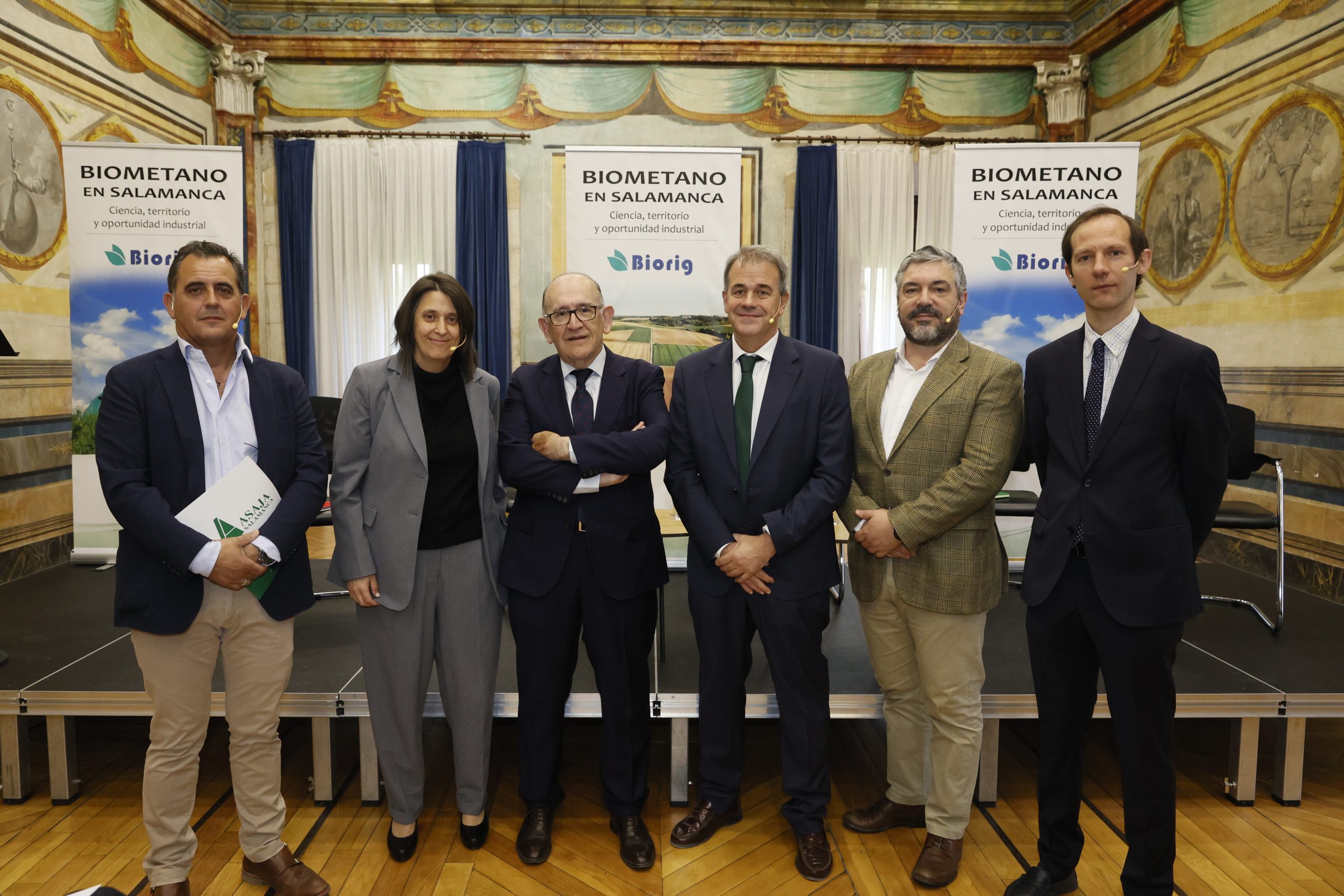
Madrid, 04-23-26. Castile and León has one of the greatest potentials in Europe for the development of biomethane. This was highlighted at the conference “Biomethane in Salamanca: Science, Territory, and Industrial Opportunity,” organized by La Gaceta de Salamanca, where government officials, the scientific community, industry representatives, and stakeholders from the agriculture and livestock sector all agreed that this technology is an effective solution for waste management and the energy transition.

The event was opened by José Manuel Jiménez, Director General of Infrastructure and Environmental Sustainability for the Regional Government of Castile and León, who stated that biomethane plants are a sustainable solution for the 35 million tons of organic waste of all kinds produced by the region.

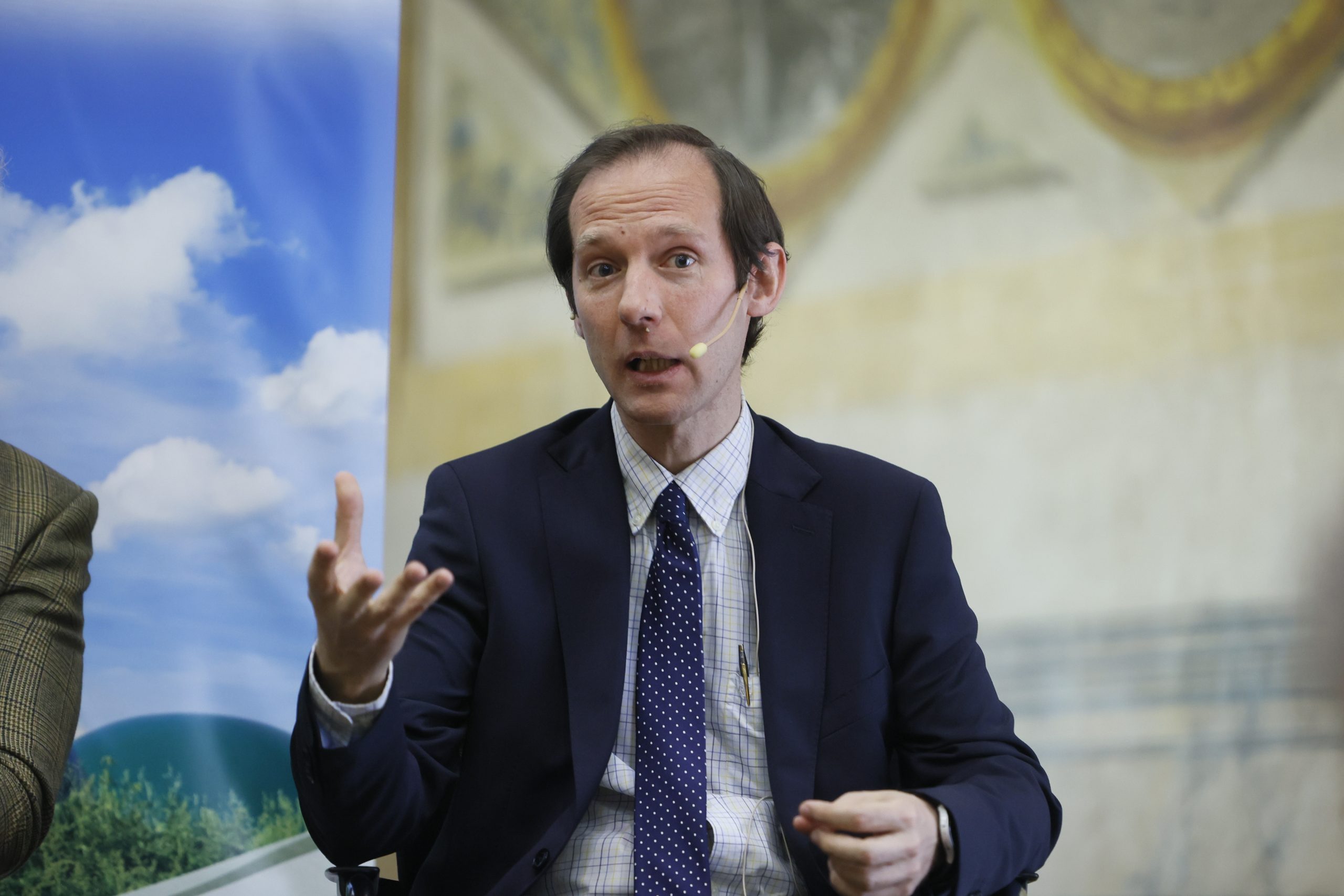
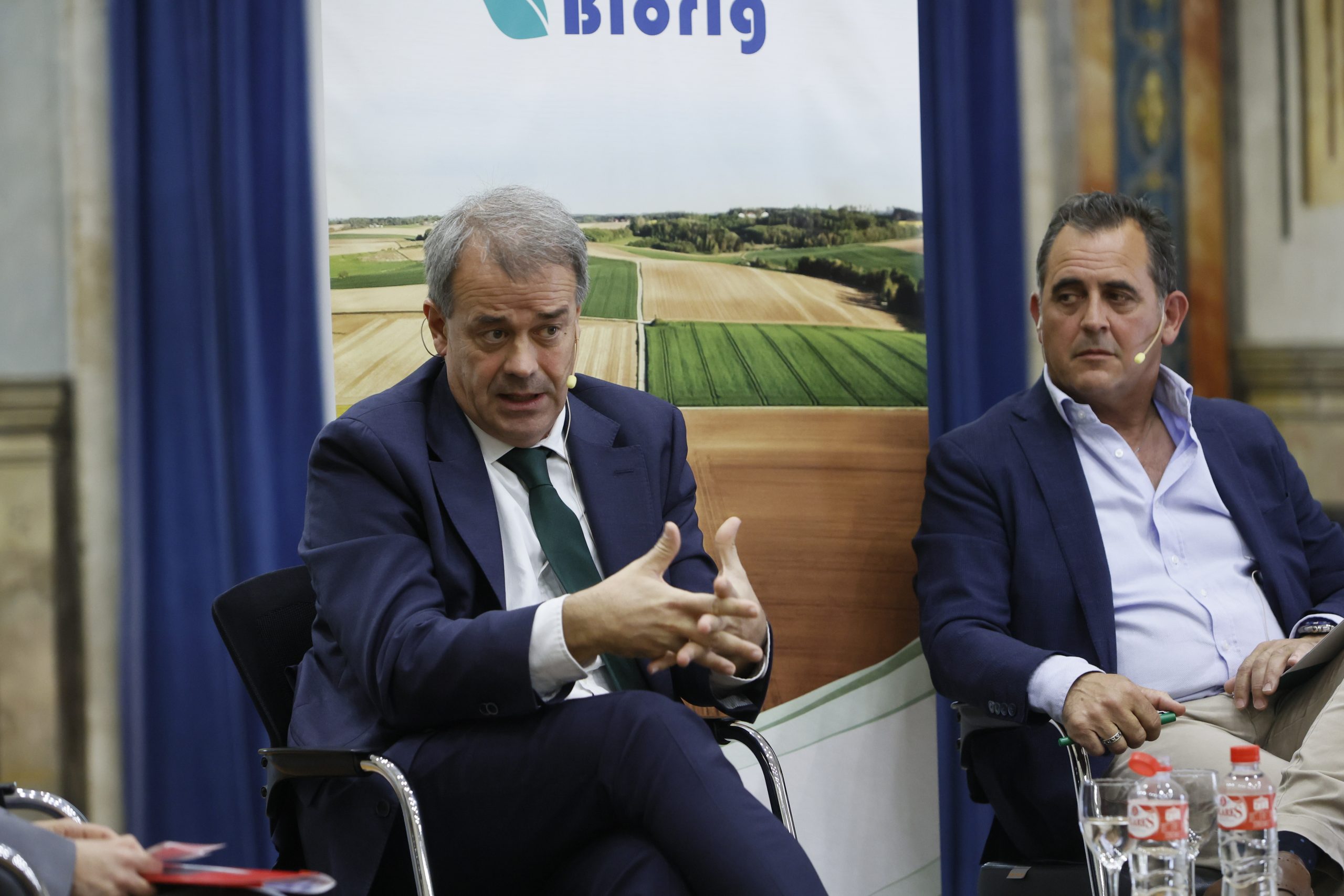
This was followed by a panel discussion moderated by Susana Magdaleno, editor-in-chief of La Gaceta, featuring representatives from the biomethane sector, the livestock industry, and academia. Participants included Manuel Alonso, CEO of Biorig; Juan Luis Delgado, president of ASAJA Salamanca; Mariano Martín, professor of Chemical Engineering at the University of Salamanca; and Pedro Palencia, director of Institutional Relations at Sedigas.

During the meeting, Biorig’s CEO, Manuel Alonso, emphasized that biomethane is an immediate solution to the community’s waste management challenges, noting that this raw material “already exists” and can be converted into renewable energy, organic fertilizers, and biogenic CO₂, without the need to increase livestock numbers or import waste.

In this regard, Alonso noted that the region could achieve an annual biomethane production of around 35 TWh, which is equivalent to more than 250 facilities similar to those developed by Biorig in Castile and León.

An environmental and energy solution based on the circular economy

In addition, Biorig’s CEO addressed some of the main public concerns associated with these facilities, such as odors and the impact on the surrounding environment. In this regard, he emphasized the importance of transparency and firsthand knowledge: “The best thing is to go and see them for yourself.” Alonso described the company’s experience with projects like the one in Castellanos de Villiquera, where residents have been able to tour operational facilities and verify that they are equipped with advanced control systems that minimize any adverse effects.

For his part, Professor Mariano Martín also highlighted the technological maturity of biomethane and the need to step up public outreach: “The technology is working, but it is our responsibility to better explain its benefits.” Along the same lines, Pedro Palencia, speaking on behalf of Sedigas, emphasized that these are safe facilities, backed by decades of experience in European countries such as Germany, France, and Italy.

Technical rigour and environmental guarantees

Speaking on behalf of the primary sector, Juan Luis Delgado highlighted the opportunity that biomethane presents for livestock farms, provided it is developed in a balanced manner. In this regard, he emphasized that it can serve as an additional source of income and an efficient solution for waste management, helping to strengthen the sector’s sustainability.

Throughout the discussion, participants emphasized the need to continue making progress in education, regulation, and collaboration among government agencies, businesses, and the public to consolidate the development of biomethane in Castile and León. As the participants agreed, this sector combines positive environmental impact, industrial development, and opportunities for rural communities.

BIORIG, circular economy and energy sustainability

Biorigis Solarig’s biomethane production division. It was created with the aim of providing innovative solutions in the field of renewable gases, such as biomethane. Its activity is focused on the management of organic agro-livestock raw materials for their transformation into renewable gases and to promote the development of projects in the field of energy transition and circular economy.

Biorig is committed to a circular economy model based on the recovery and management of agricultural and livestock raw materials, commitment to the development of local communities, and the promotion of the production of renewable gases to accelerate the energy transition in the places where it operates.

Major investments in Polish biomethane become a reality. Biorig will invest over PLN 1.5 billion in a platform targeting 1 TWh/ year

Major investments in Polish biomethane become a reality. Biorig will invest over PLN 1.5 billion in a platform targeting 1 TWh/ year

  • Solarig, a worldwide leader in sustainable energy solutions with a proven project record of 20 GW, is expanding its biomethane operations in Poland through its renewable gases division, Biorig.
  • The goal is to develop and operate a portfolio of more than 20 facilities within the next five years, to generate 1 TWh/year of renewable gas production, equivalent to the energy needs of 400,000 households.
  • The new plants will be located in seven Polish regions: zachodniopomorskie (West Pomeranian), wielkopolskie (Greater Poland), dolnośląskie (Lower Silesian), śląskie (Silesian), lubelskie (Lublin voivodeship), mazowieckie (Masovian) and podlaskie (Podlaskie voivodeship).
  • With over 1,5 GW in renewable energy projects under development in Poland, Solarig is now leveraging its expertise and capabilities to advance the deployment of biomethane. The company will combine the adquisition of projects led by local players with greenfield project develeopement, contributing to sustainable growth of the green gas sector.


WARSAW, December 15th – 2025. Solarig, through its green division, Biorig, will invest PLN 1.5 billion in the Polish biomethane market by creating a major platform with the capacity to produce 1 TWh/y — enough to power 400,000 average Polish households.

The Spanish company aims to be a leader in this emerging segment of the local economy. Especially, since Poland has significant potential for biomethane production, which, according to the Polish Economic Institute (PIE), could reach as much as 8 billion m³ per year, corresponding to 46% of the country’s natural gas demand. In the long term – by 2050 – it may increase to even 13 billion m³ (Gas for Climate data), which would place Poland in 5th place in the EU in terms of production capacity.

Biorig also chose this region due to its large livestock base, which offers potential for sustainable feedstock. Poland has the second-highest number of farms in the EU after Romania, with 1.3 million agricultural holdings. The country also has nearly 5.9 million hectares of cultivated land devoted to cereals, as well as robust and varied poultry, cattle and swine farming sectors. These conditions create an ideal landscape for Biorig’s green investments, which are deeply rooted in the rural environment and integrated with the agricultural sector, relying on manure, slurry and various agricultural by-products, including straw. Biorig’s comprehensive model optimizes waste management from the primary sector, reducing environmental contamination of soils through nitrification.

Local collaboration for the development

Biorig’s growth strategy in Poland will be centered on collaboration with local developers and suppliers who share the company’s technical and environmental vision. This will be achieved through the acquisition of brownfield projects that are ready to build (Rtb). The company will then be able to further develop these initiatives by integrating its experience in the construction, management and operation of biomethane plants in Europe. This approach will be complemented by greenfield developments for new facilities.

Announcements regarding business plans for Poland are part of the development strategy of the Solarig Group, representing a company’s commitment to Poland’s energy transition.

By launching Biorig’s operations in Poland, Solarig is broadening its contribution to the energy transition beyond renewable electricity, and adds a focus on renewable gases that amplifies its current portfolio under development of around 1.5 GW of energy storage assets (BESS) and PV projects. Meanwhile, Biorig strengthens its position as one of Europe’s leading biomethane developers and producers, with over 60 facilities under development across Spain, Italy, and now Poland.

Altogether, this portfolio will generate around 5 TWh/year of renewable energy, making a decisive contribution to reducing Europe’s dependence on fossil natural gas and improving waste management in key regions of the continent.

– Poland represents a strategic opportunity due to the great potential of its market: this is a key moment, thanks to regulatory momentum that encourages the installation of biomethane plants—energy infrastructures essential for reducing dependence on

fossil fuels and efficiently managing organic waste for recovery as biofertilizers. These are solid foundations on which to establish ourselves as a leading international player in the biomethane market. We are excited to contribute to the sector’s development with a model successfully tested in Spain and Italy, adapted to the local context – explained Piotr Tomasz Kosior, Country Manager Biorig Poland.

Biorig’s plan is to develop around 20 biomethane plants located across several regions in Poland, including Zachodniopomorskie (West Pomeranian), Wielkopolskie (Greater Poland), Dolnośląskie (Lower Silesian), Ślaskie (Silesian), Lubelskie (Lublin), Mazowieckie (Masovian), and Podlaskie (Podlaskie). Biomethane produced there will be supplied to industrial customers, particularly energy-intensive manufacturers seeking cost-competitive green energy, through gas grid contracts for pipeline delivery and long-term purchase agreements (BPAs) to assure long-term income.

__________________________________________________________

Solarig, sustainable energy solutions for society

Solarig develops, finances, builds, and operates infrastructures for the energy transition. The company currently operates over 15 GW of renewable assets and has a project portfolio exceeding 20 GW across 12 countries. It promotes global decarbonization wherever it operates through renewable energy, green gases, and sustainable fuels. Headquartered in Madrid (Spain), Solarig has a strong presence in Europe, Central and South America, Japan, and Australia.

Solarig initiated its operations in Poland in 2023. Since then, a fully capable local structure was established, which has since taken over origination activities. As a result of both the in-house efforts and co-development partnership, Solarig’s portfolio in Poland currently includes over 300 MW of PV assets and over 1,1 GW of BESS projects.

BIORIG, circular economy & energetic sustainability

Biorig is Solarig’s biomethane production division. It was created to provide innovative solutions in the field of renewable gases, such as biomethane. Its activity focuses on the management of agricultural and livestock organic feedstock for transformation into renewable gases and on promoting projects that foster energy transition and circular economy.

Biorig joins RETEMA and MITECO’s #DiálogosResiduos (Waste Dialogues) on the future of waste management

Manuel Alonso: “Fertilizer products must be sanitized, stabilized, and provide real agronomic value.”

Madrid, October 29, 2025. Biorig, Solarig’s renewable gases division, participated last Thursday, October 23, in the second day of the Dialogues for Progress in Waste Management, promoted by RETEMA magazine together with the Ministry for Ecological Transition and Demographic Challenge (MITECO). Biorig’s Managing Director, Manuel Alonso, participated in the panel dedicated to biowaste and highlighted the company’s recovery of raw materials from the primary sector by transforming slurry, manure, and straw into renewable energy and organic fertilizers certified under Regulation (EU) 2019/1009. The meeting, which took place at the College of Civil Engineers in Madrid, was attended by more than 250 professionals from the public and private sectors to analyze new regulatory frameworks and seek solutions that enable more efficient and circular management of all types of waste.

During the conference, three key areas were highlighted: (1) regulatory transformation towards a circular economy, (2) public-private collaboration to optimize the collection and treatment of biowaste, and (3) citizen involvement as an essential part of the system.

The voice of Biorig: commitment and action

In this context, Biorig participated in the session on biowaste alongside the Deputy Director General of Waste at MITECO, Margarita Ruiz; the Technical Advisor to the Directorate of Agricultural Production and Markets at the Ministry of Agriculture, Maria Luisa Ballesteros; the Director General of the Environment for the Government of Navarre, Ana Bretaña; and the manager of the Almanzora Levante Vélez Consortium, Marta Sánchez de Puerta, in a meeting moderated by the director of Retema, Alberto Casillas Paz.

During his speech, Manuel Alonso reaffirmed Biorig’s commitment to complying with organic fertilization and sustainable soil nutrition regulations for biomethane plants as the best formula for tackling waste management problems in the primary sector and promoting a truly circular economy.

“We cannot just dump anything on the field. The fertilizer product resulting from anaerobic digestion must be sanitized, stabilized, and provide real agronomic value (…) Biomethane development models must strictly comply with fertilizer regulations and the decree on sustainable nutrition of agricultural soils,” explained the Managing Director of Biorig.

Biorig actively participates in technical-industrial dialogue to align its developments with regulatory and market trends that demand a more sustainable use of waste. Through its model, the company facilitates not only the recovery of agricultural and livestock waste, but also the generation of organic fertilizers, biogenic CO₂, and green energy.

Challenges, opportunities, and vision for the future

During the conference, it became clear that Spain has significant potential for deploying organic waste or biowaste infrastructure, but currently faces barriers in terms of processing, territorial coordination, and access to technology.

In this regard, creating an integrated vision among the different administrations is essential to generate a clear legal framework that can be implemented throughout the territory. Similarly, streamlining project processing and promoting public-private partnerships that guarantee the viability of projects and their integration into the territory is key to changing the perception of waste from a problem to an opportunity to integrate it as a resource into a circular economy system.

BIORIG, circular economy and energy sustainability

Biorigis Solarig’s biomethane production division. It was created with the aim of providing innovative solutions in the field of renewable gases, such as biomethane. Its activity is focused on the management of organic agro-livestock raw materials for their transformation into renewable gases and to promote the development of projects in the field of energy transition and circular economy.

Biorig is committed to a circular economy model based on the recovery and management of agricultural and livestock raw materials, commitment to the development of local communities, and the promotion of the production of renewable gases to accelerate the energy transition in the places where it operates.

Biorig boosts biomethane production in Italy with an investment of more than €300M until 2030

Solarig expands its biomethane operations in Italy through Biorig

  • Its objective is to develop and operate a portfolio of more than 20 facilities by 2030 to generate a renewable gas production of 1 TWh/year, equivalent to the energy needs of 360,000 households.
  • With more than 15 years of experience in the development of renewable infrastructures in Italy and more than 1 GW of completed projects, Solarig is now putting its know-how and capabilities at the service of biomethane deployment. The company will combine its own initiatives with the incorporation of projects driven by local actors, contributing to the sustainable growth of the sector.


Madrid, 09-07-25. Biorig, la división de gases renovables de Solarig, anuncia la ampliación de su actividad en el sector del biometano en Italia. La firma prevé una inversión en el país de más de 300 millones de euros hasta 2030 para el desarrollo y operación de más de 20 plantas de biometano que permitirán alcanzar una producción anual de cerca de 1 TWh/año (90 millones de metros cúbicos al año), equivalente al consumo de 360.000 hogares italianos.

Solarig, which has been present in the country for more than 15 years, thus reinforces its commitment to Italy’s energy transition, extending its contribution beyond solar energy and consolidating a firm commitment to renewable gases. For its part, Biorig is expanding its developments internationally for the first time to become one of the main players in the production of biomethane in Europe, with more than 20 projects under development in Spain that will generate around 3 TWh/year of clean energy, to which the projects in Italy have now been added.

Strategic opportunity and energy diversification

“Italy represents a strategic opportunity because of the solidity of its commitment to biomethane: a clear and flexible regulatory framework, a clear concern for organic waste management, and a well-defined vision of the agronomic advantages of biofertilisers. In short, a firm foundation on which to build our experience. We are excited to be able to contribute to the development of this sector with a proven model adapted to the local context. “explained Manuel Alonso, Managing Director of Biorig.

Agnese Rocco, Solarig’s Country Manager in Italy, said: “.Biomethane is an essential pillar to advance in the decarbonisation of non-electrifiable sectors. This investment initiative is part of Solarig’s new Strategic Plan 2025-2028, which is committed to technological diversification as a response to the challenges of the energy transition. ”.

Own development and collaboration with the local fabric

Biorig’s growth strategy is based on its own development of new facilities, as well as on the incorporation of mature initiatives promoted by local players. In this context, the company plans to collaborate with developers and operators who share its technical and environmental vision, and who have projects aligned with national regulatory and environmental objectives.

“Our goal is to become one of the leading biomethane producers in Europe, and to make this activity one of Solarig’s strategic pillars in the coming years, alongside the development of renewable energy projects. To achieve this ambition, Italy is a key country. We have a solid track record as a developer of energy infrastructures, both internationally and in Italy, and we want to use all our experience to drive the growth of a sector that is already showing remarkable dynamism and maturity. “says Manuel Alonso.

Solarig, sustainable energy solutions for society

Solarig develops, finances, builds and operates infrastructure for the energy transition. It currently operates more than 10 GW of photovoltaic plants and has a portfolio of more than 20 GW of energy projects in 12 countries. The company promotes global decarbonisation wherever it operates through renewable energy solutions, green gases and sustainable fuels. Headquartered in Madrid, Spain, it has a strong presence in Europe, Central and South America, Japan and Australia.

Committed to innovation and sustainability, Solarig has a team of over 1,400 professionals. Solarig has been present in Italy for 15 years, during which time important milestones have been achieved, such as the development of more than 1 GW of solar plants thanks to a workforce of more than 100 professionals in the country.

BIORIG, circular economy and energy sustainability

Biorigis Solarig’s biomethane production division. It was created with the aim of providing innovative solutions in the field of renewable gases, such as biomethane. Its activity is focused on the management of organic agro-livestock raw materials for their transformation into renewable gases and to promote the development of projects in the field of energy transition and circular economy.

Biorig is committed to a circular economy model based on the recovery and management of agricultural and livestock raw materials, commitment to the development of local communities, and the promotion of the production of renewable gases to accelerate the energy transition in the places where it operates.

The academy, the agricultural sector and the Junta de Castilla y León endorse the development of biomethane in Zamora

Members of Asaja Zamora, Aebig, the University of León and Biorig discuss the challenges in the deployment of biomethane in a forum of ‘La Opinión – El Correo de Zamora’.

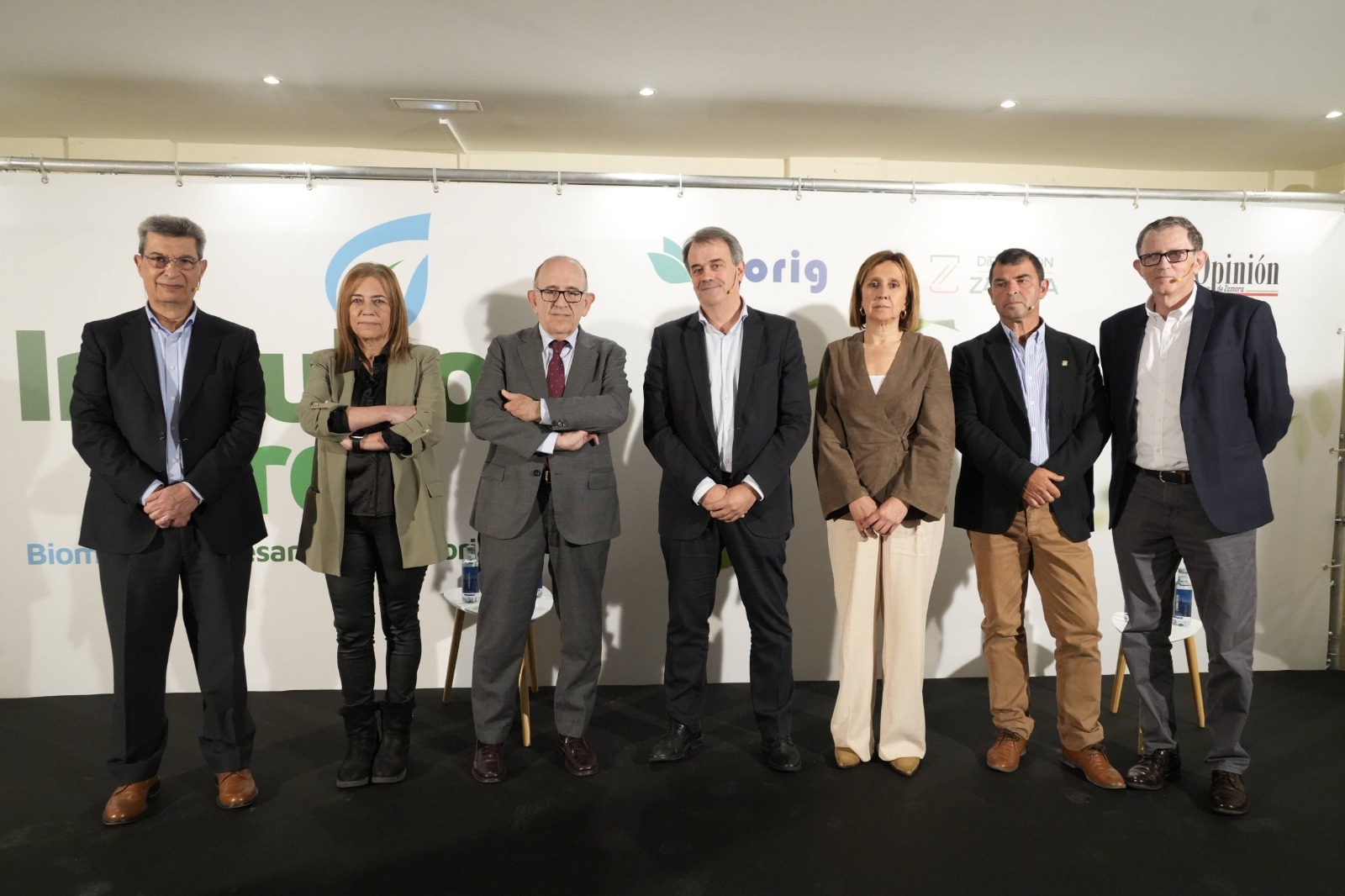
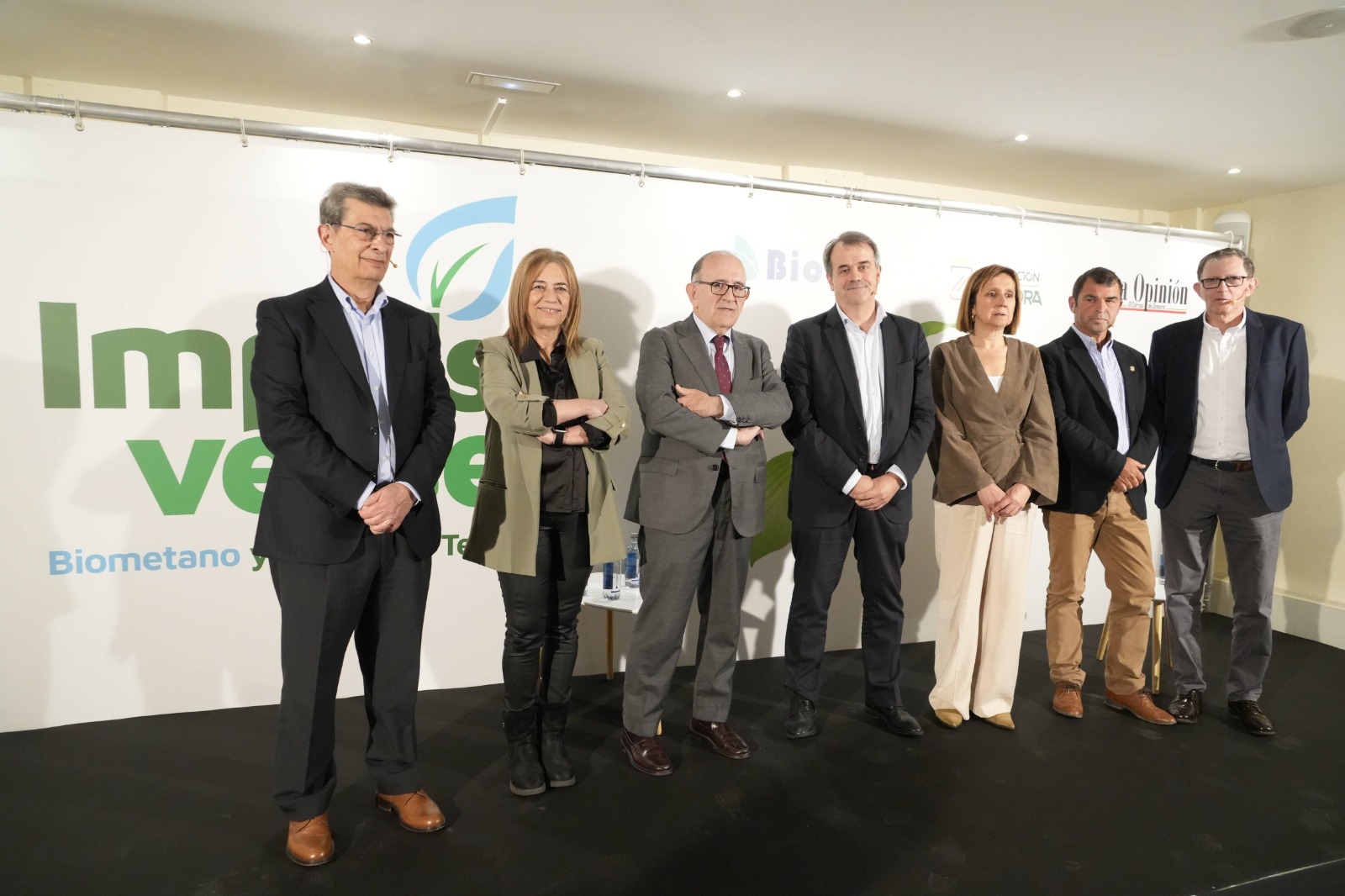
Zamora se consolida como un territorio clave en la transición energética gracias al impulso del biometano. El foro “Impulso verde: biometano y desarrollo territorial”, organizado por La Opinión – El Correo de Zamora con el patrocinio de Biorig y la Diputación de Zamora; reunió el pasado miércoles 7 de abril a actores fundamentales del sector agrario, la comunidad científica y las empresas y asociaciones del sector del biometano para poner de manifiesto la oportunidad que representa el desarrollo del biometano en Zamora y Castilla y León.
Antonio Medina, presidente de Asaja Zamora; Francisco Repullo, presidente de honor de la Asociación Española del Biogás (Aebig); Antonio Morán, catedrático de la Universidad de León; y Manuel Alonso, director general de Biorig, expusieron sus opiniones sobre esta tecnología tras la intervención de José Manuel Jiménez, director general de Infraestructuras y Sostenibilidad Ambiental, quien defendió que Castilla y León puede sustituir más del 50% del gas natural fósil que se importa del exterior gracias al biometano.

A call to action from the energy sector

Manuel Alonso, CEO of Biorig, conveyed a strong message during his speech, in line with the principles of sustainability and circular economy defended by the company: “We must be aware of the need to manage waste and achieve energy diversification”.

In a context marked by climate urgency and the need for energy autonomy, biomethane is positioned as a clean, efficient alternative capable of generating wealth in the areas that need it most. According to estimates by the Junta de Castilla y León, around 35 million tons of agricultural and livestock waste are produced annually in the region, compared to 1 million tons of urban waste, the management of which must be optimized to comply with increasingly restrictive environmental criteria and the improvement of agricultural soils.

Castilla y León: leadership in renewable energy and biomethane potential
José Manuel Jiménez, general director of Infrastructures and Environmental Sustainability of the Junta de Castilla y León, participated in the conference, highlighting that the community already produces 90% of its electricity from renewable sources. He also pointed out that biomethane would make it possible to replace more than 50% of the fossil natural gas currently consumed, with an estimated investment of 2,500 million euros.

A plural and complementary panel


The forum brought together key representatives of knowledge, production and innovation. The panel discussion, moderated by journalist Verónica de Castro. This multidisciplinary panel discussed the need to create a stable regulatory environment, to foster public confidence and to strengthen the dialogue between developers, administrations and the local population.

Both the public and business sectors stressed the importance of acting seriously, with technical rigor and transparency. The commitment to renewable gases, and in particular biomethane, requires solid projects, well communicated and oriented to generate a positive impact on the territory.

Biorig’s commitment with Zamora
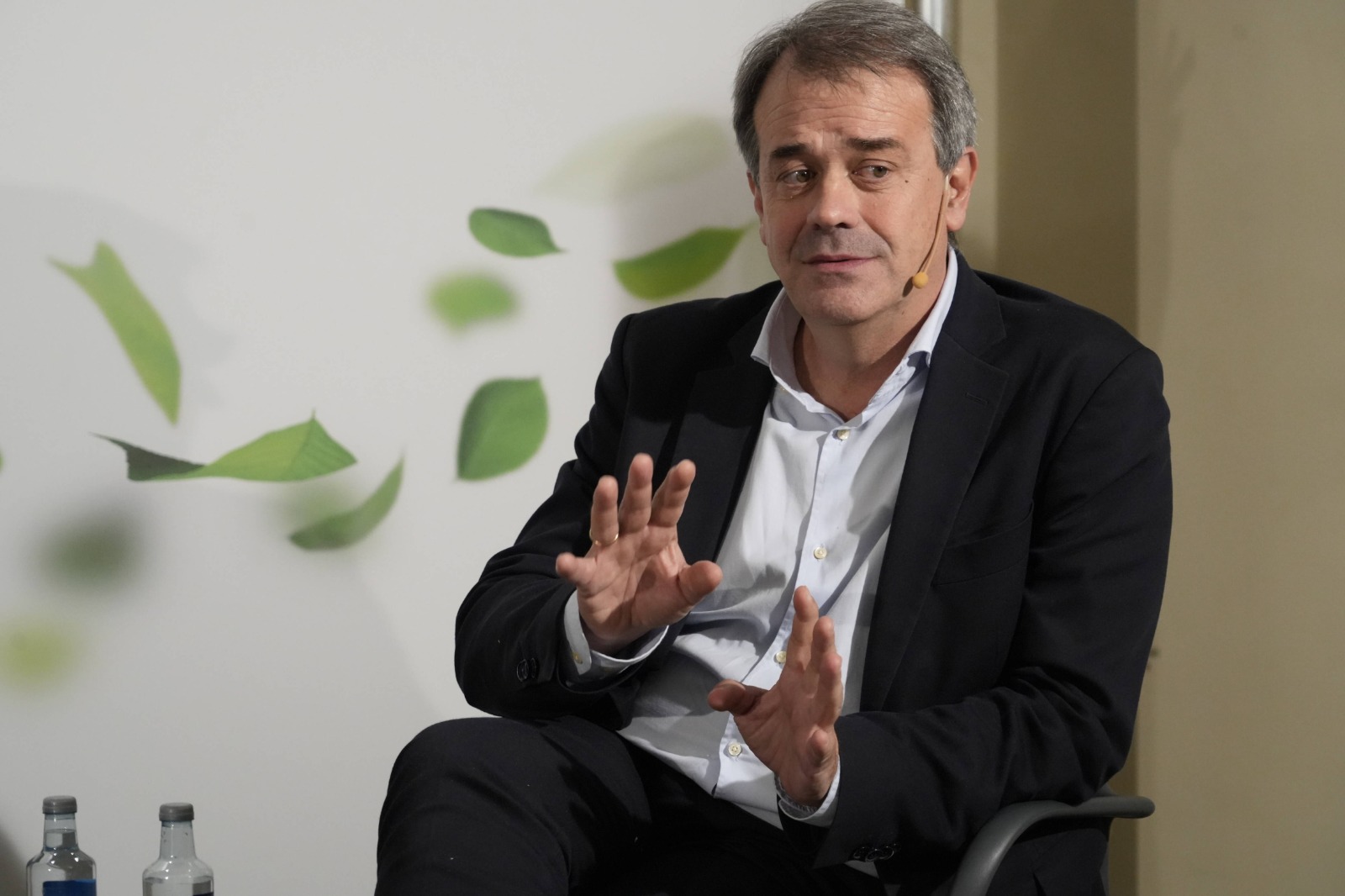
At Biorig we believe in a decentralized energy model and in the need to integrate all actors in the transformation process. Our participation in this forum reinforces the company’s commitment to sustainability, the creation of rural employment and the intelligent valorization of local resources.

The future of energy involves circular, fair and collaborative solutions. In Zamora, this transition has already begun.

BIORIG, circular economy and energy sustainability

Biorig is Solarig’s biomethane production division. It was created to provide innovative solutions in the area of renewable gases and CO2 capture. Its activity is focused on the management of organic waste for its transformation into gases of renewable origin and to promote the development of projects within the framework of the energy transition and the circular economy.

Biorig launches new website!

We developed a new site with an updated visual design and content for www.biorig.energy

Biorig, Solarig’s green gases division, inaugurates its new digital space in biorig.energy, taking another step forward in our evolution as a company and consolidating our position as a reference in the development and operation of biomethane plants.

With a renewed design and improved functionalities, the new website clearly reflects our identity and our commitment to sustainability and innovation. This redesign responds to our desire to offer a simpler, more useful and personalised digital experience, aligned with our identity and values. For its development we have had the collaboration of Prodigioso Volcán, one of the leading web design agencies in Spain, with extensive experience in strategic digital communication projects.

The result is a more modern, intuitive and accessible platform, making it easier for our visitors to access all the information about our projects, solutions and vision for the future.

New features:

  • New visual design that conveys our values of innovation, sustainability and proximity.
  • More intuitive navigation, designed to make it easier for you to find everything you need.
  • Accessibility improvements to ensure an inclusive experience for all users.
  • A space designed to reinforce our commitment to transparency, sharing in a clear and accessible way who we are, what we do and how we contribute to sustainable development.
  • New blog, in which we will publish technical and informative content on different angles of biomethane, as well as offering a detailed view of Biorig’s projects and their social impact in the communities where we operate.

Valorizating biomethane

The new site will offer specific content explaining in detail the operation of biomethane installations, a renewable gas of biological origin with characteristics identical to fossil natural gas. This technology contributes to the implementation of circular economy models and the development of agricultural and livestock farming communities.

Cecilia Carballo, General Manager of Sustainability and Communication at Solarig, said: “This new website is not only a window into our work, but also an invitation to build a more sustainable energy future together. We believe in the need to act transparently and in collaboration with the local communities where we operate, and this website brings us closer to this milestone.”

BIORIG, circular economy and energy sustainability

Biorig is Solarig’s biomethane production division. It was created to provide innovative solutions in the area of renewable gases and CO2 capture. Its activity is focused on the management of organic waste for its transformation into gases of renewable origin and to promote the development of projects within the framework of the energy transition and the circular economy.

Biorig defends the opportunity that biomethane represents in the Energy Forum of El Español – Castilla y León

The company analyzes together with Sedigás, the Junta de Castilla y León and Redexis the deployment of these energy infrastructures in the community.

On Thursday, April 10, Biorig participated in the III Energy Forum of El Español Castilla y León, under the title “Clean energy in Castilla y León: a model of success and sustainability”. In this event, the advances and challenges in wind, solar, nuclear, hydrogen and biomethane energy were analyzed, with a focus on the territory and its transformative capacity.

The general manager of Biorig, Manuel Alonso, took part in the round table dedicated to “Biogas and biomethane: the boost of green gases in Castilla y León”, sharing space with José Manuel Jiménez Blázquez, general manager of Infrastructures and Environmental Sustainability of the Junta; Joan Batalla, president of Sedigás; and Federico Medina, director of Redexis central area; in a meeting moderated by the editor of El Español-Castilla y León, Ángel Pisano.

During his speech, Manuel Alonso presented the agro-livestock development model that characterizes Biorig, which promotes more than 20 plants distributed in rural environments aimed at transforming livestock waste into renewable energy, organic fertilizers and biogenic CO₂.

The general manager of Biorig emphasized that the legal requirements and the guarantee requested from biomethane facilities in Spain “are at the highest European standards”.

These facilities prevent agricultural and livestock wastes from ending up dumped in the fields without sanitization, as they have been up to now, so Manuel defended that Castilla y León “cannot afford to let this opportunity slip away”.

In addition, he gave several European examples, such as Denmark or the Veneto region, with population densities 10 times higher than those of Castilla y León and with hundreds of plants in operation. “There is a concern for managing waste in those places and that implies that the development of these plants are integrated into society and are seen as a normal thing,” he pointed out.

BIORIG, circular economy and energy sustainability

Biorig is Solarig’s biomethane production division. It was created to provide innovative solutions in the area of renewable gases and CO2 capture. Its activity is focused on the management of organic waste for its transformation into gases of renewable origin and to promote the development of projects within the framework of the energy transition and the circular economy.