
Viaje a Alemania

Biorig visits biomethane plants in Germany with residents from Zamora and Navarra located just 100 metres from homes

First-hand insight into the Güstrow and Friedland facilities in northeastern Germany

Madrid, 21-01-26. Understanding a technology on paper can never replace seeing it in operation. With this premise in mind, Biorig organised a visit to Germany together with residents and municipal representatives from Zamora and Navarra, with the aim of showing on the ground how some of the most advanced biogas and biomethane plants in Europe operate, how they are integrated into their surroundings and what real impact they have on rural development. The trip made it possible to verify first-hand that these facilities not only coexist with local populations, but also form an active part of a fully consolidated circular economy model.

Germany is one of Europe’s leading countries in the deployment of biogas and biomethane, with more than 11,000 biogas plants in operation and over 260 biomethane production facilities. This journey began decades ago and has positioned these infrastructures today as key components of the energy, agricultural and territorial system. In this context, the Spanish delegation visited two emblematic facilities: Güstrow and Friedland, both owned by EnviTec Biogas, recognised for their scale, technology and social integration.

The first stop was Güstrow, in the northeast of the country, one of the largest biomethane plants in Europe. Located less than one kilometre from the urban centre, this facility processes around 290,000 tonnes per year of agricultural and livestock waste — exclusively manure, poultry litter and maize silage — and produces approximately 289 GWh of renewable energy annually. This amount would be sufficient to supply more than 100,000 households, three times the population of the municipality of Güstrow itself.

The plant stands out for its technological diversification. In addition to injecting biomethane into the gas grid, it produces bio-LNG for heavy transport, electricity and heat, as well as up to 18,000 tonnes per year of liquefied biogenic CO₂ of food-grade quality, destined for industrial sectors such as food and chemicals. All of this takes place within a perfectly organised complex, with differentiated circuits, environmental control and an operational design aimed at minimising any impact on the surrounding area.

One of the aspects that attracted the most attention during the visit was the management of digestate, the organic fertiliser resulting from the process. This by-product, hygienised, stabilised and odourless, is stored outdoors without causing any nuisance and is subsequently spread over approximately 40,000 hectares of nearby farmland. More than 50 local farmers take part in this circular model, supplying manure and receiving in return a fertiliser with higher agronomic quality and easier assimilation by crops.
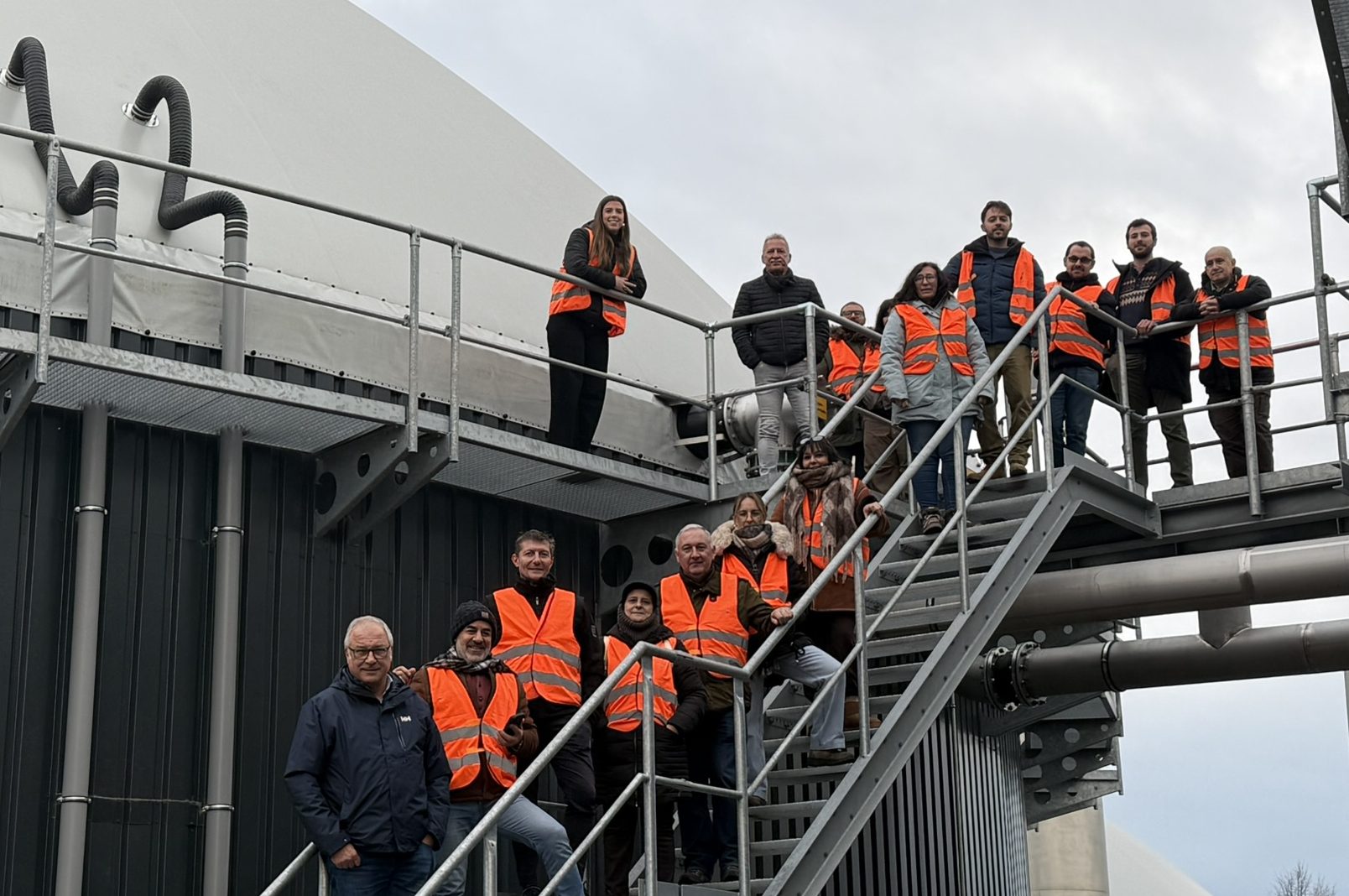
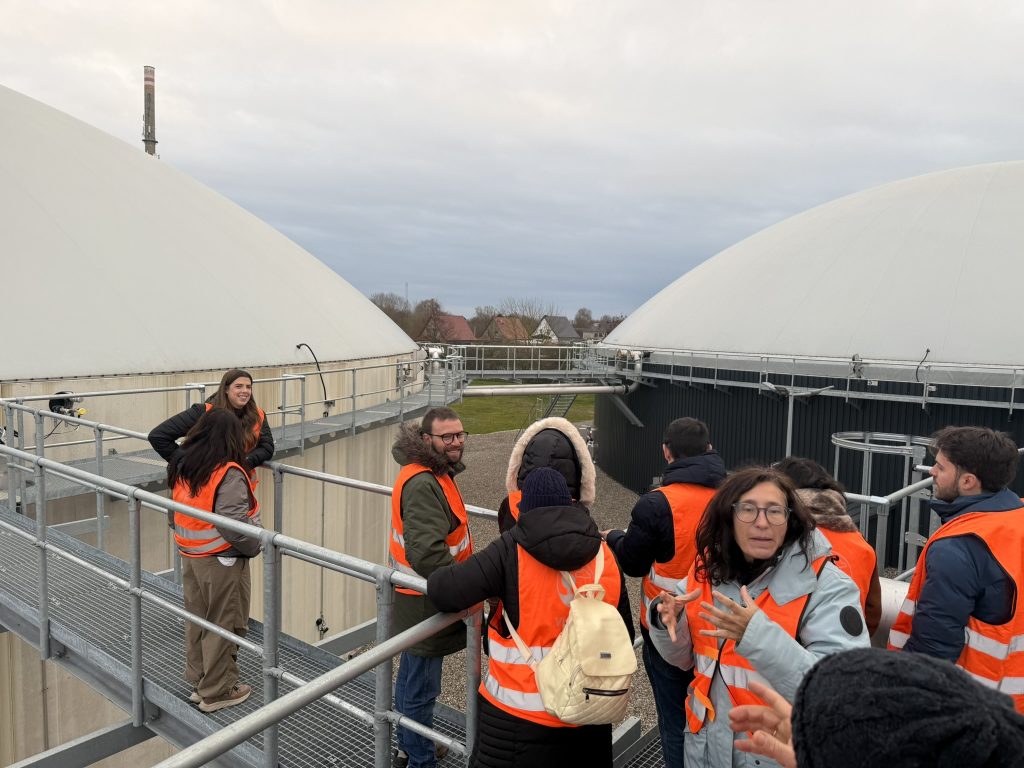
Travel to Germany with Envitec

Friedland: renewable energy just metres from homes

Biomethane housing Germany

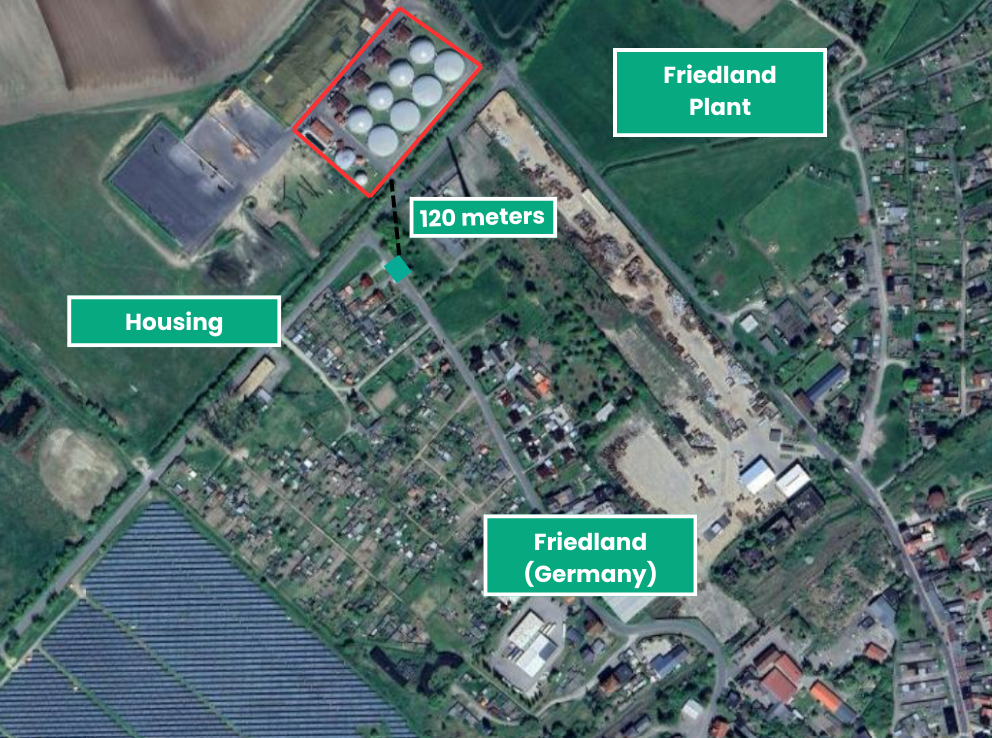
The visit continued in Friedland, a biogas plant that clearly illustrates the coexistence between this type of facility and the urban environment. In this case, the nearest homes are located just 100 metres from the plant. Far from generating opposition, the facility has been operating since 2007 without any significant incidents, supplying the town through a district heating network that uses renewable gas to provide heat directly to households.

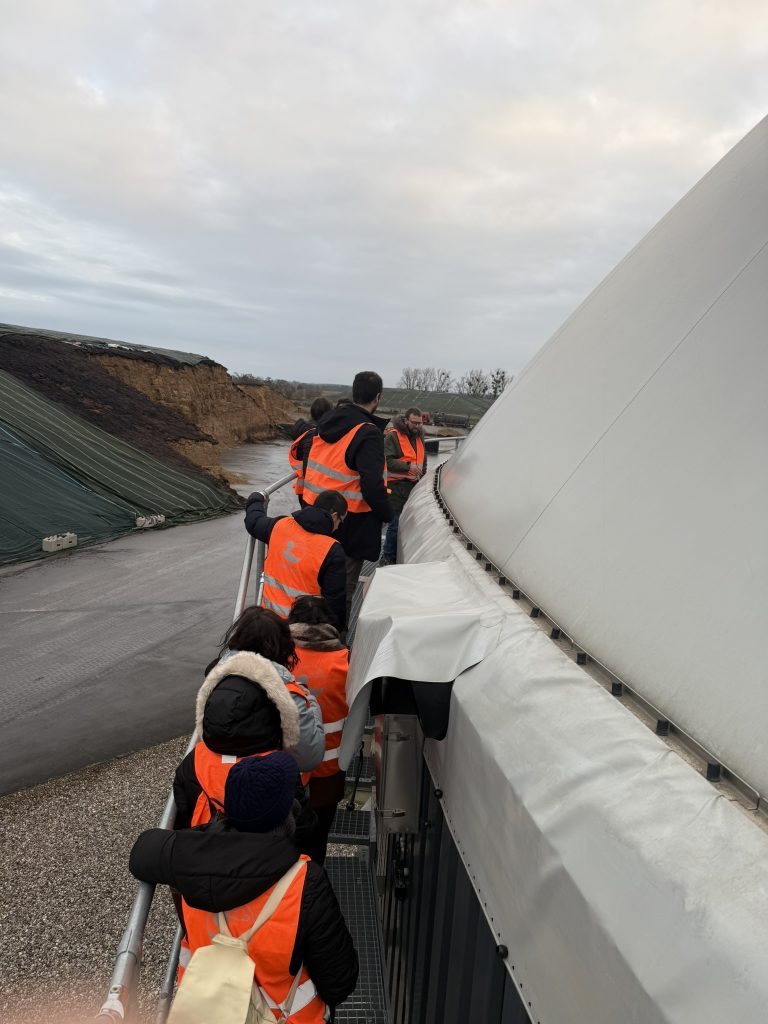
Friedland processes around 145,000 tonnes of manure and slurry annually, a particularly relevant feedstock in the Spanish context. The poultry litter storage building was one of the key points of the visit: fully enclosed and equipped with a powerful biofilter that renews the air every half hour, it allowed visitors to remain inside without perceiving any odour.

This experience was especially revealing for municipal representatives. Pedro González, Mayor of Vezdemarbán (Zamora), summed it up as follows: “I came without prejudice to see the plant, mainly to check what smells there were and what impact it might have. I was very surprised to see that houses are right next to the plant. We are inside the facility and there is absolutely no smell at all; we are just a few metres from the poultry litter storage and there is no odour — everything is properly prepared.”

Mature and standardised technology

Both facilities provide a clear understanding of the biomethane production process. It begins with the collection of agricultural and livestock waste and its introduction into closed digesters, where anaerobic digestion takes place under controlled conditions, generally mesophilic, at around 40°C. This process, in addition to producing biogas, significantly reduces odour emissions thanks to the degradation of sulphur compounds.

“We are inside the plant and there is absolutely no smell at all.”

The resulting biogas then undergoes a purification or upgrading process, removing CO₂ and impurities to obtain biomethane with natural gas quality. In projects such as those developed by Biorig in Spain, this process is complemented by a thermal treatment of the feedstock, which guarantees full sanitisation of the materials and enables the valorisation of digestate as a fertiliser in accordance with European Regulation 2019/1009.

The feedstocks used in Güstrow and Friedland — manure, poultry litter, slurry and maize silage — are similar to those planned for Biorig’s projects in Spain. At no point are sewage sludge, municipal waste or oils used, further reinforcing the integration of these plants into the local agri-livestock ecosystem.

Perceptions change with experience

For Itziar Malón, Mayor of Rada (Navarra), the visit was conclusive: “These are very well organised plants, everything is very clean and orderly, each raw material has its own space. We came here to see what technology is used in Germany (…) the plant has been operating since 2007 with zero problems, so I feel reassured.”
Her testimony reflects how direct knowledge and transparency help to dismantle fears and misconceptions.

During the tour, participants were able to confirm that odours are restricted exclusively to very specific waste-handling areas and never extend outside the facilities. They also observed the landscape integration of the plants, their normalisation within the territory and their role as local industries generating skilled employment.

Knowledge and transparency as the basis for development

The visit to Germany forms part of Biorig’s strategy to promote knowledge and transparency among its different stakeholders. Showing real, consolidated and fully operational examples helps to contextualise the projects the company is developing in Spain and to explain, with data and proven experience, how these facilities work.

In regions such as Castilla y León, where Biorig is promoting a development plan for ten biomethane plants, these types of informative initiatives are key to explaining the role of this infrastructure in decarbonisation, the efficient management of agricultural and livestock waste and the strengthening of the primary sector. Germany demonstrates that biomethane is not a future promise, but an industrial reality compatible with everyday life, rural development and long-term sustainability.

Contact

We are close to you

Do you want to contact us, propose a project, learn about our services? You can reach us at any of our offices, by e-mail or telephone.