

Soil conservation: turning waste into fertility

Soil: a living and strategic resource
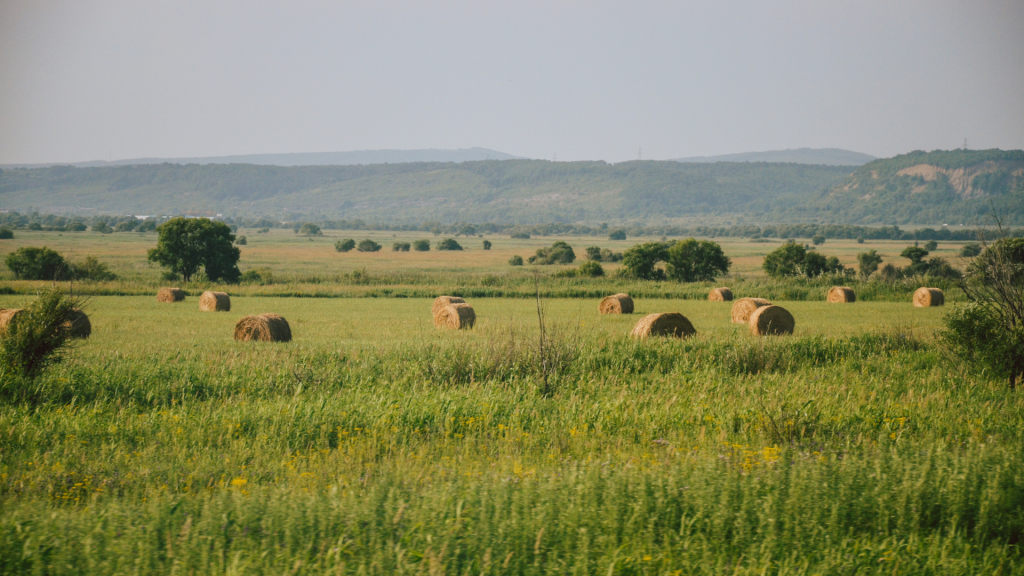
Madrid. 07.07.2026. Every 7 July, International Soil Conservation Day is celebrated – a day that serves as a reminder of something essential: soil is not just the surface on which we grow food, but a living, finite and strategic resource. Agricultural productivity, biodiversity, water quality and the resilience of rural areas to climate change all depend on its condition.

The FAO points out that healthy soils are the foundation of agricultural development, food production and numerous ecosystem services. It also warns that soil degradation takes many forms: loss of organic matter, erosion, salinisation, compaction, loss of fertility and deterioration of soil structure.

In Spain, this debate has a particularly significant dimension for the agricultural and livestock sector. Agriculture and livestock farming generate organic materials with agronomic value — such as slurry, manure, plant residues and straw — but their management must be carried out with proper planning, traceability and technical criteria. When these material flows are not managed properly, they can lead to environmental externalities, including emissions, local nuisances and diffuse nitrate pollution. In this article, we will explain best practices for ensuring that soils remain healthy, primarily through the recovery of organic matter for use as energy and organic fertilisers.

An environmental and production challenge

Soil degradation can manifest itself through erosion, loss of organic matter, compaction, salinisation or non-point source pollution. In agricultural areas, this challenge calls for solutions that enable productivity to be maintained without compromising natural resources. It is therefore necessary to move towards models that help the primary sector to produce better, more efficiently and with less environmental impact.

Loss of organic matter.
01 Loss of organic matter.
Unbalanced nutrient utilisation.
02 Unbalanced nutrient utilisation.
Erosion caused by wind or water.
03 Erosion caused by wind or water.
Diffuse pollution associated with the improper management of fertilisers or manure.
04 Diffuse pollution associated with the improper management of fertilisers or manure.
Reduced ability of the soil to retain water and carbon.
05 Reduced ability of the soil to retain water and carbon.

From waste to resource: an opportunity for the region

Agriculture and livestock farming produce organic materials of agronomic value, such as slurry, manure, plant residues and straw. If managed correctly, these materials can become a source of nutrients and organic matter for the soil.

The right approach is not to single out the livestock sector, but to provide it with technical, traceable and viable solutions. Farmers and livestock farmers play a vital role in soil conservation, as they work directly on the land and need tools that enable them to meet increasing environmental requirements without losing competitiveness.

The problem is not farming and livestock rearing itself, but the lack of adequate tools to make good use of their organic waste streams.

The circular economy makes it possible to turn an environmental burden into a useful resource.

The proximity between waste generation, recovery and agricultural use reduces logistical and environmental impacts.

Biomethane and digestate to close the nutrient cycle

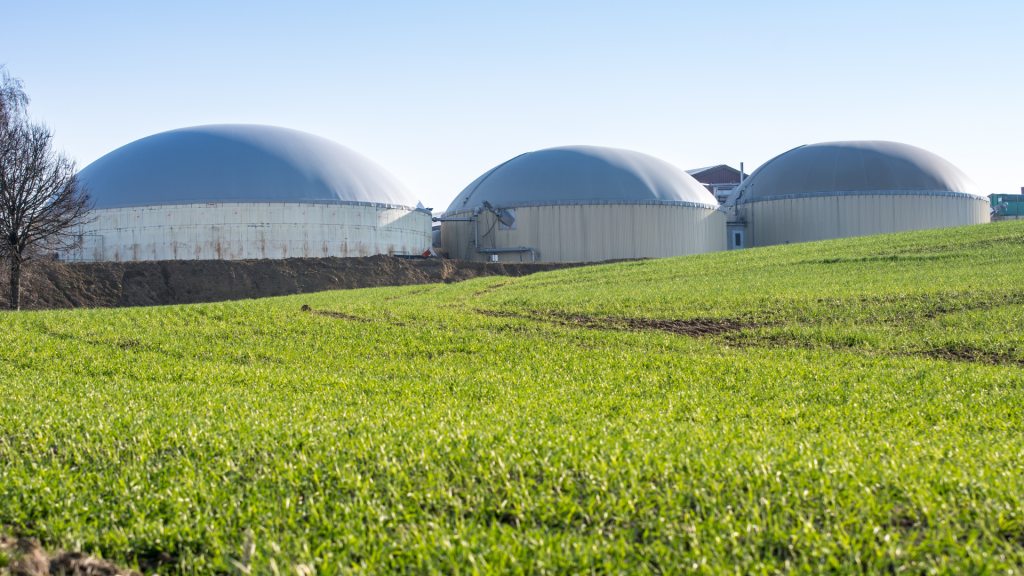
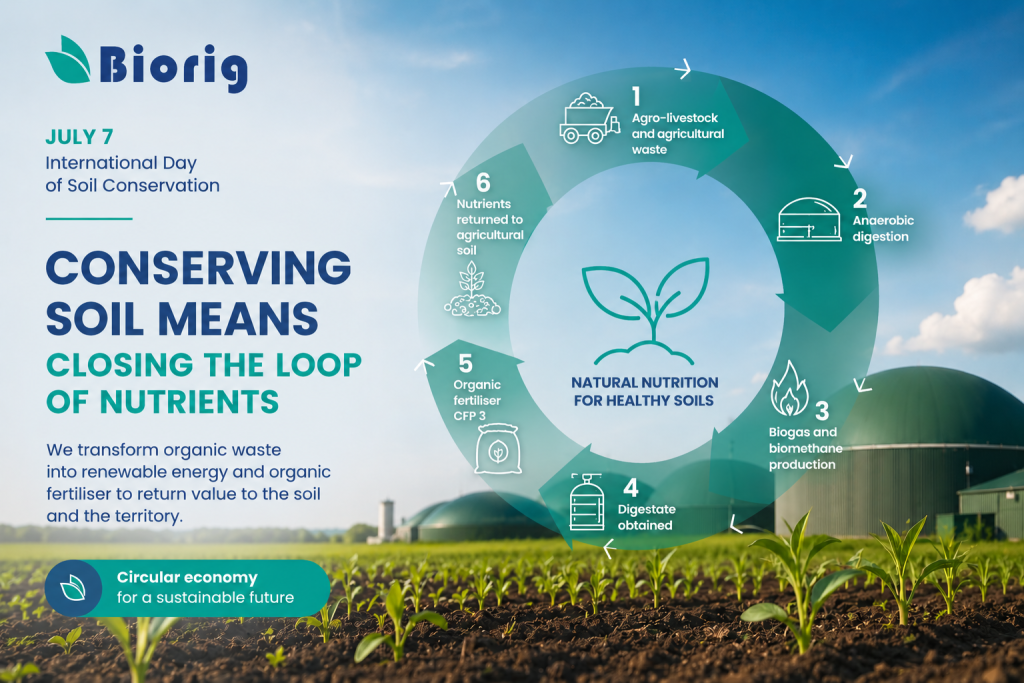
Biorig’s operations are based on the recovery of organic waste through anaerobic digestion. This process enables agricultural and livestock materials to be converted into biogas, which is then purified to produce biomethane. At the same time, it produces digestate, a stream rich in organic matter and nutrients that can be used as a basis for the production of organic fertilisers.

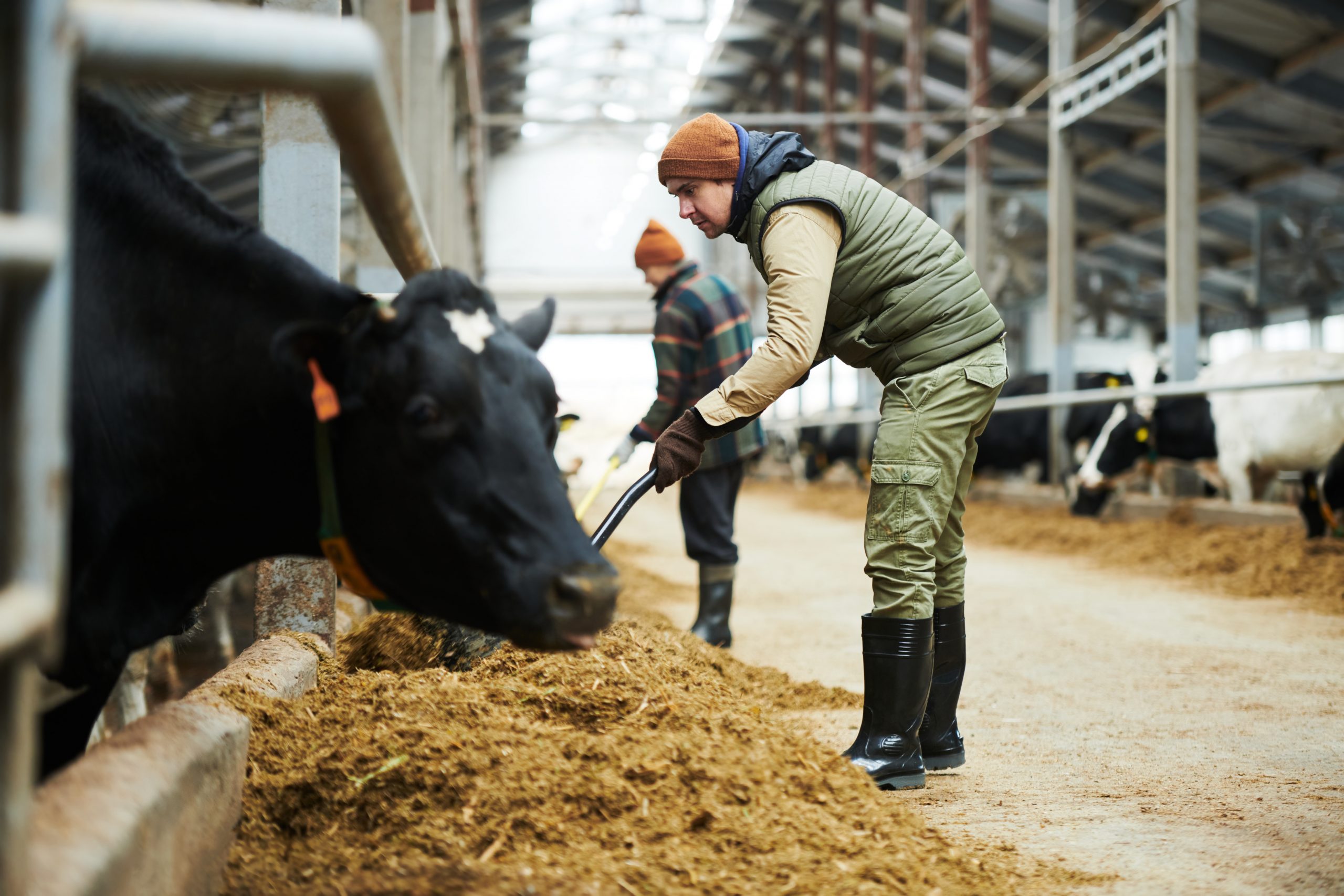
Incoming organic waste from agriculture, livestock farming and the agri-food industry.

Receipt of materials such as slurry, manure, straw or organic by-products for processing.

Anaerobic digestion under controlled conditions.

An anaerobic biological process that converts organic matter into biogas within monitored digesters.

Biogas production and subsequent upgrading to biomethane.

Biogas production and the removal of impurities to obtain a renewable gas suitable for use as an energy source.

Production of digestate.

Production of the organic material resulting from anaerobic digestion, which is rich in nutrients and organic matter.

Utilisation of digestate as an organic fertiliser.

Treatment of digestate to convert it into a useful, safe and regulated fertiliser.

Returning nutrients to agricultural soil.

Agronomic use of organic fertiliser to restore nutrients and organic matter to the soil.

From digestate to an organic soil improver

One of the key distinguishing features of the Biorig model is the recovery of digestate as CFP 3 organic fertiliser, in accordance with Regulation (EU) 2019/1009. This means that digestate is not treated as a waste product with no intended use, but rather as a recoverable material that must meet quality, stability and safety requirements for its use in agriculture.

The CFP 3 organic fertiliser adds organic matter and nutrients to the soil, helping to improve its fertility and reduce dependence on mineral fertilisers. Furthermore, as it is subject to a regulatory framework, it facilitates more traceable, planned application that is tailored to the actual needs of the crops.

More organised management to protect soil and water

Nitrate pollution is one of the major challenges associated with nutrient management in agricultural and livestock farming areas. The use of digestate as a regulated organic fertiliser can contribute to more orderly management, as it provides a better understanding of the origin, composition and fate of the nutrients applied to the soil.

The aim is not to replace agronomic judgement, but to reinforce it. Organic fertilisers must be applied as part of fertilisation plans that take into account the crop’s needs, soil characteristics, appropriate application periods and the limits set by the regulations.

Soil conservation is, ultimately, about protecting the productive and environmental foundation of our regions. The recovery of agricultural, livestock and agro-industrial waste through anaerobic digestion enables us to move towards a more circular model, in which nutrients are recovered, managed with traceability and returned to the fields in the form of organic fertiliser. At Biorig, we are working to ensure that this process contributes to more efficient waste management, the production of renewable energy and more sustainable fertilisation, thereby reinforcing the role of the primary sector as an essential ally in soil conservation and the ecological transition.

Contact

We are close to you

Do you want to contact us, propose a project, learn about our services? You can reach us at any of our offices, by e-mail or telephone.